

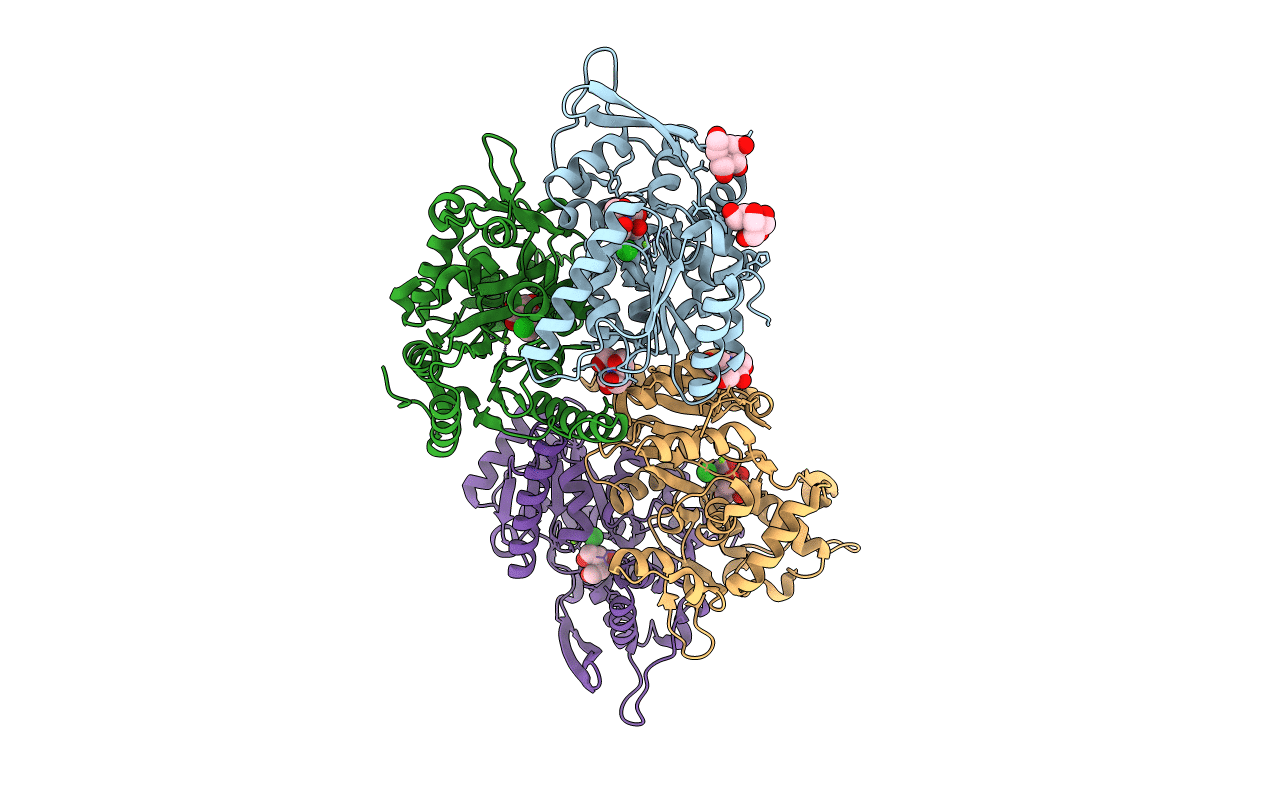
4AS2 image
Deposition Date 2012-04-27
Release Date 2012-08-22
Last Version Date 2024-11-20
Entry Detail
PDB ID:
4AS2
Keywords:
Title:
Pseudomonas Aeruginosa Phosphorylcholine Phosphatase. Monoclinic form
Biological Source:
Source Organism(s):
Expression System(s):
Method Details:
Experimental Method:
Resolution:
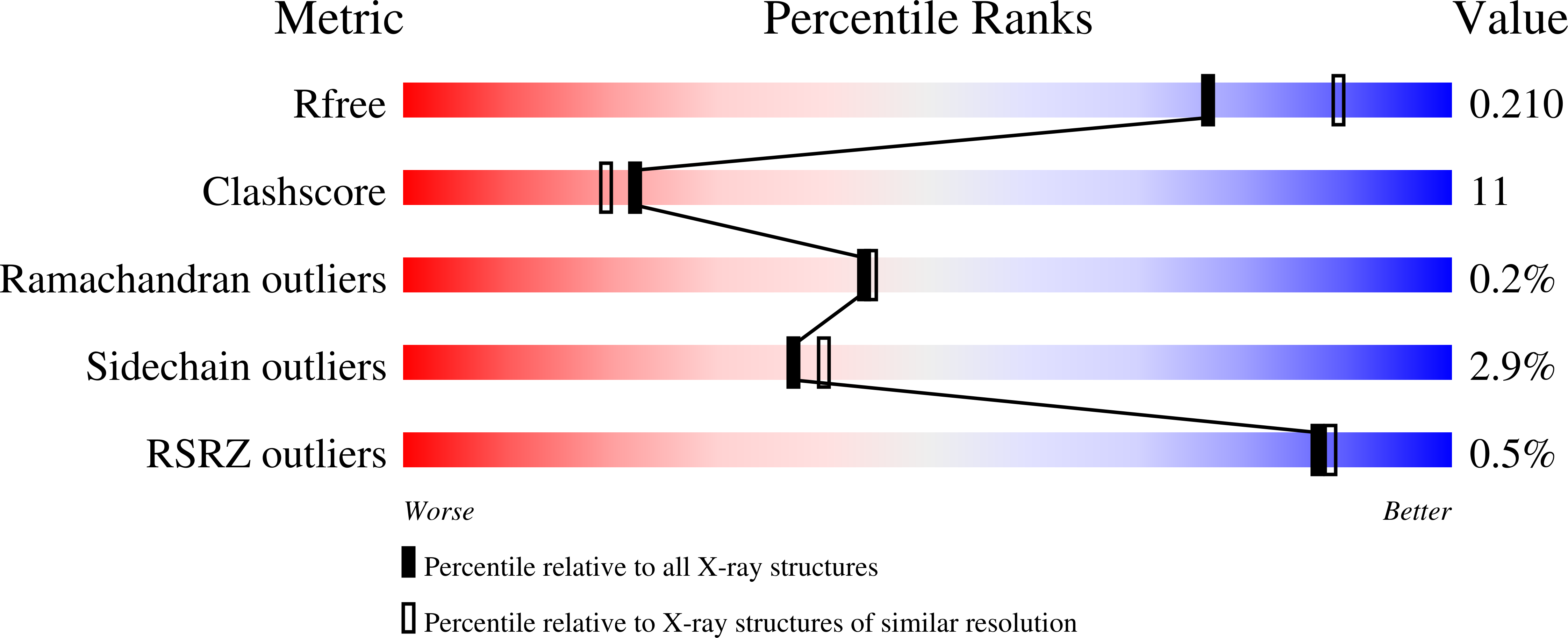
2.12 Å
R-Value Free:
0.21
R-Value Work:
0.15
R-Value Observed:
0.15
Space Group:
C 1 2 1
Macromolecular Entities
Structures with similar UniProt ID
Protein Blast
Polymer Type:polypeptide(L)
Molecule:PHOSPHORYLCHOLINE PHOSPHATASE
Gene (Uniprot):pchP
Chain IDs:A, B, C, D
Chain Length:327
Number of Molecules:4
Biological Source:PSEUDOMONAS AERUGINOSA
Primary Citation
The Structural Domains of Pseudomonas Aeruginosa Phosphorylcholine Phosphatase Cooperate in Substrate Hydrolysis: 3D Structure and Enzymatic Mechanism.
J. Mol. Biol. 423 503 ? (2012)
PMID: 22922065 DOI: 10.1016/J.JMB.2012.07.024

Abstact

Pseudomonas aeruginosa is an opportunistic Gram-negative pathogen. It colonizes different tissues by the utilization of diverse mechanisms. One of these may involve the breakdown of the host cell membrane through the sequential action of hemolytic phospholipase C and phosphorylcholine phosphatase (PchP). The action of hemolytic phospholipase C on phosphatidylcholine produces phosphorylcholine, which is hydrolyzed to choline (Cho) and inorganic phosphate by PchP. The available biochemical data on this enzyme demonstrate the involvement of two Cho-binding sites in the catalytic cycle and in enzyme regulation. The crystal structure of P. aeruginosa PchP has been determined. It folds into three structural domains. The first domain harbors all the residues involved in catalysis and is well conserved among the haloacid dehalogenase superfamily of proteins. The second domain is characteristic of PchP and is involved in the recognition of the Cho moiety of the substrate. The third domain stabilizes the relative position of the other two. Fortuitously, the crystal structure of PchP captures molecules of Bistris (2-[bis(2-hydroxyethyl)amino]-2-(hydroxymethyl)propane-1,3-diol) at the active site and at an additional site. This represents two catalytically relevant complexes with just one or two inhibitory Bistris molecules and provides the basis of the PchP function and regulation. Site-directed mutagenesis along with biochemical experiments corroborates the structural observations and demonstrates the interplay between different sites for Cho recognition and inhibition. The structural comparison of PchP with other phosphatases of the haloacid dehalogenase family provides a three-dimensional picture of the conserved catalytic cycle and the structural basis for the recognition of the diverse substrate molecules.

Legend

Protein

Chemical

Disease

Primary Citation of related structures
Feedback Form
Name
Email
Institute
Feedback