

3ZKE image
Deposition Date 2013-01-22
Release Date 2013-03-20
Last Version Date 2024-05-08
Entry Detail
PDB ID:
3ZKE
Title:
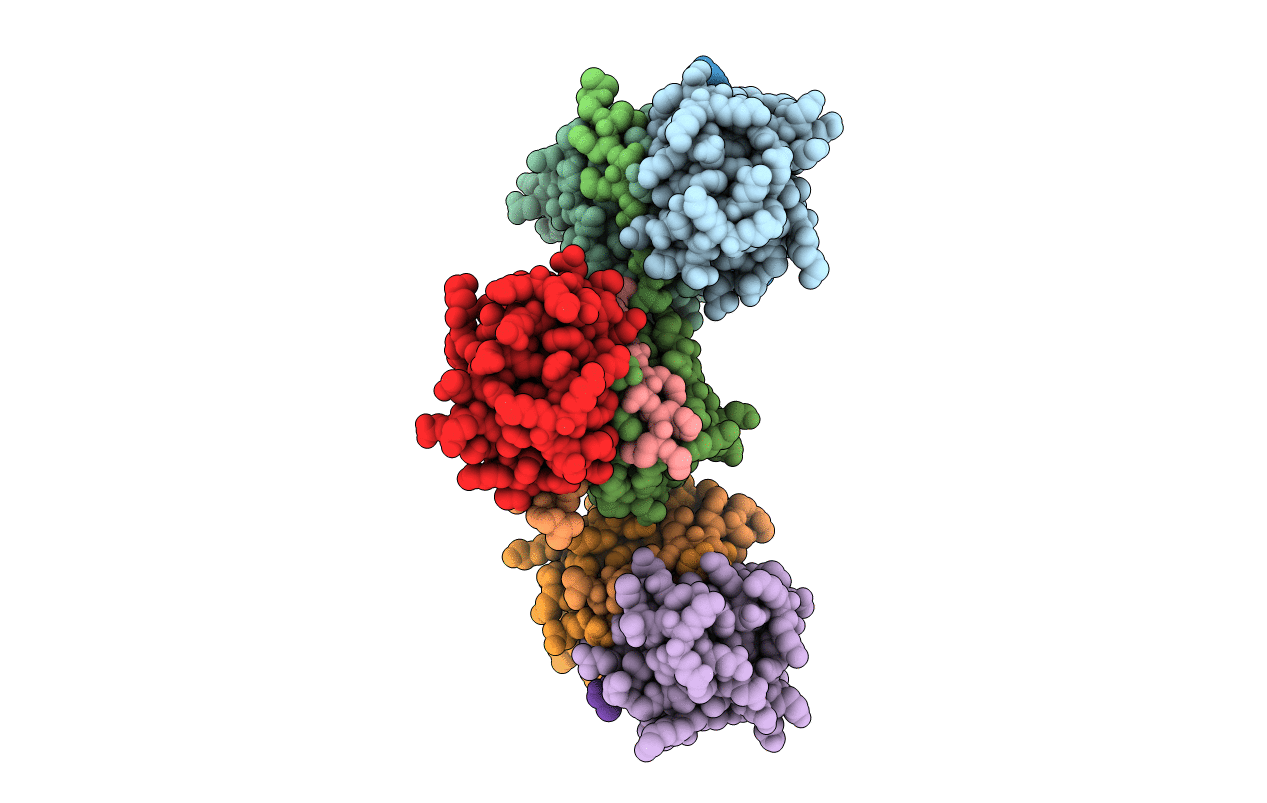
Structure of LC8 in complex with Nek9 peptide
Biological Source:
Source Organism(s):
HOMO SAPIENS (Taxon ID: 9606)
Expression System(s):
Method Details:
Experimental Method:
Resolution:
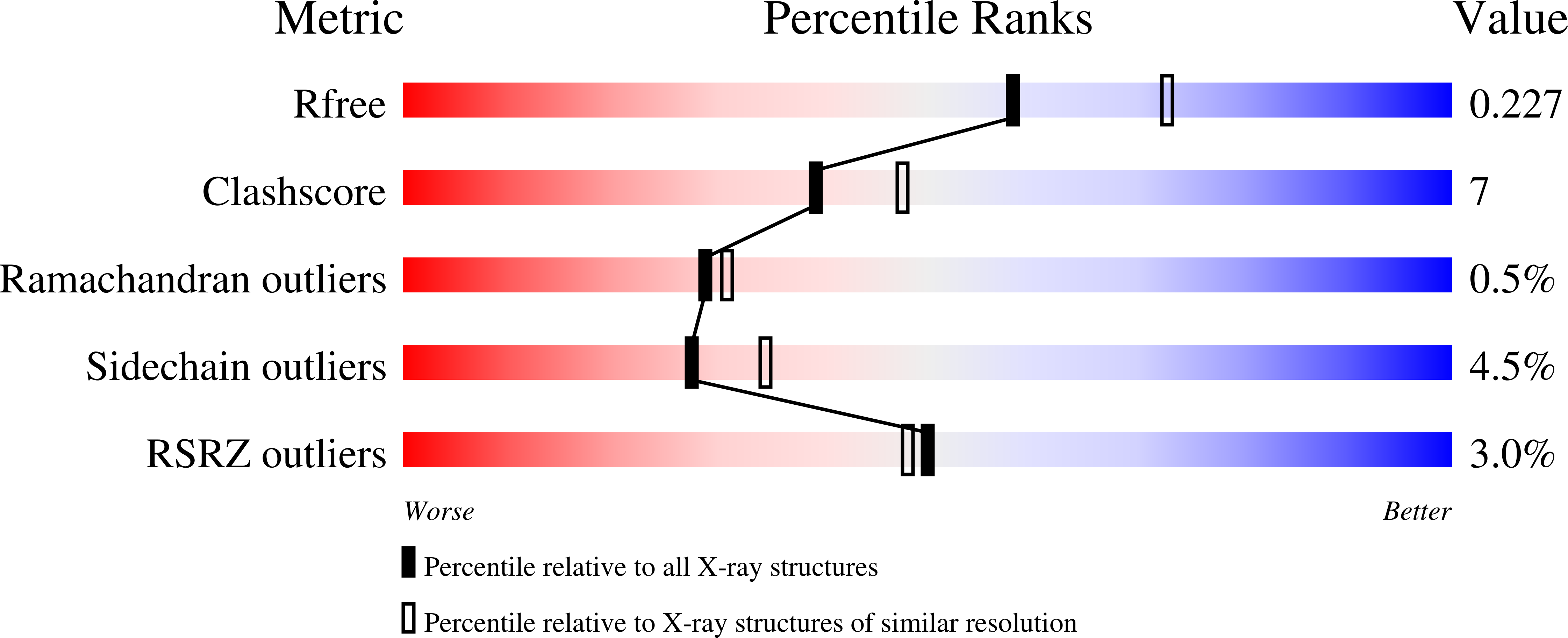
2.20 Å
R-Value Free:
0.22
R-Value Work:
0.19
R-Value Observed:
0.19
Space Group:
P 21 21 21
Macromolecular Entities
Structures with similar UniProt ID
Protein Blast
Polymer Type:polypeptide(L)
Molecule:DYNEIN LIGHT CHAIN 1, CYTOPLA
Gene (Uniprot):DYNLL1
Chain IDs:A, C, E, G, I, K
Chain Length:89
Number of Molecules:6
Biological Source:HOMO SAPIENS
Structures with similar UniProt ID
Protein Blast
Polymer Type:polypeptide(L)
Molecule:NEK9 PROTEIN
Chain IDs:B, D, F, H, J, L
Chain Length:11
Number of Molecules:6
Biological Source:HOMO SAPIENS
Primary Citation
Structural Analysis of the Regulation of the Dynll/Lc8 Binding to Nek9 by Phosphorylation
J. Biol. Chem. 288 12283 ? (2013)
PMID: 23482567 DOI: 10.1074/JBC.M113.459149

Abstact

The NIMA family protein kinases Nek9/Nercc1, Nek6, and Nek7 constitute a signaling module activated in early mitosis involved in the control of spindle organization. DYNLL/LC8 (dynein light chain 8) was originally described as a component of the dynein complex, but the recent discovery of multiple interaction partners for LC8 has suggested that it has a general role as a dimerization hub that organizes different protein partners. Recent experiments suggested that LC8 binding to Nek9 was regulated by Nek9 autophosphorylation on Ser(944), a residue immediately located N-terminal to the LC8 conserved (K/R)xTQT binding motif, and that this was crucial for the control of signal transduction through the Nek/Nek6/7 module. In the present work, we present two crystal structures of LC8 with a peptide corresponding to the Nek9 binding region with and without a phosphorylation on Ser(944). Structural analysis of LC8 with both Nek9 peptides, together with different biophysical experiments, explains the observed diminished binding affinity of Nek9 to LC8 upon phosphorylation on Ser(944) within the Nek9 sequence, thus shedding light into a novel phosphorylation regulatory mechanism that interferes with LC8 protein · protein complex formation.

Legend

Protein

Chemical

Disease

Primary Citation of related structures
Feedback Form
Name
Email
Institute
Feedback