

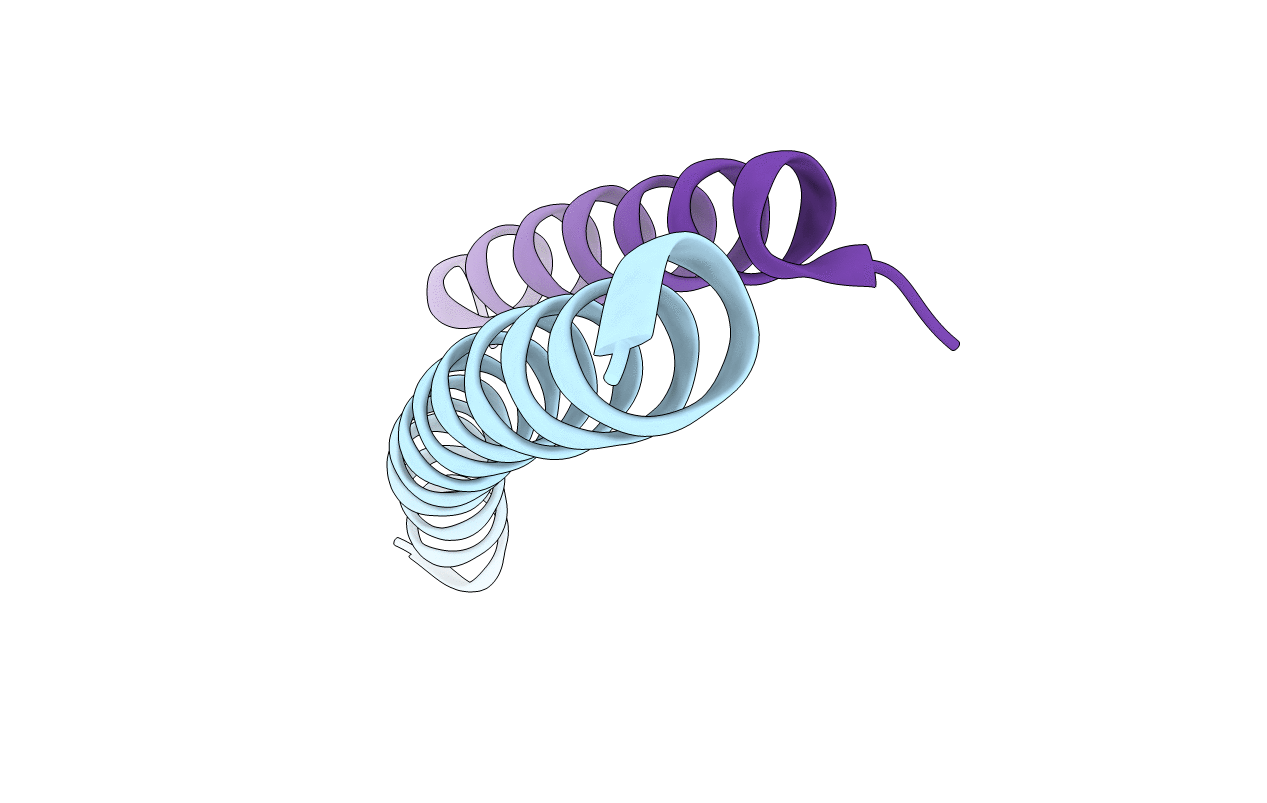
3VTP image
Deposition Date 2012-06-02
Release Date 2012-08-22
Last Version Date 2024-11-06
Entry Detail
PDB ID:
3VTP
Title:
HIV fusion inhibitor MT-C34
Biological Source:
Source Organism(s):
Method Details:
Experimental Method:
Resolution:
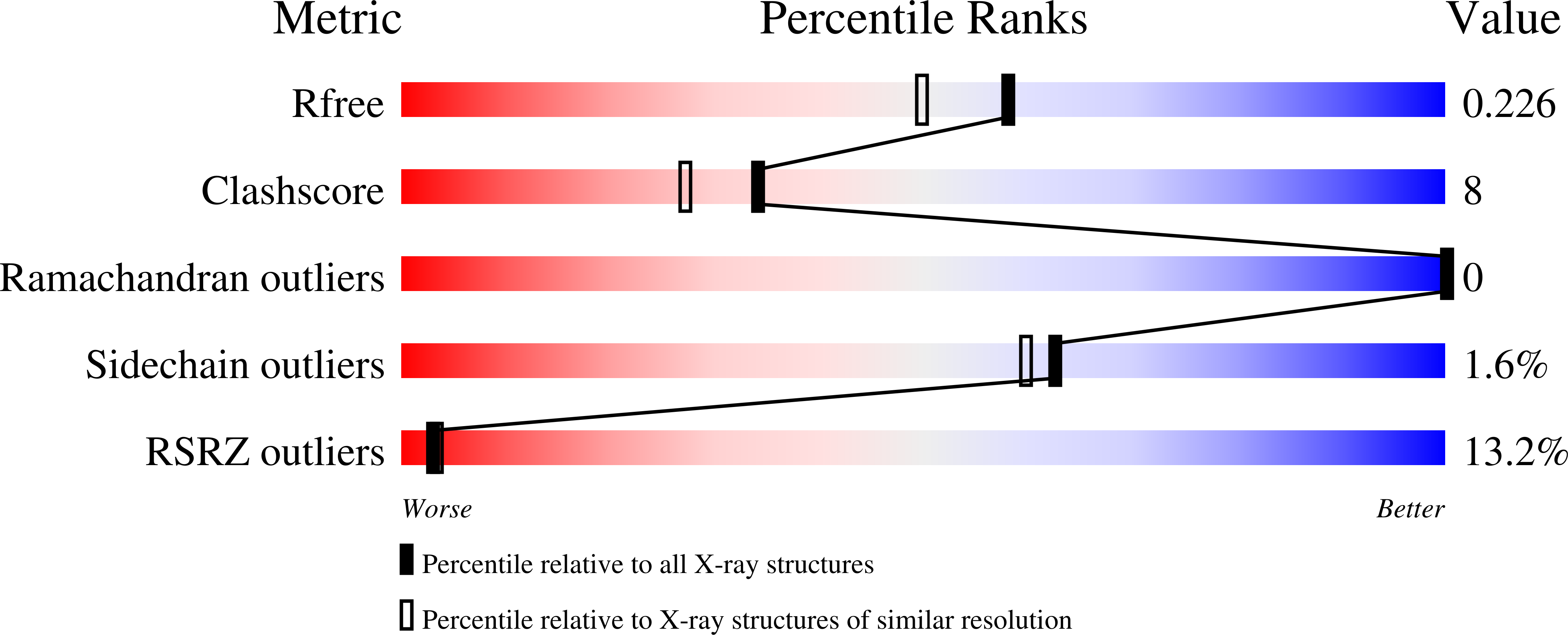
1.90 Å
R-Value Free:
0.23
R-Value Work:
0.19
R-Value Observed:
0.19
Space Group:
H 3 2
Macromolecular Entities
Structures with similar UniProt ID
Protein Blast
Polymer Type:polypeptide(L)
Molecule:Transmembrane protein gp41
Gene (Uniprot):env
Chain IDs:A (auth: C)
Chain Length:43
Number of Molecules:1
Biological Source:Human immunodeficiency virus type 1
Structures with similar UniProt ID
Protein Blast
Polymer Type:polypeptide(L)
Molecule:Transmembrane protein gp41
Gene (Uniprot):env
Chain IDs:B (auth: D)
Chain Length:38
Number of Molecules:1
Biological Source:Human immunodeficiency virus type 1
Primary Citation
The M-T hook structure is critical for design of HIV-1 fusion inhibitors.
J. Biol. Chem. 287 34558 34568 (2012)
PMID: 22879603 DOI: 10.1074/jbc.M112.390393

Abstact

CP621-652 is a potent HIV-1 fusion inhibitor peptide derived from the C-terminal heptad repeat of gp41. We recently identified that its N-terminal residues Met-626 and Thr-627 adopt a unique hook-like structure (termed M-T hook) thus stabilizing the interaction of the inhibitor with the deep pocket on the N-terminal heptad repeat. In this study, we further demonstrated that the M-T hook structure is a key determinant of CP621-652 in terms of its thermostability and anti-HIV activity. To directly define the structure and function of the M-T hook, we generated the peptide MT-C34 by incorporating Met-626 and Thr-627 into the N terminus of the C-terminal heptad repeat-derived peptide C34. The high resolution crystal structure (1.9 Å) of MT-C34 complexed by an N-terminal heptad repeat-derived peptide reveals that the M-T hook conformation is well preserved at the N-terminal extreme of the inhibitor. Strikingly, addition of two hook residues could dramatically enhance the binding affinity and thermostability of 6-helix bundle core. Compared with C34, MT-C34 exhibited significantly increased activity to inhibit HIV-1 envelope-mediated cell fusion (6.6-fold), virus entry (4.5-fold), and replication (6-fold). Mechanistically, MT-C34 had a 10.5-fold higher increase than C34 in blocking 6-helix bundle formation. We further showed that MT-C34 possessed higher potency against T20 (Enfuvirtide, Fuzeon)-resistant HIV-1 variants. Therefore, this study provides convincing data for our proposed concept that the M-T hook structure is critical for designing HIV-1 fusion inhibitors.

Legend

Protein

Chemical

Disease

Primary Citation of related structures
Feedback Form
Name
Email
Institute
Feedback