

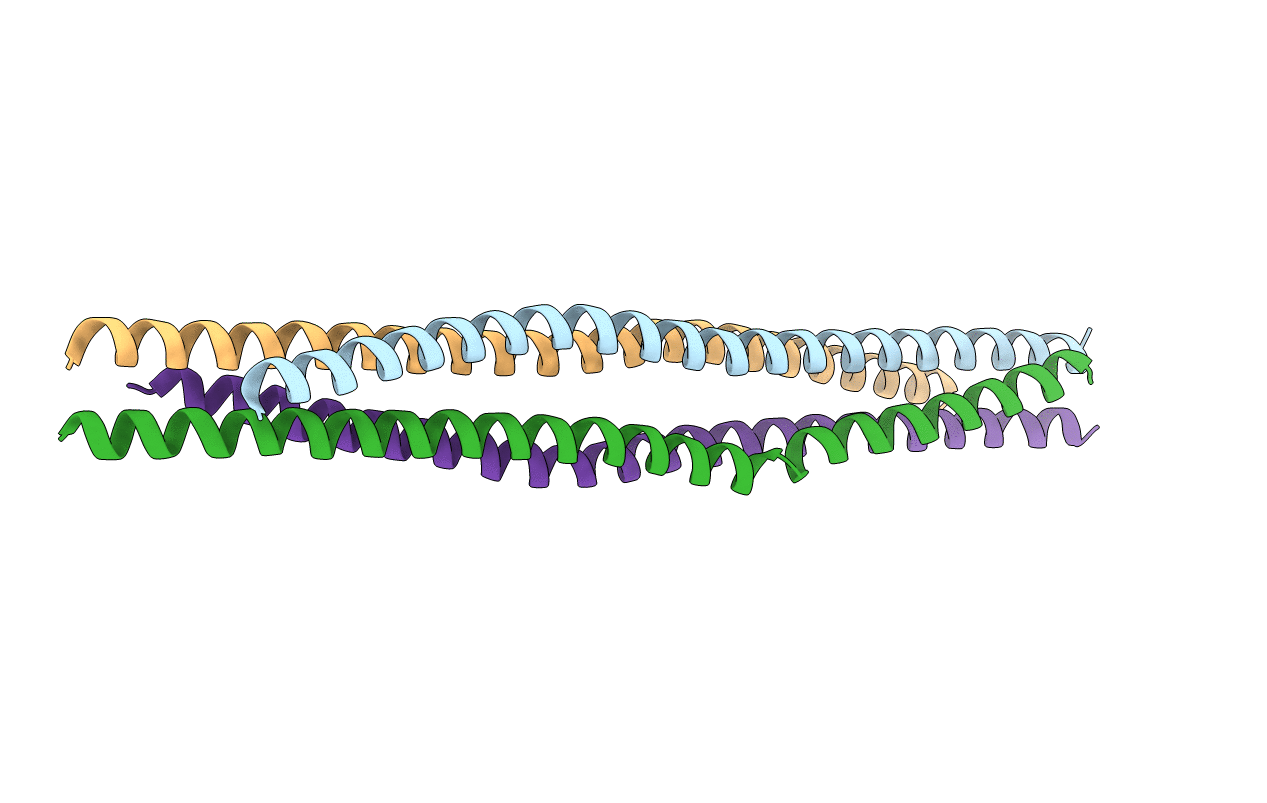
3VP8 image
Deposition Date 2012-02-28
Release Date 2012-06-13
Last Version Date 2024-03-20
Entry Detail
PDB ID:
3VP8
Keywords:
Title:
Crystal structure of the N-terminal domain of the yeast general corepressor Tup1p
Biological Source:
Source Organism(s):
Expression System(s):
Method Details:
Experimental Method:
Resolution:
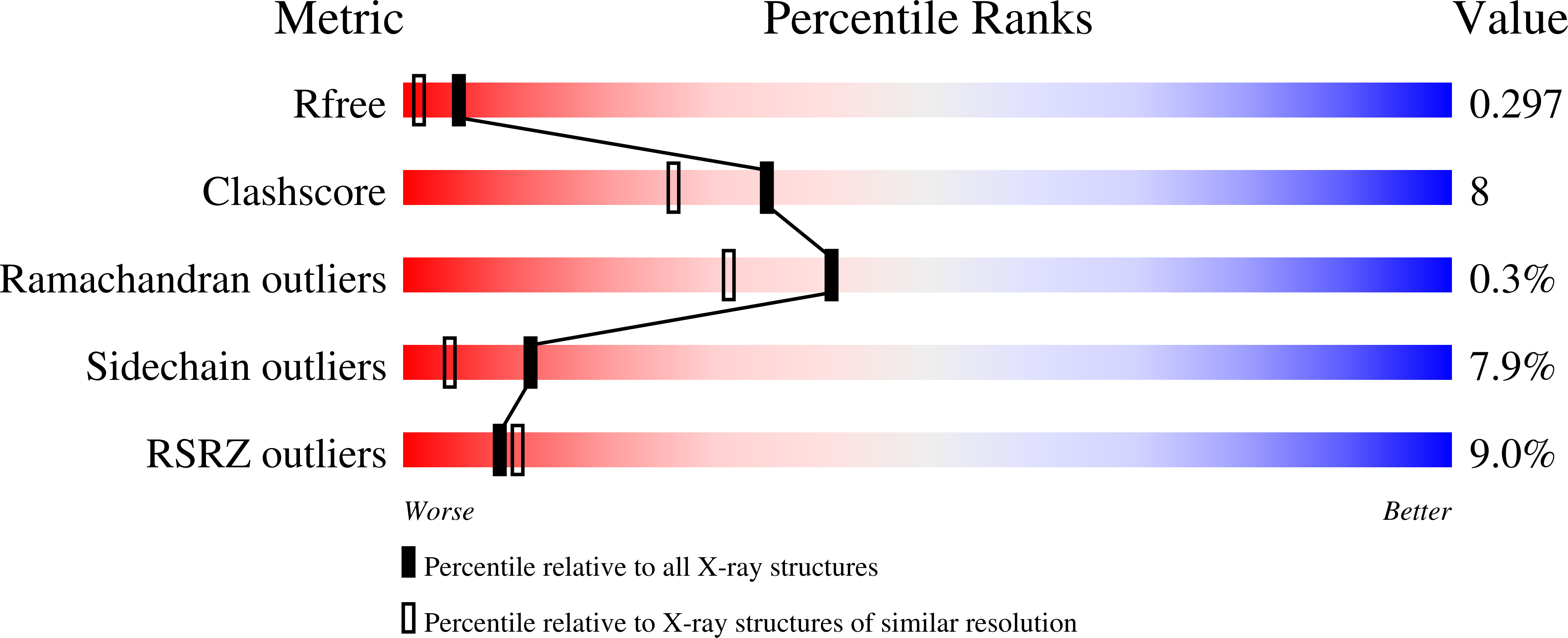
1.91 Å
R-Value Free:
0.29
R-Value Work:
0.24
R-Value Observed:
0.24
Space Group:
P 1 21 1
Macromolecular Entities
Structures with similar UniProt ID
Protein Blast
Polymer Type:polypeptide(L)
Molecule:General transcriptional corep
Gene (Uniprot):TUP1
Chain IDs:A, B, C, D
Chain Length:92
Number of Molecules:4
Biological Source:Saccharomyces cerevisiae
Primary Citation
Crystal structure of the N-terminal domain of the yeast general corepressor Tup1p and its functional implications
J. Biol. Chem. 287 26528 26538 (2012)
PMID: 22707714 DOI: 10.1074/jbc.M112.369652

Abstact

The yeast Cyc8p-Tup1p protein complex is a general transcriptional corepressor of genes involved in many different physiological processes. Herein, we present the crystal structure of the Tup1p N-terminal domain (residues 1-92), essential for Tup1p self-assembly and interaction with Cyc8p. This domain tetramerizes to form a novel antiparallel four-helix bundle. Coiled coil interactions near the helical ends hold each dimer together, whereas interdimeric association involves only two sets of two residues located toward the chain centers. A mutagenesis study confirmed that the nonpolar residues responsible for the association of the protomers as dimers are also required for transcriptional repression. An additional structural study demonstrated that the domain containing an Leu(62) → Arg mutation that had been shown not to bind Cyc8p exhibits an altered structure, distinct from the wild type. This altered structure explains why the mutant cannot bind Cyc8p. The data presented herein highlight the importance of the architecture of the Tup1p N-terminal domain for self-association.

Legend

Protein

Chemical

Disease

Primary Citation of related structures
Feedback Form
Name
Email
Institute
Feedback