

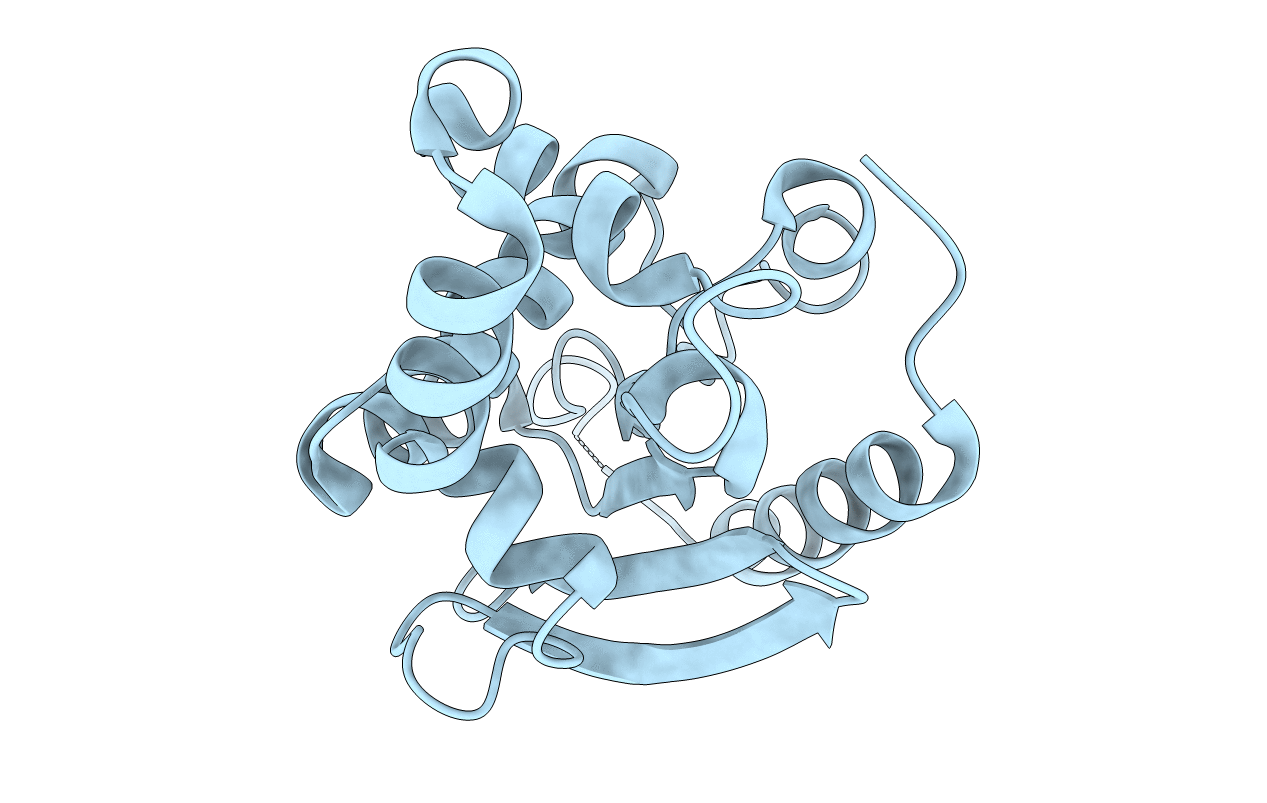
3VGP image
Deposition Date 2011-08-18
Release Date 2012-07-04
Last Version Date 2024-10-30
Entry Detail
PDB ID:
3VGP
Keywords:
Title:
Crystal structure of the C-terminal globular domain of oligosaccharyltransferase (AF_0329) from Archaeoglobus fulgidus
Biological Source:
Source Organism(s):
Expression System(s):
Method Details:
Experimental Method:
Resolution:
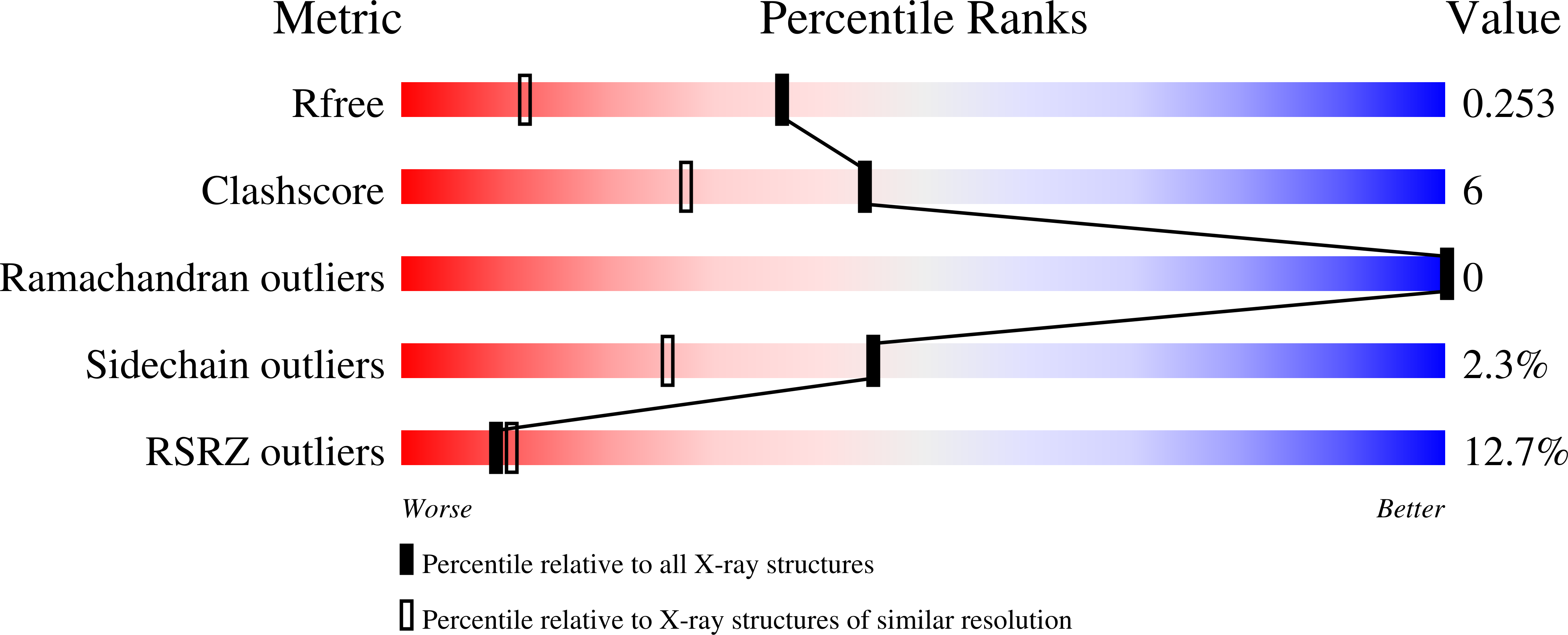
1.75 Å
R-Value Free:
0.25
R-Value Work:
0.22
R-Value Observed:
0.22
Space Group:
P 41 21 2
Macromolecular Entities
Structures with similar UniProt ID
Protein Blast
Polymer Type:polypeptide(L)
Molecule:Transmembrane oligosaccharyl
Gene (Uniprot):aglB1
Mutagens:C482A
Chain IDs:A
Chain Length:164
Number of Molecules:1
Biological Source:Archaeoglobus fulgidus
Modified Residue
Compound ID Chain ID Parent Comp ID Details 2D Image
MSE A MET SELENOMETHIONINE
Primary Citation
Crystal Structure of the C-Terminal Globular Domain of Oligosaccharyltransferase from Archaeoglobus fulgidus at 1.75 A Resolution
Biochemistry 51 4157 4166 (2012)
PMID: 22559858 DOI: 10.1021/bi300076u

Abstact

Protein N-glycosylation occurs in the three domains of life. Oligosaccharyltransferase (OST) transfers glycan to asparagine in the N-glycosylation sequon. The catalytic subunit of OST is called STT3 in eukaryotes, AglB in archaea, and PglB in eubacteria. The genome of a hyperthermophilic archaeon, Archaeoglobus fulgidus, encodes three AglB paralogs. Two of them are the shortest AglBs across all domains of life. We determined the crystal structure of the C-terminal globular domain of the smallest AglB to identify the minimal structural unit. The Archaeoglobus AglB lacked a β-barrel-like structure, which had been found in other AglB and PglB structures. In agreement, the deletion in a larger Pyrococcus AglB confirmed its dispensability for the activity. By contrast, the Archaeoglobus AglB contains a kinked helix bearing a conserved motif, called DK/MI motif. The lysine and isoleucine residues in the motif participate in the Ser/Thr recognition in the sequon. The Archaeoglobus AglB structure revealed that the kinked helix contained an unexpected insertion. A revised sequence alignment based on this finding identified a variant type of the DK motif with the insertion. A mutagenesis study of the Archaeoglobus AglB confirmed the contribution of this particular type of the DK motif to the activity. When taken together with our previous results, this study defined the classification of OST: one group consisting of eukaryotes and most archaea possesses the DK-type Ser/Thr pocket, and the other group consisting of eubacteria and the remaining archaea possesses the MI-type Ser/Thr pocket. This classification provides a useful framework for OST studies.

Legend

Protein

Chemical

Disease

Primary Citation of related structures
Feedback Form
Name
Email
Institute
Feedback