

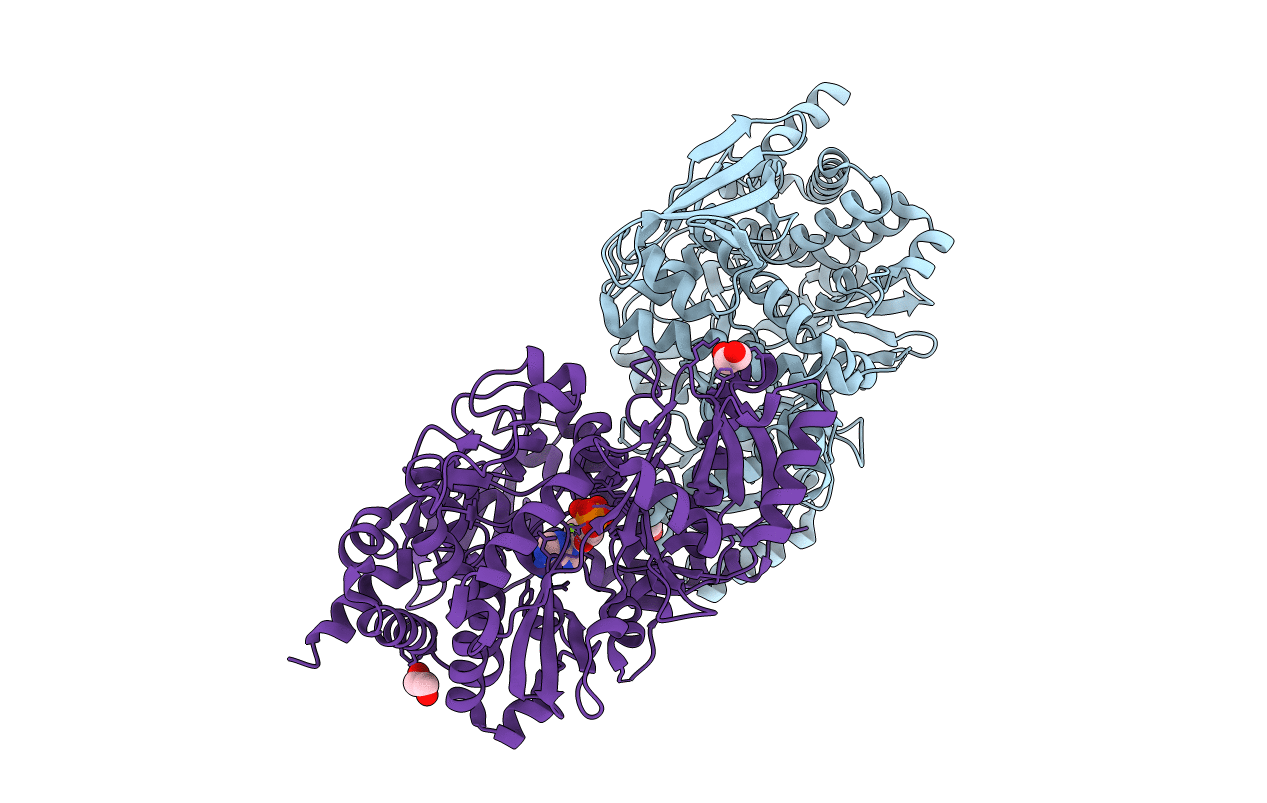
3TO3 image
Deposition Date 2011-09-03
Release Date 2011-10-05
Last Version Date 2024-11-06
Entry Detail
PDB ID:
3TO3
Title:
Crystal Structure of Petrobactin Biosynthesis Protein AsbB from Bacillus anthracis str. Sterne
Biological Source:
Source Organism(s):
Expression System(s):
Method Details:
Experimental Method:
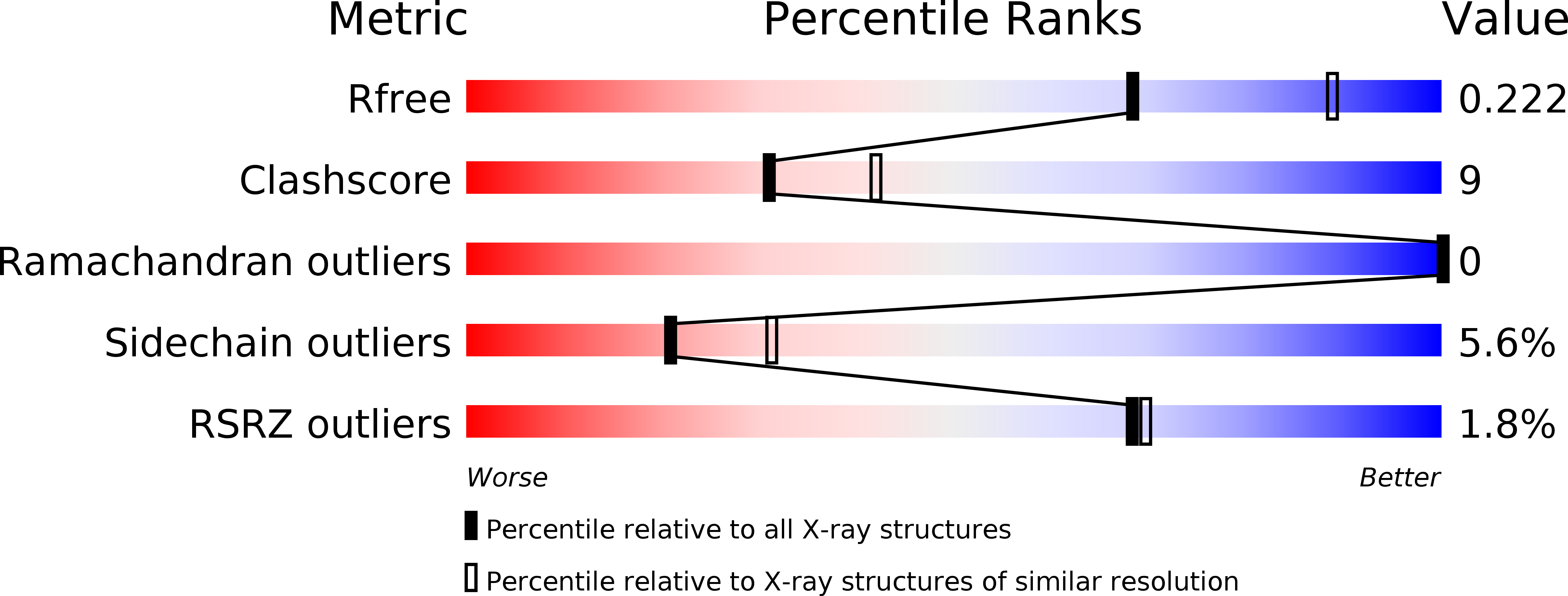
Resolution:
2.38 Å
R-Value Free:
0.22
R-Value Work:
0.17
R-Value Observed:
0.17
Space Group:
P 21 21 21
Macromolecular Entities
Structures with similar UniProt ID
Protein Blast
Polymer Type:polypeptide(L)
Molecule:Petrobactin biosynthesis prot
Gene (Uniprot):asbB
Chain IDs:A, B
Chain Length:619
Number of Molecules:2
Biological Source:Bacillus anthracis
Modified Residue
Compound ID Chain ID Parent Comp ID Details 2D Image
MSE A MET SELENOMETHIONINE
Primary Citation
Functional and Structural Analysis of the Siderophore Synthetase AsbB through Reconstitution of the Petrobactin Biosynthetic Pathway from Bacillus anthracis.
J.Biol.Chem. 287 16058 16072 (2012)
PMID: 22408253 DOI: 10.1074/jbc.M112.359349

Abstact

Petrobactin, a mixed catechol-carboxylate siderophore, is required for full virulence of Bacillus anthracis, the causative agent of anthrax. The asbABCDEF operon encodes the biosynthetic machinery for this secondary metabolite. Here, we show that the function of five gene products encoded by the asb operon is necessary and sufficient for conversion of endogenous precursors to petrobactin using an in vitro system. In this pathway, the siderophore synthetase AsbB catalyzes formation of amide bonds crucial for petrobactin assembly through use of biosynthetic intermediates, as opposed to primary metabolites, as carboxylate donors. In solving the crystal structure of the B. anthracis siderophore biosynthesis protein B (AsbB), we disclose a three-dimensional model of a nonribosomal peptide synthetase-independent siderophore (NIS) synthetase. Structural characteristics provide new insight into how this bifunctional condensing enzyme can bind and adenylate multiple citrate-containing substrates followed by incorporation of both natural and unnatural polyamine nucleophiles. This activity enables formation of multiple end-stage products leading to final assembly of petrobactin. Subsequent enzymatic assays with the nonribosomal peptide synthetase-like AsbC, AsbD, and AsbE polypeptides show that the alternative products of AsbB are further converted to petrobactin, verifying previously proposed convergent routes to formation of this siderophore. These studies identify potential therapeutic targets to halt deadly infections caused by B. anthracis and other pathogenic bacteria and suggest new avenues for the chemoenzymatic synthesis of novel compounds.

Legend

Protein

Chemical

Disease

Primary Citation of related structures
Feedback Form
Name
Email
Institute
Feedback