

3T9O image
Deposition Date 2011-08-03
Release Date 2012-09-05
Last Version Date 2024-02-28
Entry Detail
PDB ID:
3T9O
Title:
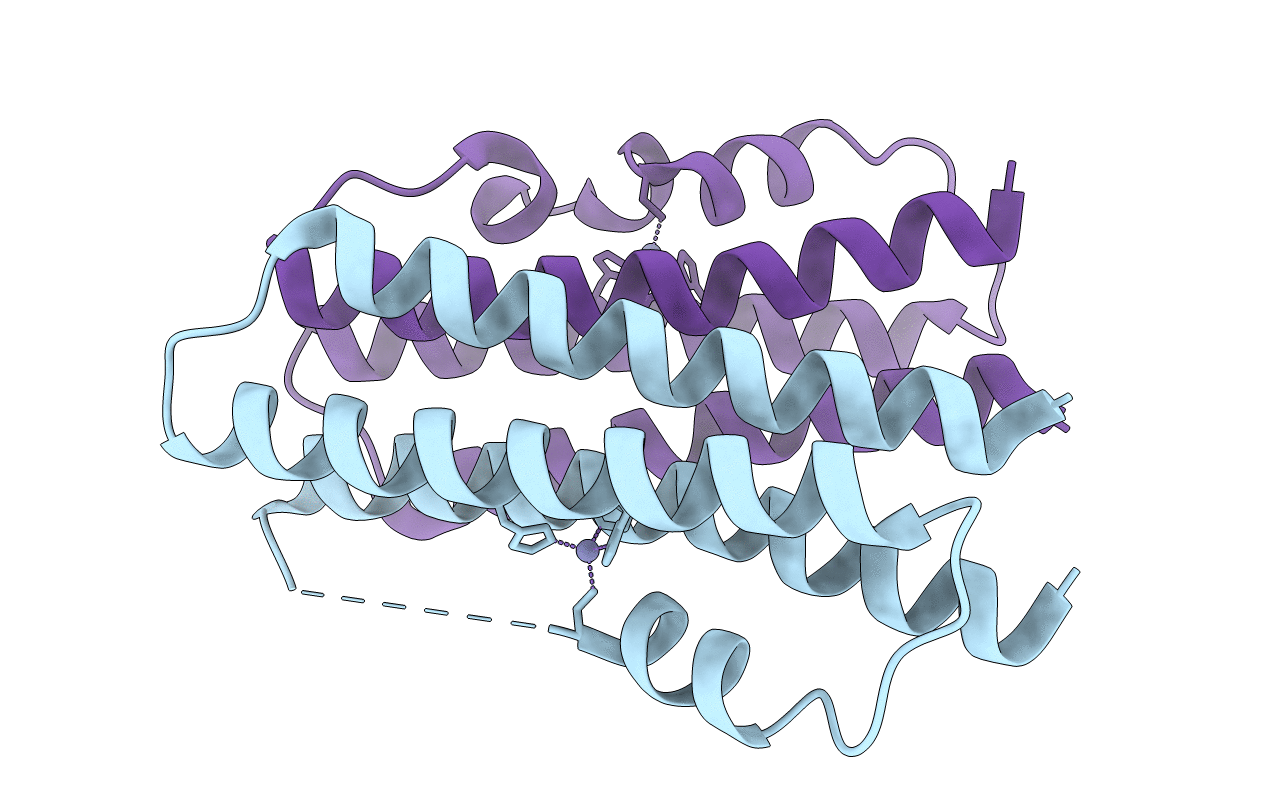
Regulatory CZB domain of DgcZ
Biological Source:
Source Organism(s):
Expression System(s):
Method Details:
Experimental Method:
Resolution:
2.20 Å
R-Value Free:
0.24
R-Value Work:
0.20
R-Value Observed:
0.21
Space Group:
C 1 2 1
Macromolecular Entities
Structures with similar UniProt ID
Protein Blast
Polymer Type:polypeptide(L)
Molecule:Diguanylate cyclase DgcZ
Gene (Uniprot):dgcZ
Chain IDs:A, B
Chain Length:135
Number of Molecules:2
Biological Source:Escherichia coli
Ligand Molecules
Primary Citation
Structure and signaling mechanism of a zinc-sensory diguanylate cyclase.
Structure 21 1149 1157 (2013)
PMID: 23769666 DOI: 10.1016/j.str.2013.04.026

Abstact

Diguanylate cyclases synthesize the second messenger c-di-GMP, which in turn governs a plethora of physiological processes in bacteria. Although most diguanylate cyclases harbor sensory domains, their input signals are largely unknown. Here, we demonstrate that diguanylate cyclase DgcZ (YdeH) from Escherichia coli is regulated allosterically by zinc. Crystal structures show that the zinc ion is bound to the 3His/1Cys motif of the regulatory chemoreceptor zinc-binding domain, which mediates subunit contact within the dimeric enzyme. In vitro, zinc reversibly inhibits DgcZ with a subfemtomolar Ki constant. In vivo, bacterial biofilm formation is modulated by externally applied zinc in a DgcZ- and c-di-GMP-dependent fashion. The study outlines the structural principles of this zinc sensor. Zinc binding seems to regulate the activity of the catalytic GGDEF domains by impeding their mobility and thus preventing productive encounter of the two GTP substrates.

Legend

Protein

Chemical

Disease

Primary Citation of related structures
Feedback Form
Name
Email
Institute
Feedback