

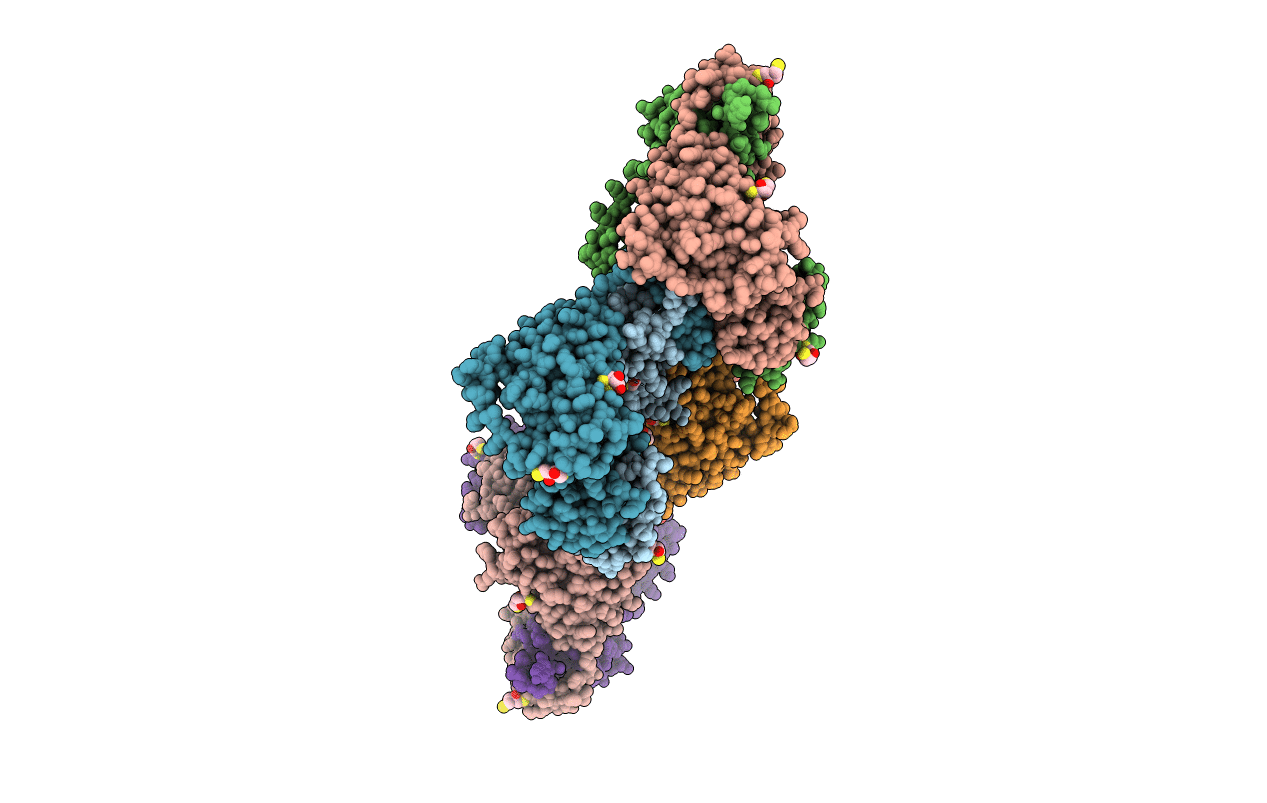
3RTY image
Deposition Date 2011-05-04
Release Date 2011-12-21
Last Version Date 2024-12-25
Entry Detail
PDB ID:
3RTY
Title:
Structure of an Enclosed Dimer Formed by The Drosophila Period Protein
Biological Source:
Source Organism(s):
Expression System(s):
Method Details:
Experimental Method:
Resolution:
2.85 Å
R-Value Free:
0.28
R-Value Work:
0.23
R-Value Observed:
0.23
Space Group:
P 1
Macromolecular Entities
Structures with similar UniProt ID
Protein Blast
Polymer Type:polypeptide(L)
Molecule:Period circadian protein
Gene (Uniprot):per
Chain IDs:A, B, C, D, E, F, G, H
Chain Length:339
Number of Molecules:8
Biological Source:Drosophila melanogaster
Ligand Molecules
Primary Citation
Structure of an enclosed dimer formed by the Drosophila period protein.
J. Mol. Biol. 413 561 572 (2011)
PMID: 21907720 DOI: 10.1016/j.jmb.2011.08.048

Abstact

Period (PER) is the major transcription inhibitor in metazoan circadian clocks and lies at the center of several feedback loops that regulate gene expression. Dimerization of Drosophila PER influences nuclear translocation, repressor activity, and behavioral rhythms. The structure of a central, 346-residue PER fragment reveals two associated PAS (Per-Arnt-Sim) domains followed by a protruding α-helical extension (αF). A closed, pseudo-symmetric dimer forms from a cross handshake interaction of the N-terminal PAS domain with αF of the opposing subunit. Strikingly, a shift of αF against the PAS β-sheet generates two alternative subunit interfaces in the dimer. Taken together with a previously reported PER structure in which αF extends, these data indicate that αF unlatches to switch association of PER with itself to its partner Timeless. The variable positions of the αF helix provide snapshots of a helix dissociation mechanism that has relevance to other PAS protein systems. Conservation of PER interaction residues among a family of PAS-AB-containing transcription factors suggests that contacts mediating closed PAS-AB dimers serve a general function.

Legend

Protein

Chemical

Disease

Primary Citation of related structures
Feedback Form
Name
Email
Institute
Feedback