

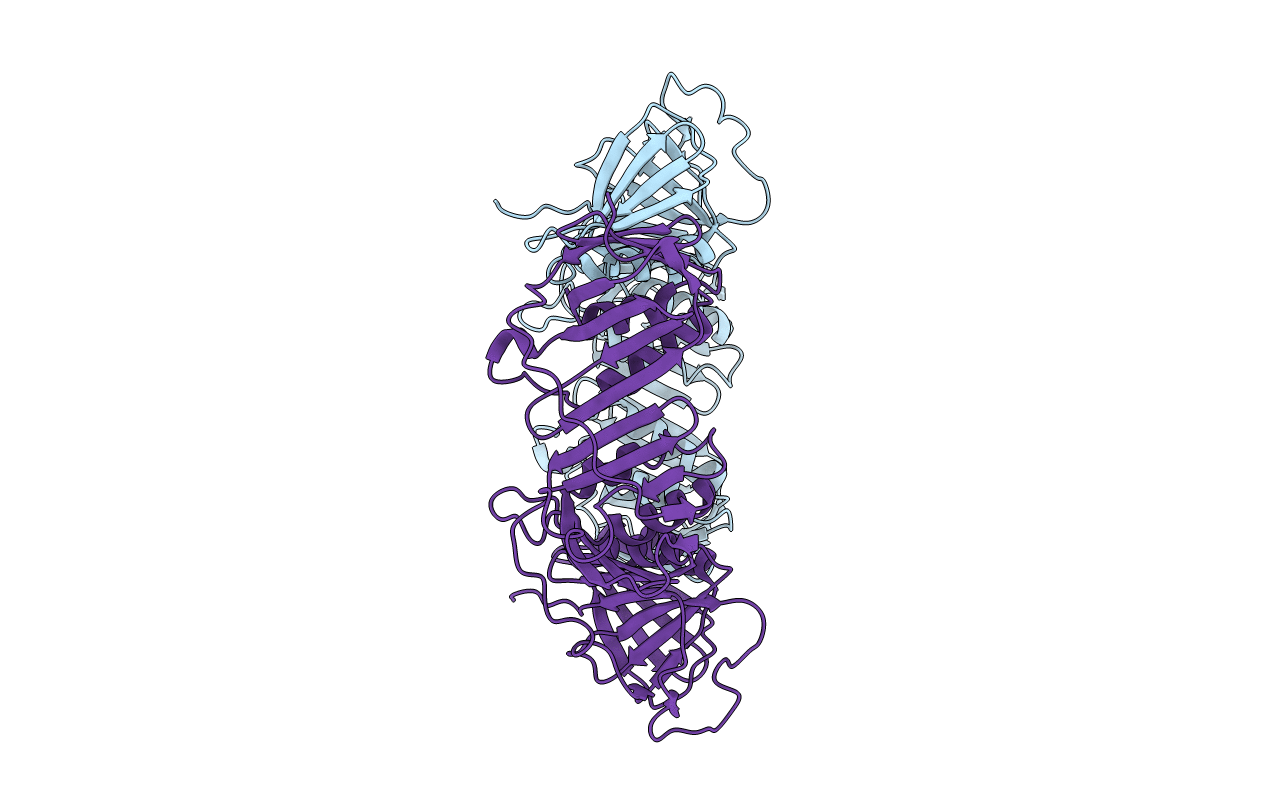
3RB9 image
Deposition Date 2011-03-29
Release Date 2012-04-04
Last Version Date 2024-03-20
Entry Detail
PDB ID:
3RB9
Keywords:
Title:
Crystal structure of the M. tuberculosis beta clamp
Biological Source:
Source Organism(s):
Expression System(s):
Method Details:
Experimental Method:
Resolution:
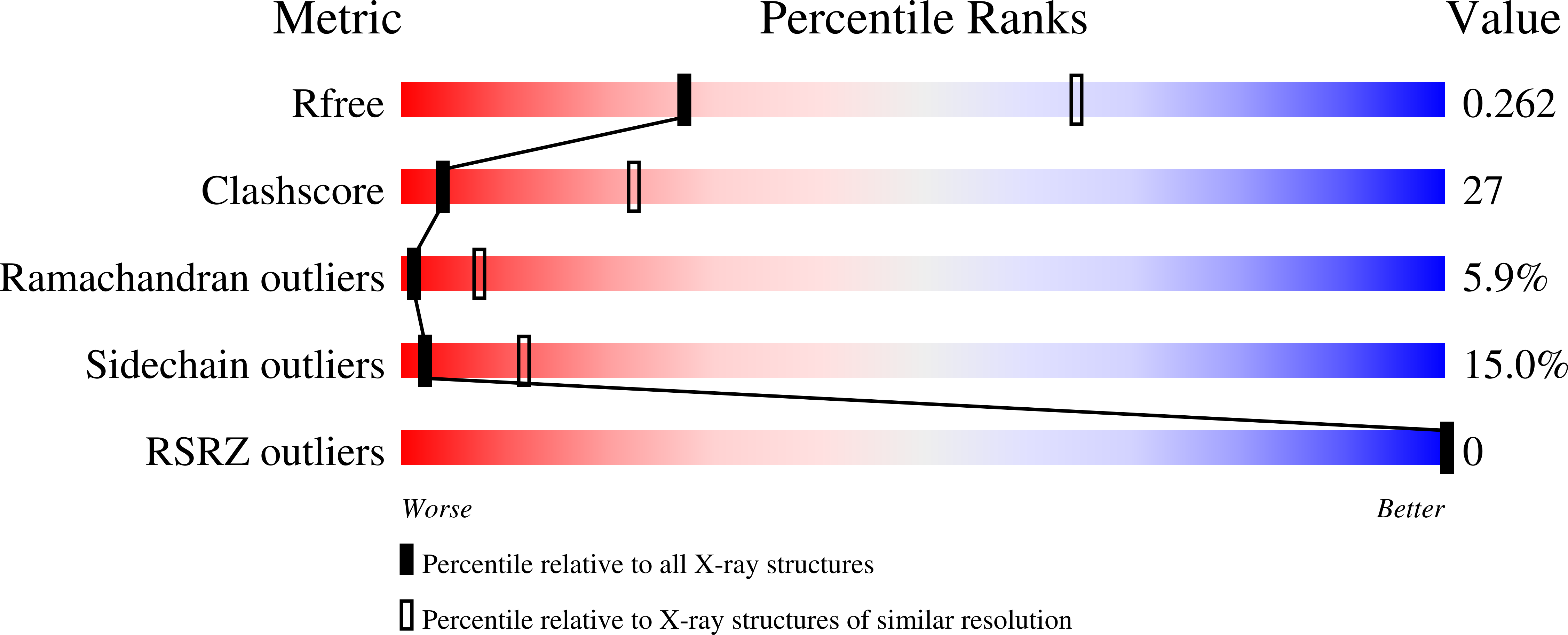
3.00 Å
R-Value Free:
0.25
R-Value Work:
0.20
R-Value Observed:
0.21
Space Group:
C 2 2 21
Macromolecular Entities
Structures with similar UniProt ID
Protein Blast
Polymer Type:polypeptide(L)
Molecule:DNA polymerase III subunit be
Chain IDs:A, B
Chain Length:395
Number of Molecules:2
Biological Source:Mycobacterium tuberculosis
Ligand Molecules
Primary Citation
M. tuberculosis Sliding beta-Clamp Does Not Interact Directly with the NAD(+)-Dependent DNA Ligase
PLoS ONE 7 e35702 e35702 (2012)
PMID: 22545130 DOI: 10.1371/journal.pone.0035702

Abstact

The sliding β-clamp, an important component of the DNA replication and repair machinery, is drawing increasing attention as a therapeutic target. We report the crystal structure of the M. tuberculosis β-clamp (Mtbβ-clamp) to 3.0 Å resolution. The protein crystallized in the space group C222(1) with cell-dimensions a = 72.7, b = 234.9 & c = 125.1 Å respectively. Mtbβ-clamp is a dimer, and exhibits head-to-tail association similar to other bacterial clamps. Each monomer folds into three domains with similar structures respectively and associates with its dimeric partner through 6 salt-bridges and about 21 polar interactions. Affinity experiments involving a blunt DNA duplex, primed-DNA and nicked DNA respectively show that Mtbβ-clamp binds specifically to primed DNA about 1.8 times stronger compared to the other two substrates and with an apparent K(d) of 300 nM. In bacteria like E. coli, the β-clamp is known to interact with subunits of the clamp loader, NAD(+)-dependent DNA ligase (LigA) and other partners. We tested the interactions of the Mtbβ-clamp with MtbLigA and the γ-clamp loader subunit through radioactive gel shift assays, size exclusion chromatography, yeast-two hybrid experiments and also functionally. Intriguingly while Mtbβ-clamp interacts in vitro with the γ-clamp loader, it does not interact with MtbLigA unlike in bacteria like E. coli where it does. Modeling studies involving earlier peptide complexes reveal that the peptide-binding site is largely conserved despite lower sequence identity between bacterial clamps. Overall the results suggest that other as-yet-unidentified factors may mediate interactions between the clamp, LigA and DNA in mycobacteria.

Legend

Protein

Chemical

Disease

Primary Citation of related structures
Feedback Form
Name
Email
Institute
Feedback