

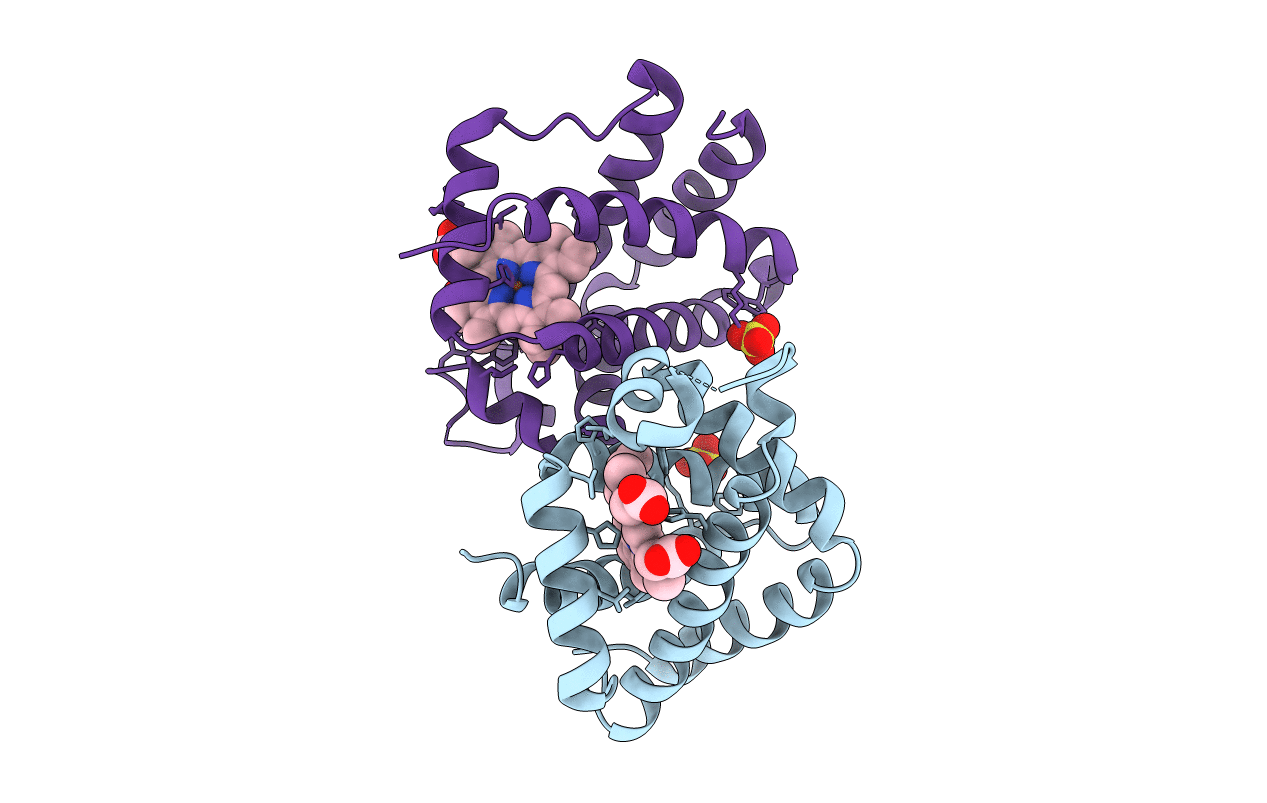
3QQQ image
Deposition Date 2011-02-16
Release Date 2011-04-27
Last Version Date 2024-02-21
Entry Detail
PDB ID:
3QQQ
Title:
Crystal structure of non-symbiotic plant hemoglobin from Trema tomentosa
Biological Source:
Source Organism(s):
Trema tomentosa (Taxon ID: 3480)
Expression System(s):
Method Details:
Experimental Method:
Resolution:
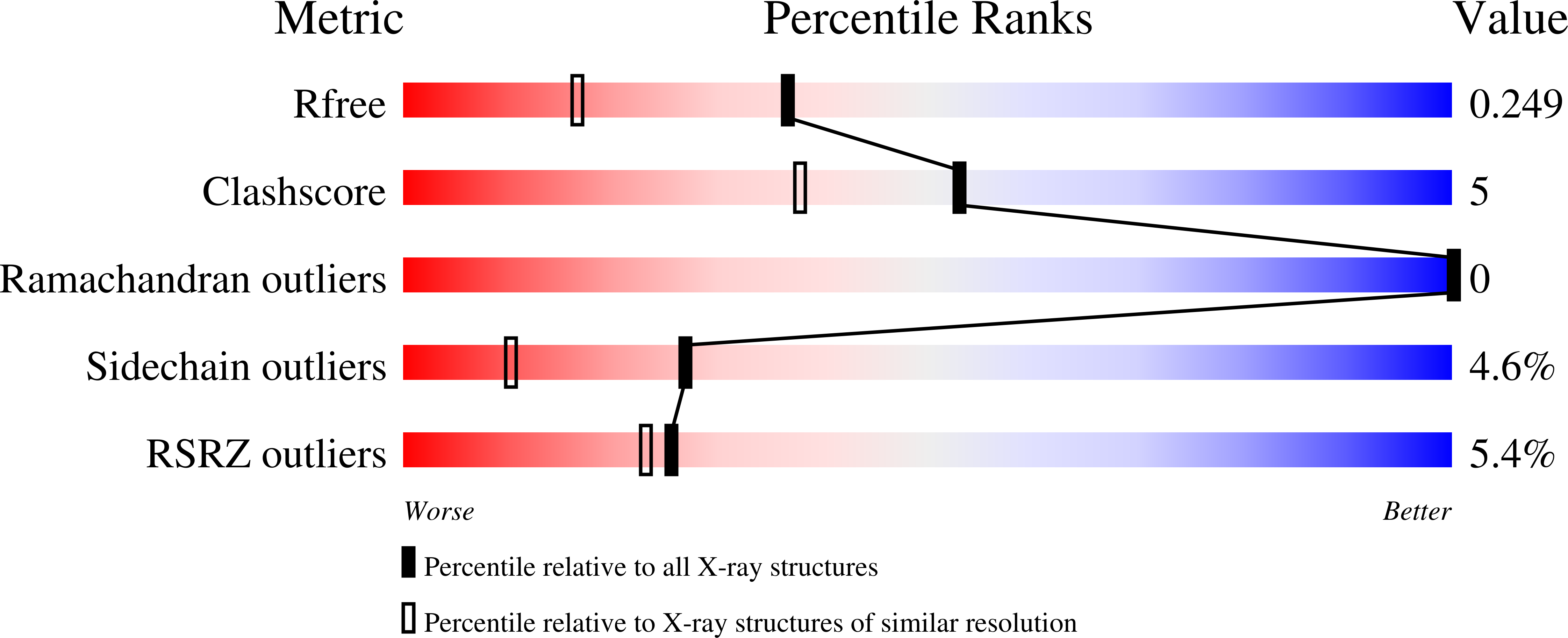
1.84 Å
R-Value Free:
0.24
R-Value Work:
0.21
R-Value Observed:
0.21
Space Group:
P 21 21 21
Macromolecular Entities
Structures with similar UniProt ID
Protein Blast
Polymer Type:polypeptide(L)
Molecule:Non-symbiotic hemoglobin
Gene (Uniprot):GLB1
Chain IDs:A, B
Chain Length:168
Number of Molecules:2
Biological Source:Trema tomentosa
Primary Citation
Crystal structures of Parasponia and Trema hemoglobins: differential heme coordination is linked to quaternary structure.
Biochemistry 50 4273 4280 (2011)
PMID: 21491905 DOI: 10.1021/bi2002423

Abstact

Hemoglobins from the plants Parasponia andersonii (ParaHb) and Trema tomentosa (TremaHb) are 93% identical in primary structure but differ in oxygen binding constants in accordance with their distinct physiological functions. Additionally, these proteins are dimeric, and ParaHb exhibits the unusual property of having different heme redox potentials for each subunit. To investigate how these hemoglobins could differ in function despite their shared sequence identity and to determine the cause of subunit heterogeneity in ParaHb, we have measured their crystal structures in the ferric oxidation state. Furthermore, we have made a monomeric ParaHb mutant protein (I43N) and measured its ferrous/ferric heme redox potential to test the hypothesized link between quaternary structure and heme heterogeneity in wild-type ParaHb. Our results demonstrate that TremaHb is a symmetric dimeric hemoglobin similar to other class 1 nonsymbiotic plant hemoglobins but that ParaHb has structurally distinct heme coordination in each of its two subunits that is absent in the monomeric I43N mutant protein. A mechanism for achieving structural heterogeneity in ParaHb in which the Ile(101(F4)) side chain contacts the proximal His(105(F8)) in one subunit but not the other is proposed. These results are discussed in the context of the evolution of plant oxygen transport hemoglobins, and other potential functions of plant hemoglobins.

Legend

Protein

Chemical

Disease

Primary Citation of related structures
Feedback Form
Name
Email
Institute
Feedback