

3PRO image
Deposition Date 1998-08-26
Release Date 1999-04-27
Last Version Date 2024-11-20
Entry Detail
PDB ID:
3PRO
Title:
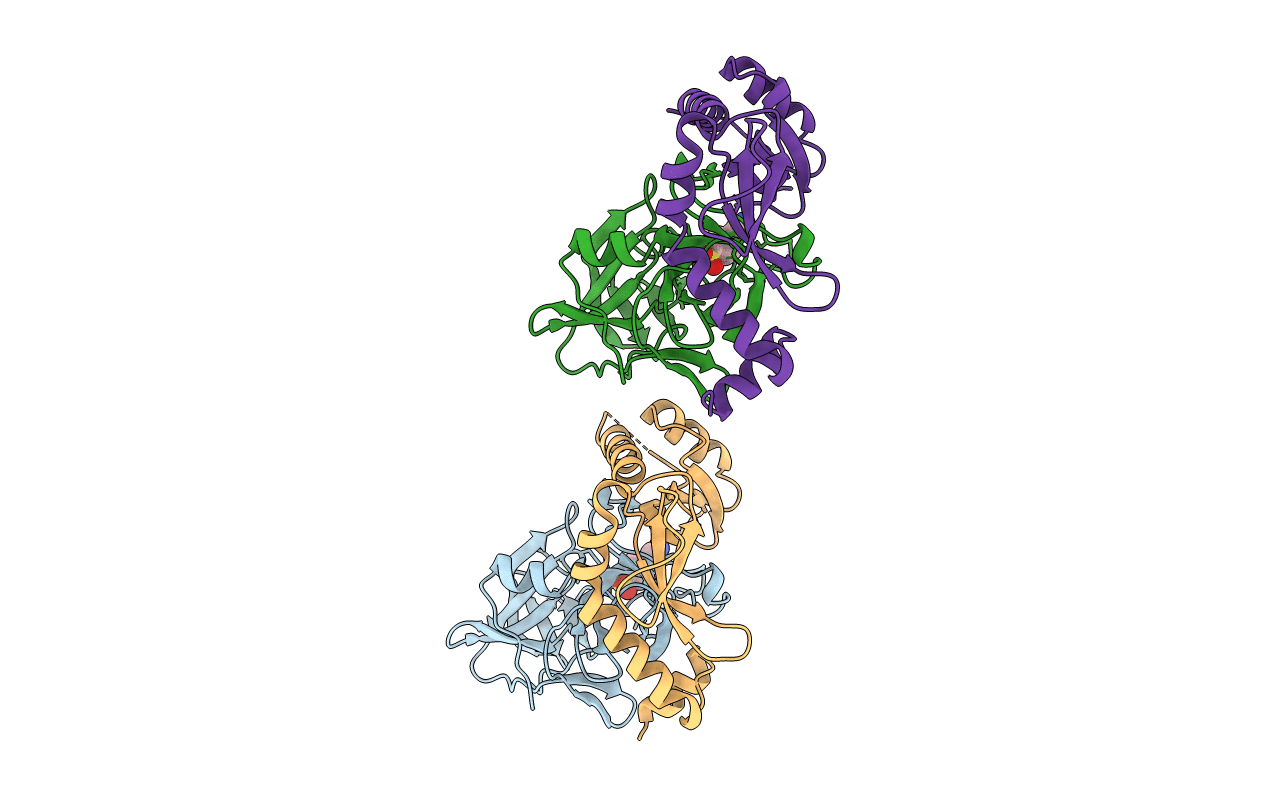
ALPHA-LYTIC PROTEASE COMPLEXED WITH C-TERMINAL TRUNCATED PRO REGION
Biological Source:
Source Organism(s):
Expression System(s):
Method Details:
Experimental Method:
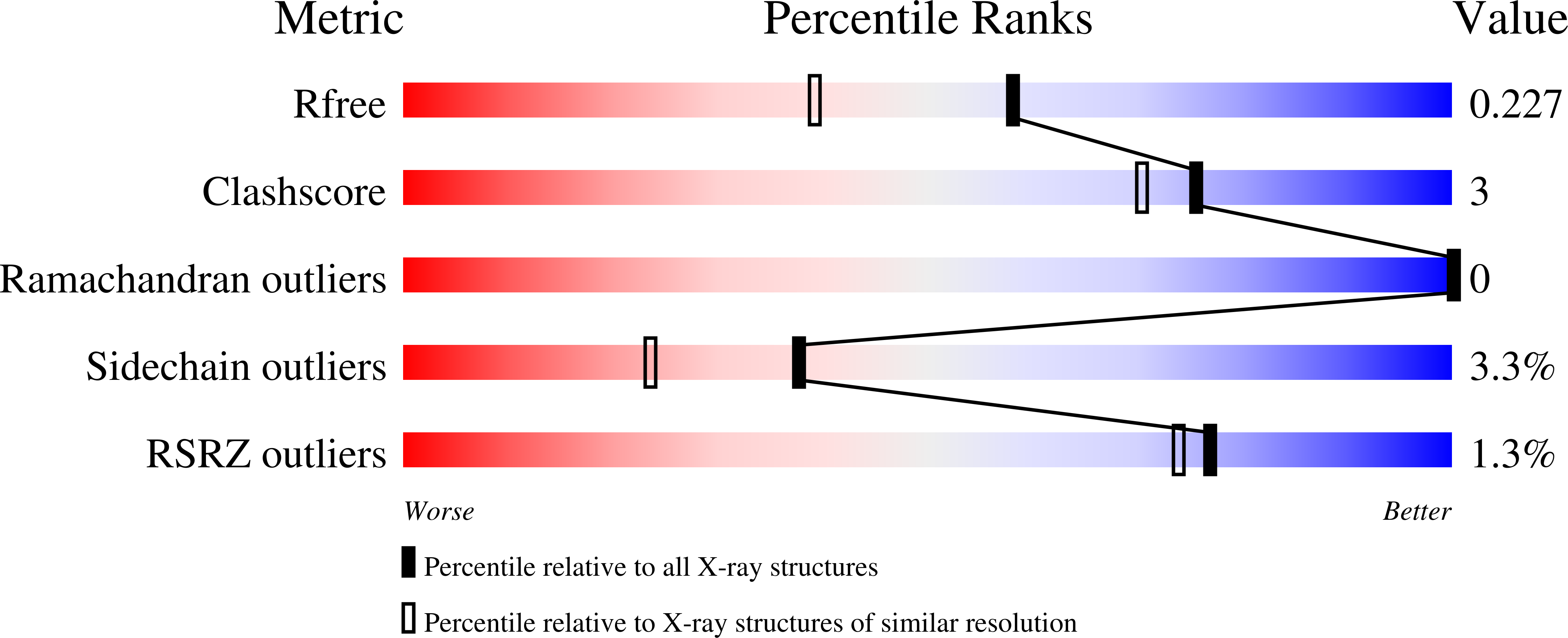
Resolution:
1.80 Å
R-Value Free:
0.23
R-Value Work:
0.20
R-Value Observed:
0.20
Space Group:
P 1 21 1
Macromolecular Entities
Structures with similar UniProt ID
Protein Blast
Polymer Type:polypeptide(L)
Molecule:ALPHA-LYTIC PROTEASE
Gene (Uniprot):alpha-LP
Mutagens:M158A
Chain IDs:A, C (auth: B)
Chain Length:198
Number of Molecules:2
Biological Source:Lysobacter enzymogenes
Structures with similar UniProt ID
Protein Blast
Polymer Type:polypeptide(L)
Molecule:ALPHA-LYTIC PROTEASE
Gene (Uniprot):alpha-LP
Chain IDs:B (auth: C), D
Chain Length:166
Number of Molecules:2
Biological Source:Lysobacter enzymogenes
Ligand Molecules
Primary Citation
Structure of alpha-lytic protease complexed with its pro region.
Nat. Struct. Biol. 5 945 950 (1998)
PMID: 9808037 DOI: 10.1038/2919

Abstact

While the majority of proteins fold rapidly and spontaneously to their native states, the extracellular bacterial protease alpha-lytic protease (alphaLP) has a t(1/2) for folding of approximately 2,000 years, corresponding to a folding barrier of 30 kcal mol(-1). AlphaLP is synthesized as a pro-enzyme where its pro region (Pro) acts as a foldase to stabilize the transition state for the folding reaction. Pro also functions as a potent folding catalyst when supplied as a separate polypeptide chain, accelerating the rate of alphaLP folding by a factor of 3 x 10(9). In the absence of Pro, alphaLP folds only partially to a stable molten globule-like intermediate state. Addition of Pro to this intermediate leads to rapid formation of native alphaLP. Here we report the crystal structures of Pro and of the non-covalent inhibitory complex between Pro and native alphaLP. The C-shaped Pro surrounds the C-terminal beta-barrel domain of the folded protease, forming a large complementary interface. Regions of extensive hydration in the interface explain how Pro binds tightly to the native state, yet even more tightly to the folding transition state. Based on structural and functional data we propose that a specific structural element in alphaLP is largely responsible for the folding barrier and suggest how Pro can overcome this barrier.

Legend

Protein

Chemical

Disease

Primary Citation of related structures
Feedback Form
Name
Email
Institute
Feedback