

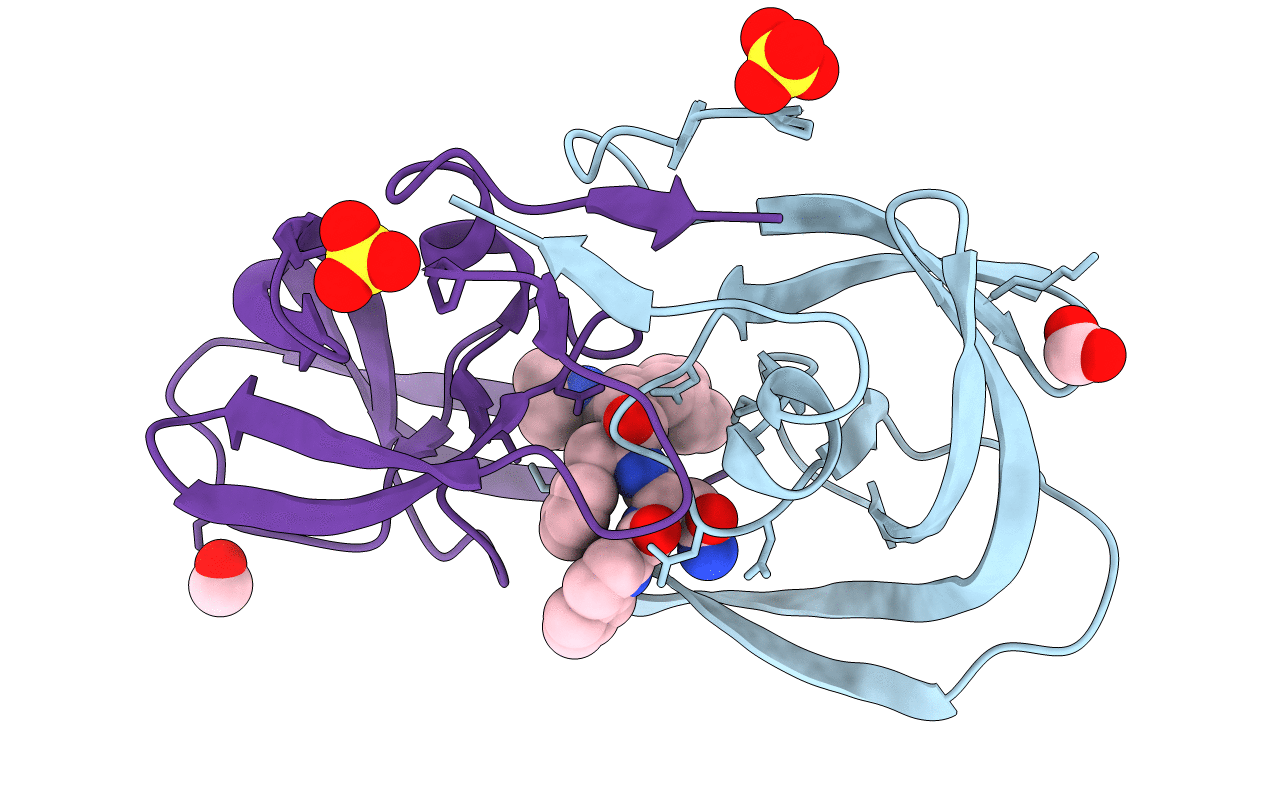
3OXC image
Deposition Date 2010-09-21
Release Date 2010-11-10
Last Version Date 2023-09-06
Entry Detail
PDB ID:
3OXC
Title:
Wild Type HIV-1 Protease with Antiviral Drug Saquinavir
Biological Source:
Source Organism(s):
Expression System(s):
Method Details:
Experimental Method:
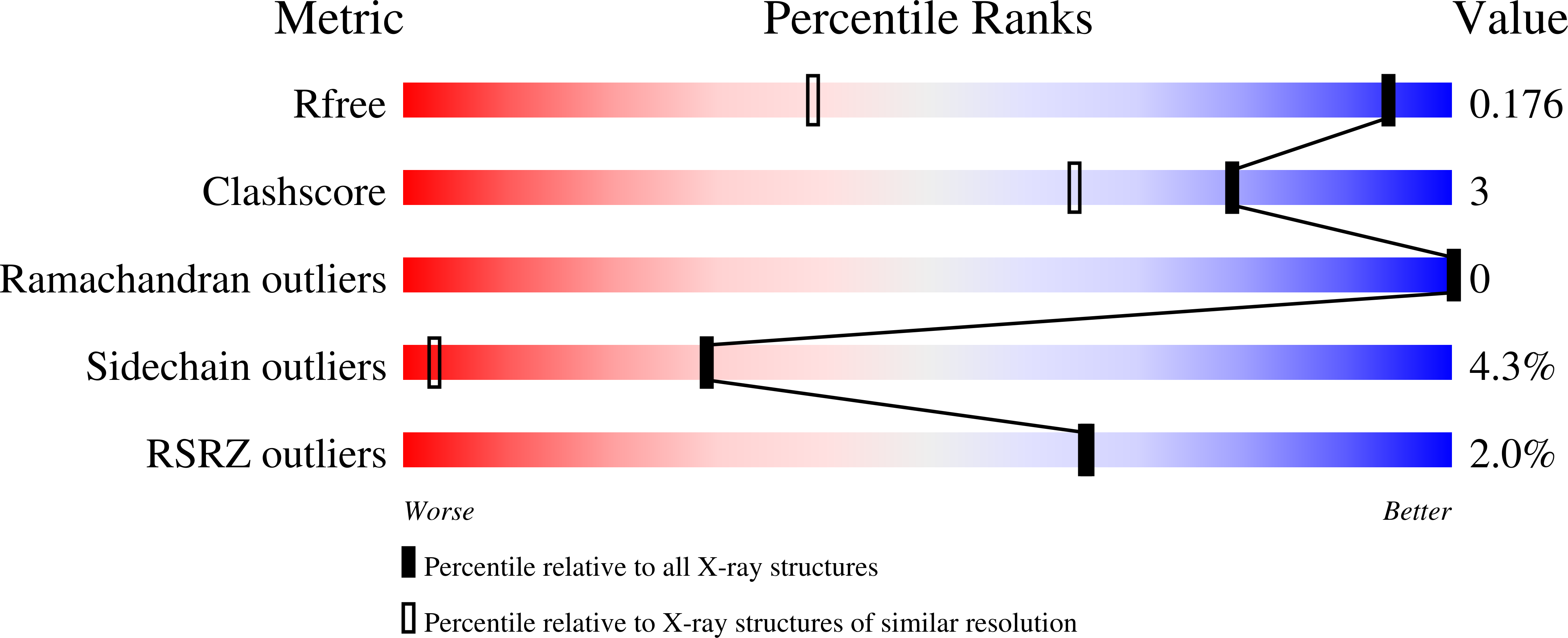
Resolution:
1.16 Å
R-Value Free:
0.17
R-Value Work:
0.13
R-Value Observed:
0.13
Space Group:
P 21 21 21
Macromolecular Entities
Structures with similar UniProt ID
Protein Blast
Polymer Type:polypeptide(L)
Molecule:Protease
Gene (Uniprot):pol
Mutagens:Q7K, L33I, L63I, C67A, C95A
Chain IDs:A, B
Chain Length:99
Number of Molecules:2
Biological Source:Human immunodeficiency virus 1
Peptide-like Molecules
PRD_000454
Primary Citation
Atomic resolution crystal structures of HIV-1 protease and mutants V82A and I84V with saquinavir
Proteins 67 232 242 (2007)
PMID: 17243183

Abstact

Saquinavir (SQV), the first antiviral HIV-1 protease (PR) inhibitor approved for AIDS therapy, has been studied in complexes with PR and the variants PR(I) (84V) and PR(V) (82A) containing the single mutations I84V and V82A that provide resistance to all the clinical inhibitors. Atomic resolution crystal structures (0.97-1.25 A) of the SQV complexes were analyzed in comparison to the protease complexes with darunavir, a new drug that targets resistant HIV, in order to understand the molecular basis of drug resistance. PR(I) (84V) and PR(V) (82A) complexes were obtained in both the space groups P2(1)2(1)2 and P2(1)2(1)2(1), which provided experimental limits for the conformational flexibility. The SQV interactions with PR were very similar in the mutant complexes, consistent with the similar inhibition constants. The mutation from bigger to smaller amino acids allows more space to accommodate the large group at P1' of SQV, unlike the reduced interactions observed in darunavir complexes. The residues 79-82 have adjusted to accommodate the large hydrophobic groups of SQV, suggesting that these residues are intrinsically flexible and their conformation depends more on the nature of the inhibitor than on the mutations in this region. This analysis will assist with development of more effective antiviral inhibitors.

Legend

Protein

Chemical

Disease

Primary Citation of related structures
Feedback Form
Name
Email
Institute
Feedback