

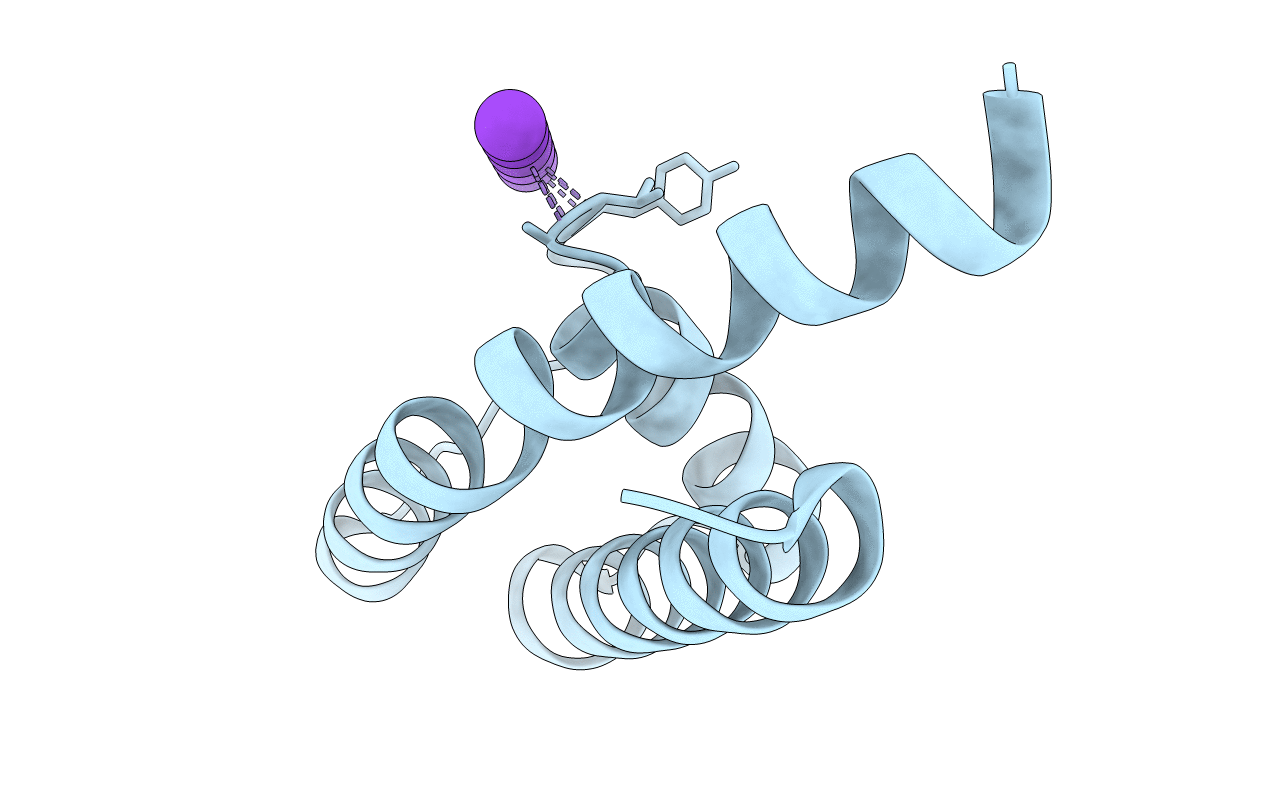
3OUS image
Deposition Date 2010-09-15
Release Date 2011-01-12
Last Version Date 2024-02-21
Entry Detail
PDB ID:
3OUS
Title:
MthK channel pore T59A mutant
Biological Source:
Source Organism(s):
Expression System(s):
Method Details:
Experimental Method:
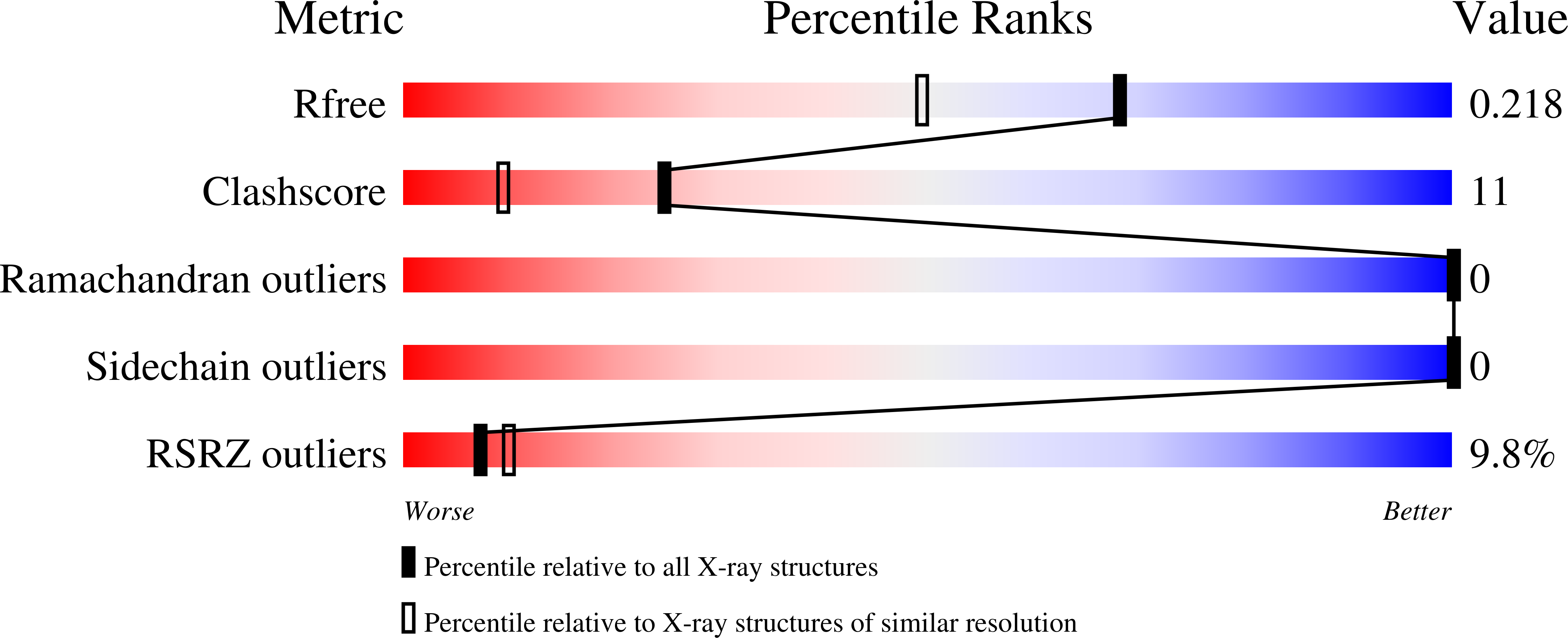
Resolution:
1.75 Å
R-Value Free:
0.23
R-Value Work:
0.21
Space Group:
P 4 21 2
Macromolecular Entities
Structures with similar UniProt ID
Protein Blast
Polymer Type:polypeptide(L)
Molecule:Calcium-gated potassium chann
Gene (Uniprot):mthK
Mutagens:T59A
Chain IDs:A
Chain Length:82
Number of Molecules:1
Biological Source:Methanothermobacter thermautotrophicus
Ligand Molecules
Primary Citation
Tuning the ion selectivity of tetrameric cation channels by changing the number of ion binding sites.
Proc. Natl. Acad. Sci. U.S.A. 108 598 602 (2011)
PMID: 21187421 DOI: 10.1073/pnas.1013636108

Abstact

Selective ion conduction across ion channel pores is central to cellular physiology. To understand the underlying principles of ion selectivity in tetrameric cation channels, we engineered a set of cation channel pores based on the nonselective NaK channel and determined their structures to high resolution. These structures showcase an ensemble of selectivity filters with a various number of contiguous ion binding sites ranging from 2 to 4, with each individual site maintaining a geometry and ligand environment virtually identical to that of equivalent sites in K(+) channel selectivity filters. Combined with single channel electrophysiology, we show that only the channel with four ion binding sites is K(+) selective, whereas those with two or three are nonselective and permeate Na(+) and K(+) equally well. These observations strongly suggest that the number of contiguous ion binding sites in a single file is the key determinant of the channel's selectivity properties and the presence of four sites in K(+) channels is essential for highly selective and efficient permeation of K(+) ions.

Legend

Protein

Chemical

Disease

Primary Citation of related structures
Feedback Form
Name
Email
Institute
Feedback