

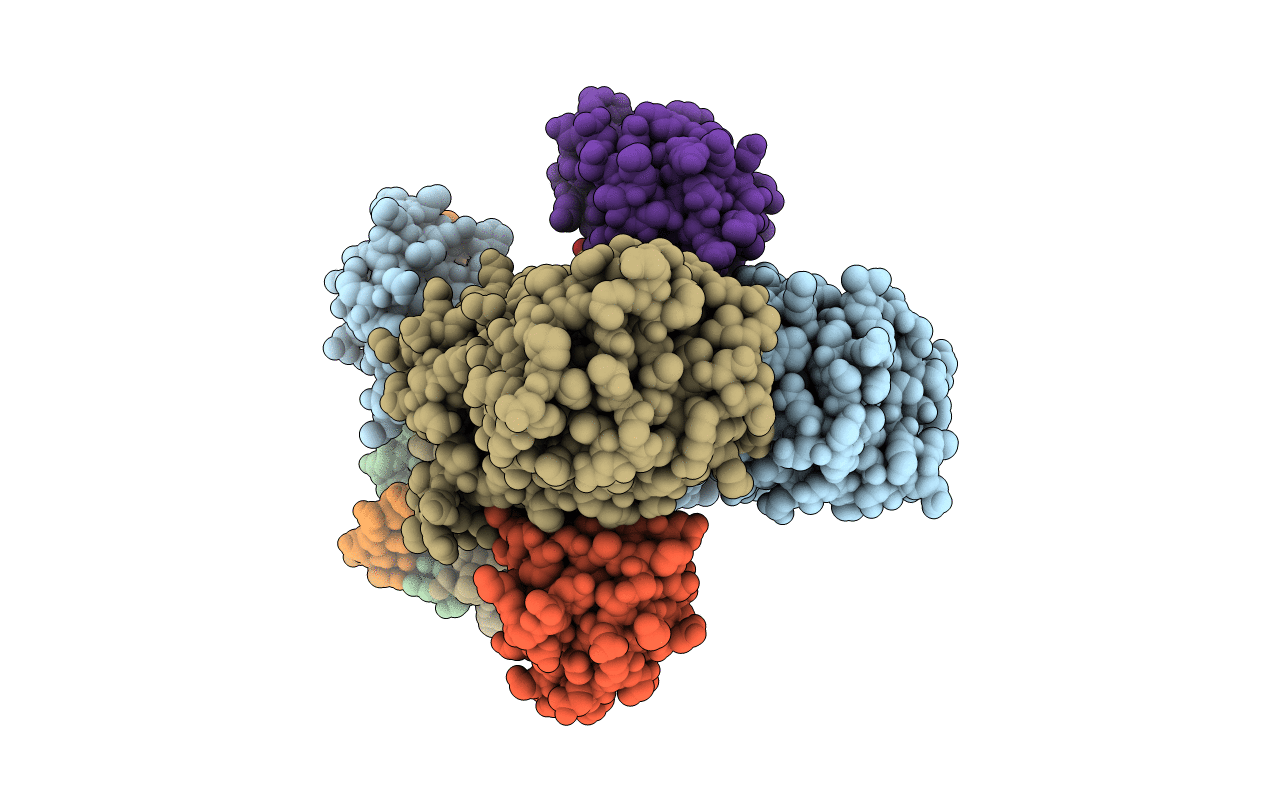
3OQO image
Deposition Date 2010-09-03
Release Date 2011-10-26
Last Version Date 2024-10-16
Entry Detail
PDB ID:
3OQO
Title:
Ccpa-hpr-ser46p-syn cre
Biological Source:
Source Organism(s):
Expression System(s):
Method Details:
Experimental Method:
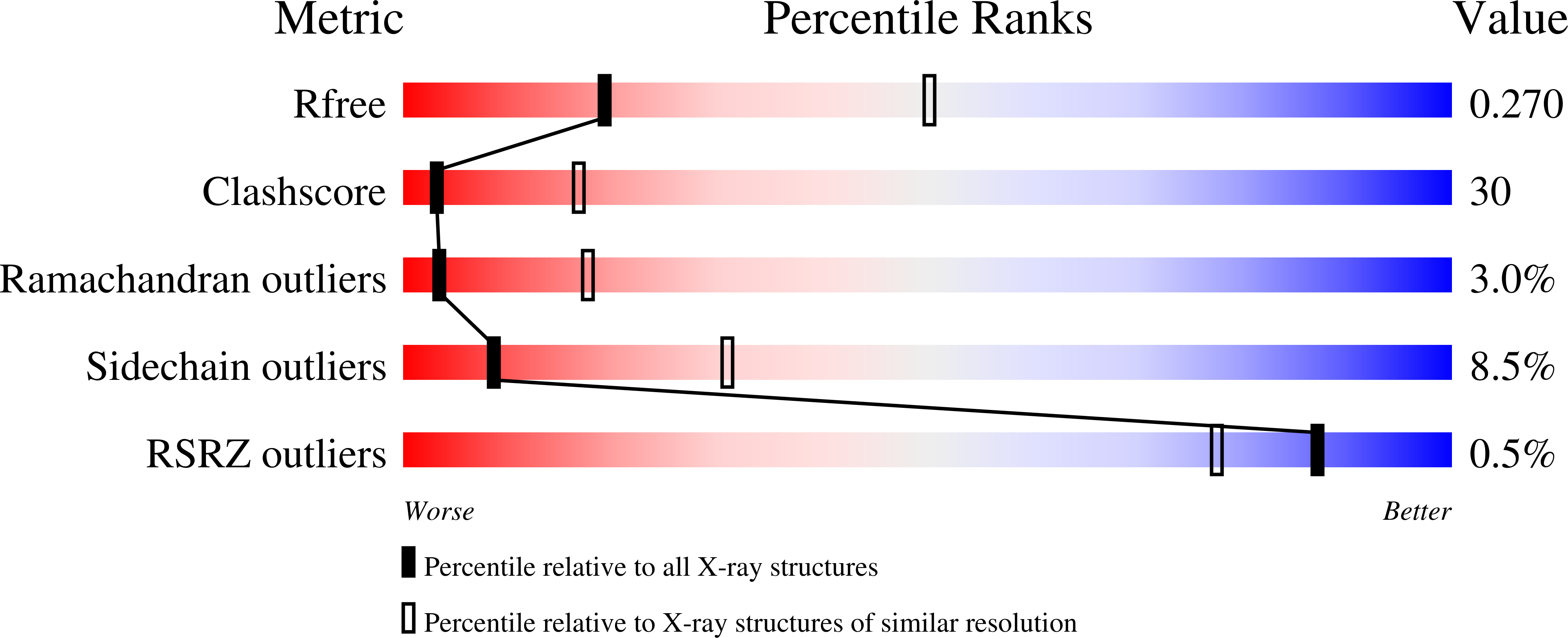
Resolution:
2.97 Å
R-Value Free:
0.27
R-Value Work:
0.21
R-Value Observed:
0.21
Space Group:
P 21 21 21
Macromolecular Entities
Structures with similar UniProt ID
Protein Blast
Polymer Type:polypeptide(L)
Molecule:Catabolite control protein A
Gene (Uniprot):ccpA
Chain IDs:A, C
Chain Length:339
Number of Molecules:2
Biological Source:Bacillus subtilis
Polymer Type:polydeoxyribonucleotide
Molecule:5'-D(*CP*TP*GP*AP*AP*AP*GP*CP
Chain IDs:F (auth: B)
Chain Length:16
Number of Molecules:1
Biological Source:Bacillus subtilis
Polymer Type:polydeoxyribonucleotide
Molecule:5'-D(*CP*TP*GP*TP*TP*AP*GP*CP
Chain IDs:E
Chain Length:16
Number of Molecules:1
Biological Source:Bacillus subtilis
Structures with similar UniProt ID
Protein Blast
Polymer Type:polypeptide(L)
Molecule:Phosphocarrier protein HPr
Gene (Uniprot):ptsH
Chain IDs:B (auth: S), D
Chain Length:87
Number of Molecules:2
Biological Source:Bacillus subtilis
Modified Residue
Compound ID Chain ID Parent Comp ID Details 2D Image
SEP B SER PHOSPHOSERINE
Ligand Molecules
Primary Citation
Structures of carbon catabolite protein A-(HPr-Ser46-P) bound to diverse catabolite response element sites reveal the basis for high-affinity binding to degenerate DNA operators.
Nucleic Acids Res. 39 2931 2942 (2011)
PMID: 21106498 DOI: 10.1093/nar/gkq1177

Abstact

In Gram-positive bacteria, carbon catabolite protein A (CcpA) is the master regulator of carbon catabolite control, which ensures optimal energy usage under diverse conditions. Unlike other LacI-GalR proteins, CcpA is activated for DNA binding by first forming a complex with the phosphoprotein HPr-Ser46-P. Bacillus subtilis CcpA functions as both a transcription repressor and activator and binds to more than 50 operators called catabolite response elements (cres). These sites are highly degenerate with the consensus, WTGNNARCGNWWWCAW. How CcpA-(HPr-Ser46-P) binds such diverse sequences is unclear. To gain insight into this question, we solved the structures of the CcpA-(HPr-Ser46-P) complex bound to three different operators, the synthetic (syn) cre, ackA2 cre and gntR-down cre. Strikingly, the structures show that the CcpA-bound operators display different bend angles, ranging from 31° to 56°. These differences are accommodated by a flexible linkage between the CcpA helix-turn-helix-loop-helix motif and hinge helices, which allows independent docking of these DNA-binding modules. This flexibility coupled with an abundance of non-polar residues capable of non-specific nucleobase interactions permits CcpA-(HPr-Ser46-P) to bind diverse operators. Indeed, biochemical data show that CcpA-(HPr-Ser46-P) binds the three cre sites with similar affinities. Thus, the data reveal properties that license this protein to function as a global transcription regulator.

Legend

Protein

Chemical

Disease

Primary Citation of related structures
Feedback Form
Name
Email
Institute
Feedback