

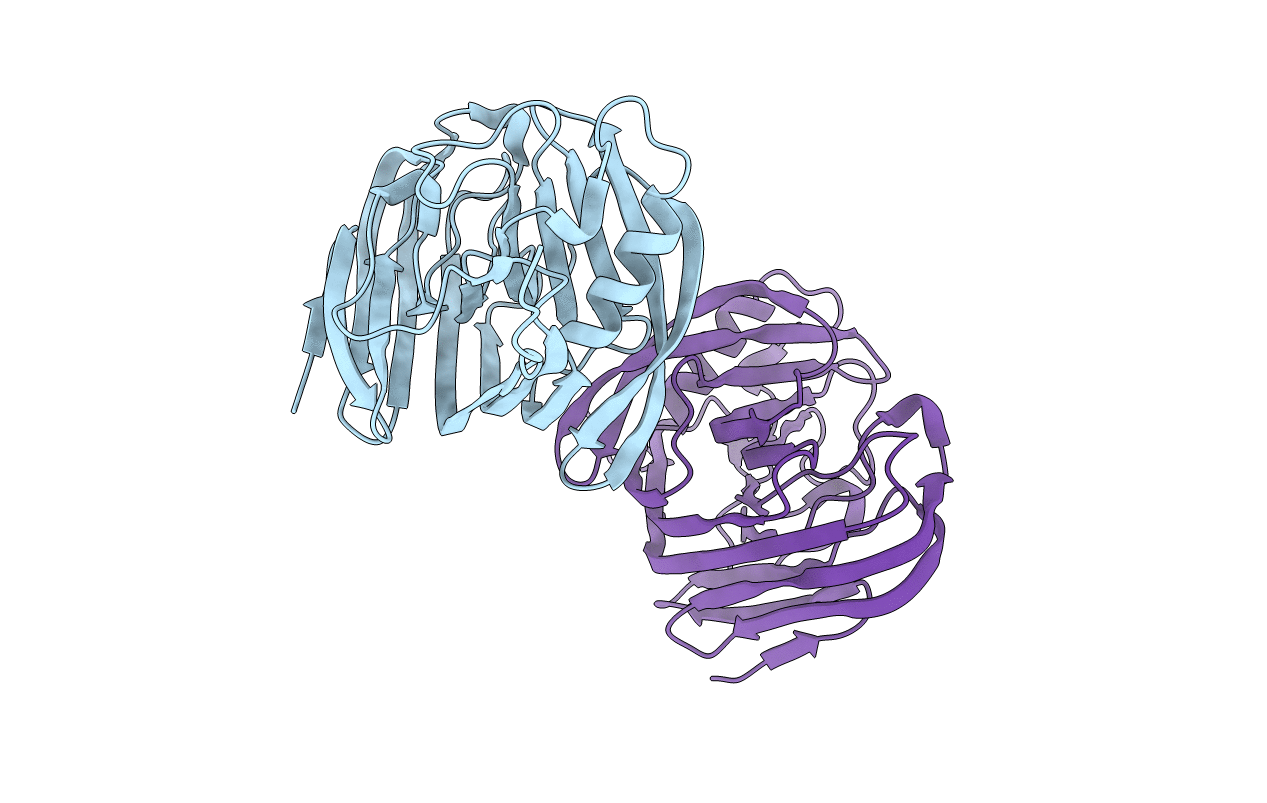
3O7O image
Deposition Date 2010-07-30
Release Date 2010-12-01
Last Version Date 2024-10-30
Entry Detail
PDB ID:
3O7O
Keywords:
Title:
Use of synthetic symmetrization in the crystallization and structure determination of CelA from Thermotoga maritima
Biological Source:
Source Organism(s):
Expression System(s):
Method Details:
Experimental Method:
Resolution:
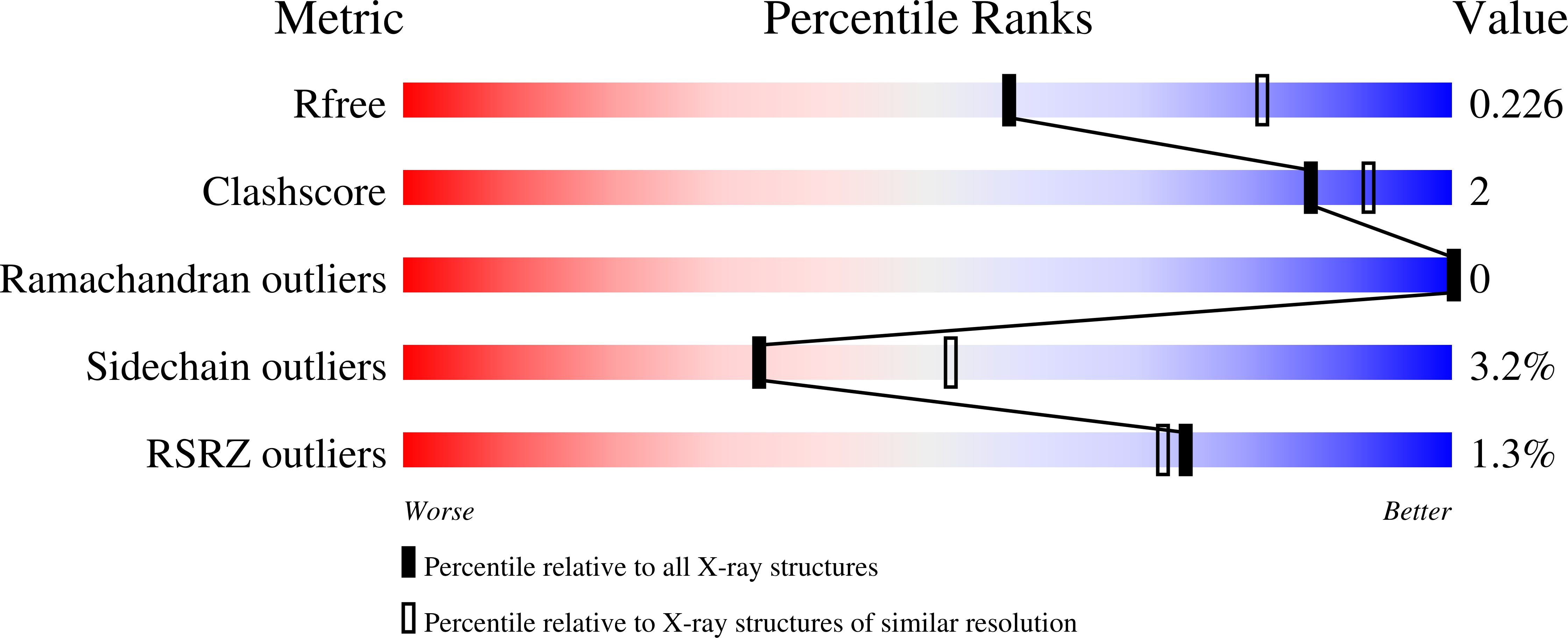
2.41 Å
R-Value Free:
0.21
R-Value Work:
0.17
R-Value Observed:
0.17
Space Group:
P 63
Macromolecular Entities
Structures with similar UniProt ID
Protein Blast
Polymer Type:polypeptide(L)
Molecule:Endoglucanase
Gene (Uniprot):TM_1524
Mutagens:D188C
Chain IDs:A, B
Chain Length:264
Number of Molecules:2
Biological Source:Thermotoga maritima
Ligand Molecules
Primary Citation
Synthetic symmetrization in the crystallization and structure determination of CelA from Thermotoga maritima.
Protein Sci. 20 168 178 (2011)
PMID: 21082721 DOI: 10.1002/pro.550

Abstact

Protein crystallization continues to be a major bottleneck in X-ray crystallography. Previous studies suggest that symmetric proteins, such as homodimers, might crystallize more readily than monomeric proteins or asymmetric complexes. Proteins that are naturally monomeric can be made homodimeric artificially. Our approach is to create homodimeric proteins by introducing single cysteines into the protein of interest, which are then oxidized to form a disulfide bond between the two monomers. By introducing the single cysteine at different sequence positions, one can produce a variety of synthetically dimerized versions of a protein, with each construct expected to exhibit its own crystallization behavior. In earlier work, we demonstrated the potential utility of the approach using T4 lysozyme as a model system. Here we report the successful application of the method to Thermotoga maritima CelA, a thermophilic endoglucanase enzyme with low sequence identity to proteins with structures previously reported in the Protein Data Bank. This protein had resisted crystallization in its natural monomeric form, despite a broad survey of crystallization conditions. The synthetic dimerization of the CelA mutant D188C yielded well-diffracting crystals with molecules in a packing arrangement that would not have occurred with native, monomeric CelA. A 2.4 Å crystal structure was determined by single anomalous dispersion using a seleno-methionine derivatized protein. The results support the notion that synthetic symmetrization can be a useful approach for enlarging the search space for crystallizing monomeric proteins or asymmetric complexes.

Legend

Protein

Chemical

Disease

Primary Citation of related structures
Feedback Form
Name
Email
Institute
Feedback