

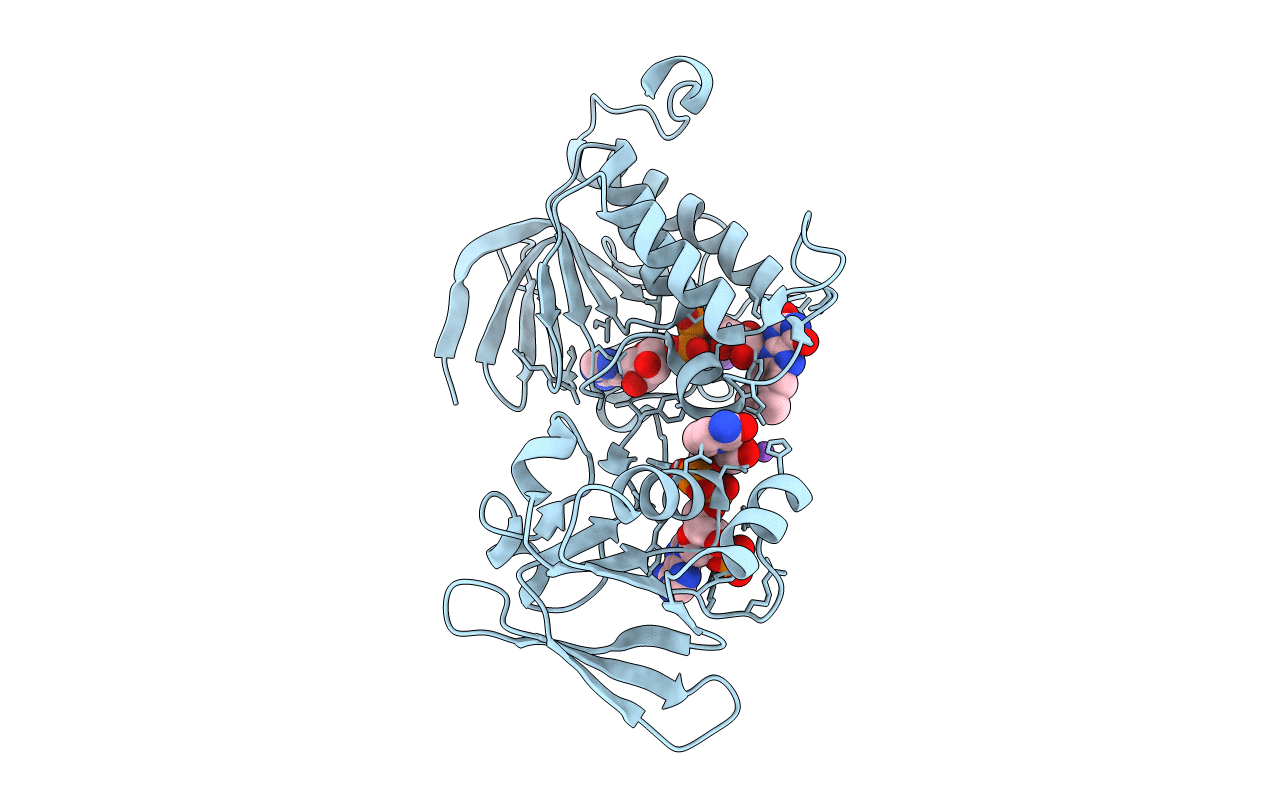
3LZW image
Deposition Date 2010-03-02
Release Date 2010-12-08
Last Version Date 2023-11-01
Entry Detail
PDB ID:
3LZW
Keywords:
Title:
Crystal structure of ferredoxin-NADP+ oxidoreductase from bacillus subtilis (form I)
Biological Source:
Source Organism(s):
Expression System(s):
Method Details:
Experimental Method:
Resolution:
1.80 Å
R-Value Free:
0.19
R-Value Work:
0.16
R-Value Observed:
0.17
Space Group:
P 21 21 2
Macromolecular Entities
Structures with similar UniProt ID
Protein Blast
Polymer Type:polypeptide(L)
Molecule:Ferredoxin--NADP reductase 2
Gene (Uniprot):yumC
Chain IDs:A
Chain Length:332
Number of Molecules:1
Biological Source:Bacillus subtilis
Primary Citation
Crystal structure analysis of Bacillus subtilis ferredoxin-NADP(+) oxidoreductase and the structural basis for its substrate selectivity
Protein Sci. 19 2279 2290 (2010)
PMID: 20878669 DOI: 10.1002/pro.508

Abstact

Bacillus subtilis yumC encodes a novel type of ferredoxin-NADP+ oxidoreductase (FNR) with a primary sequence and oligomeric conformation distinct from those of previously known FNRs. In this study, the crystal structure of B. subtilis FNR (BsFNR) complexed with NADP+ has been determined. BsFNR features two distinct binding domains for FAD and NADPH in accordance with its structural similarity to Escherichia coli NADPH-thioredoxin reductase (TdR) and TdR-like protein from Thermus thermophilus HB8 (PDB code: 2ZBW). The deduced mode of NADP+ binding to the BsFNR molecule is nonproductive in that the nicotinamide and isoalloxazine rings are over 15 Å apart. A unique C-terminal extension, not found in E. coli TdR but in TdR-like protein from T. thermophilus HB8, covers the re-face of the isoalloxazine moiety of FAD. In particular, Tyr50 in the FAD-binding region and His324 in the C-terminal extension stack on the si- and re-faces of the isoalloxazine ring of FAD, respectively. Aromatic residues corresponding to Tyr50 and His324 are also found in the plastid-type FNR superfamily of enzymes, and the residue corresponding to His324 has been reported to be responsible for nucleotide specificity. In contrast to the plastid-type FNRs, replacement of His324 with Phe or Ser had little effect on the specificity or reactivity of BsFNR with NAD(P)H, whereas replacement of Arg190, which interacts with the 2'-phosphate of NADP+, drastically decreased its affinity toward NADPH. This implies that BsFNR adopts the same nucleotide binding mode as the TdR enzyme family and that aromatic residue on the re-face of FAD is hardly relevant to the nucleotide selectivity.

Legend

Protein

Chemical

Disease

Primary Citation of related structures
Feedback Form
Name
Email
Institute
Feedback