

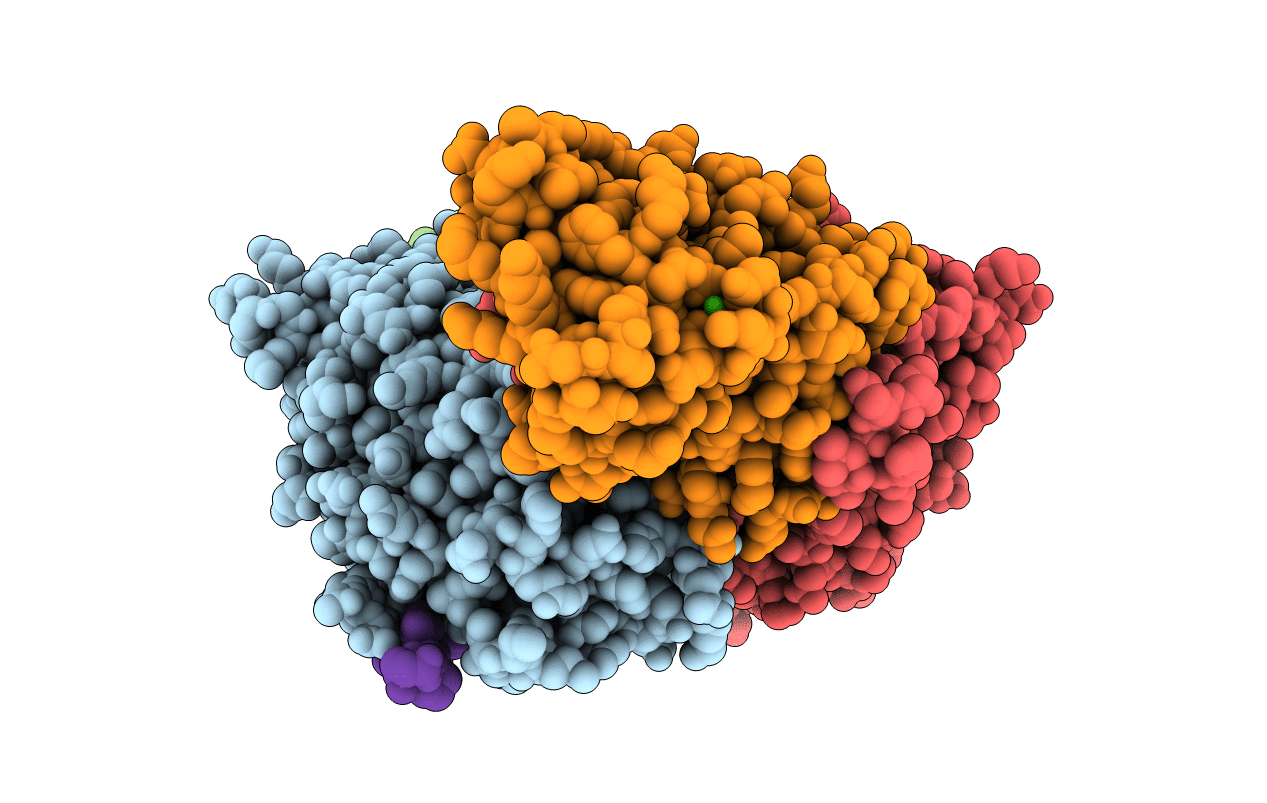
3LL8 image
Deposition Date 2010-01-28
Release Date 2011-01-12
Last Version Date 2024-02-21
Entry Detail
PDB ID:
3LL8
Title:
Crystal Structure of Calcineurin in Complex with AKAP79 Peptide
Biological Source:
Source Organism(s):
Homo sapiens (Taxon ID: 9606)
Expression System(s):
Method Details:
Experimental Method:
Resolution:
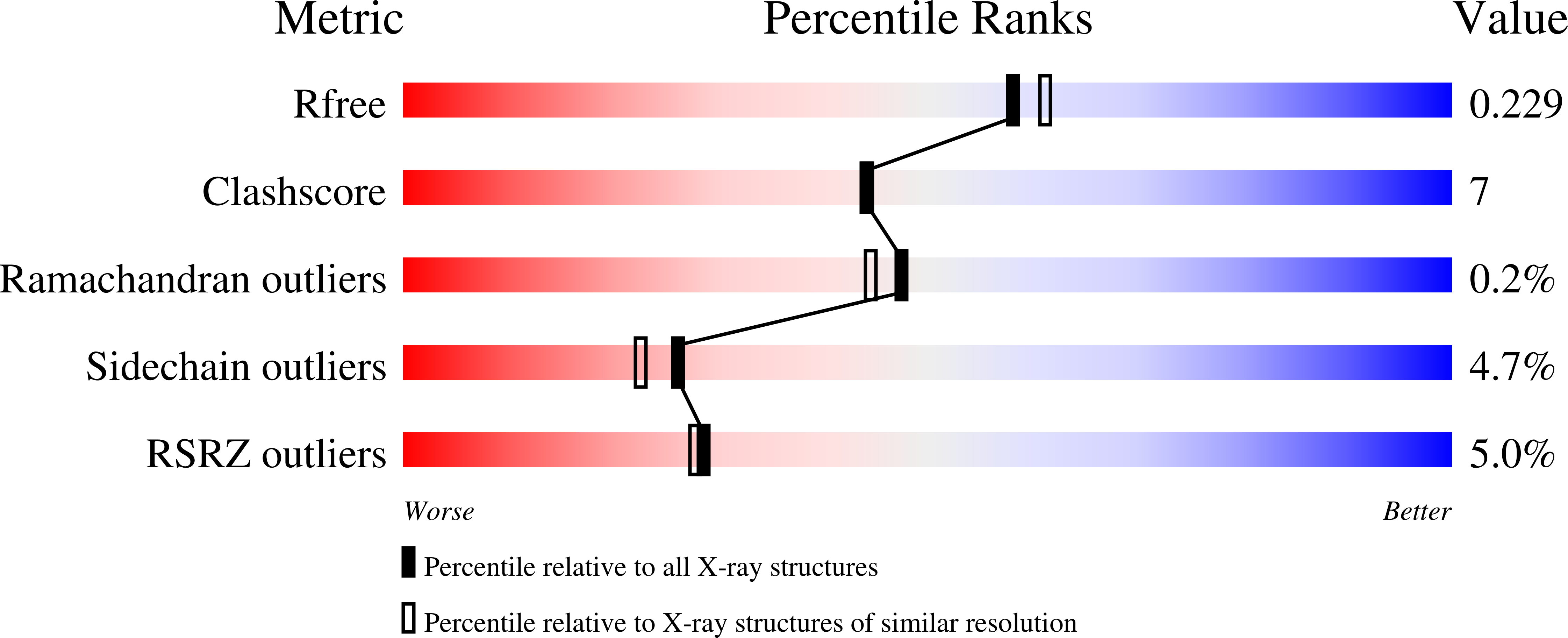
2.00 Å
R-Value Free:
0.22
R-Value Work:
0.17
R-Value Observed:
0.17
Space Group:
P 21 21 21
Macromolecular Entities
Structures with similar UniProt ID
Protein Blast
Polymer Type:polypeptide(L)
Molecule:Serine/threonine-protein phos
Gene (Uniprot):PPP3CA
Chain IDs:B (auth: A), D (auth: C)
Chain Length:357
Number of Molecules:2
Biological Source:Homo sapiens
Structures with similar UniProt ID
Protein Blast
Polymer Type:polypeptide(L)
Molecule:Calcineurin subunit B type 1
Gene (Uniprot):PPP3R1
Chain IDs:C (auth: B), E (auth: D)
Chain Length:155
Number of Molecules:2
Biological Source:Homo sapiens
Structures with similar UniProt ID
Protein Blast
Polymer Type:polypeptide(L)
Molecule:AKAP79 peptide
Gene (Uniprot):AKAP5
Chain IDs:A (auth: E)
Chain Length:11
Number of Molecules:1
Biological Source:Homo sapiens
Primary Citation
Balanced interactions of calcineurin with AKAP79 regulate Ca(2+)-calcineurin-NFAT signaling.
Nat. Struct. Mol. Biol. 19 337 345 (2012)
PMID: 22343722 DOI: 10.1038/nsmb.2238

Abstact

In hippocampal neurons, the scaffold protein AKAP79 recruits the phosphatase calcineurin to L-type Ca(2+) channels and couples Ca(2+) influx to activation of calcineurin and of its substrate, the transcription factor NFAT. Here we show that an IAIIIT anchoring site in human AKAP79 binds the same surface of calcineurin as the PxIxIT recognition peptide of NFAT, albeit more strongly. A modest decrease in calcineurin-AKAP affinity due to an altered anchoring sequence is compatible with NFAT activation, whereas a further decrease impairs activation. Counterintuitively, increasing calcineurin-AKAP affinity increases recruitment of calcineurin to the scaffold but impairs NFAT activation; this is probably due to both slower release of active calcineurin from the scaffold and sequestration of active calcineurin by 'decoy' AKAP sites. We propose that calcineurin-AKAP79 scaffolding promotes NFAT signaling by balancing strong recruitment of calcineurin with its efficient release to communicate with NFAT.

Legend

Protein

Chemical

Disease

Primary Citation of related structures
Feedback Form
Name
Email
Institute
Feedback