

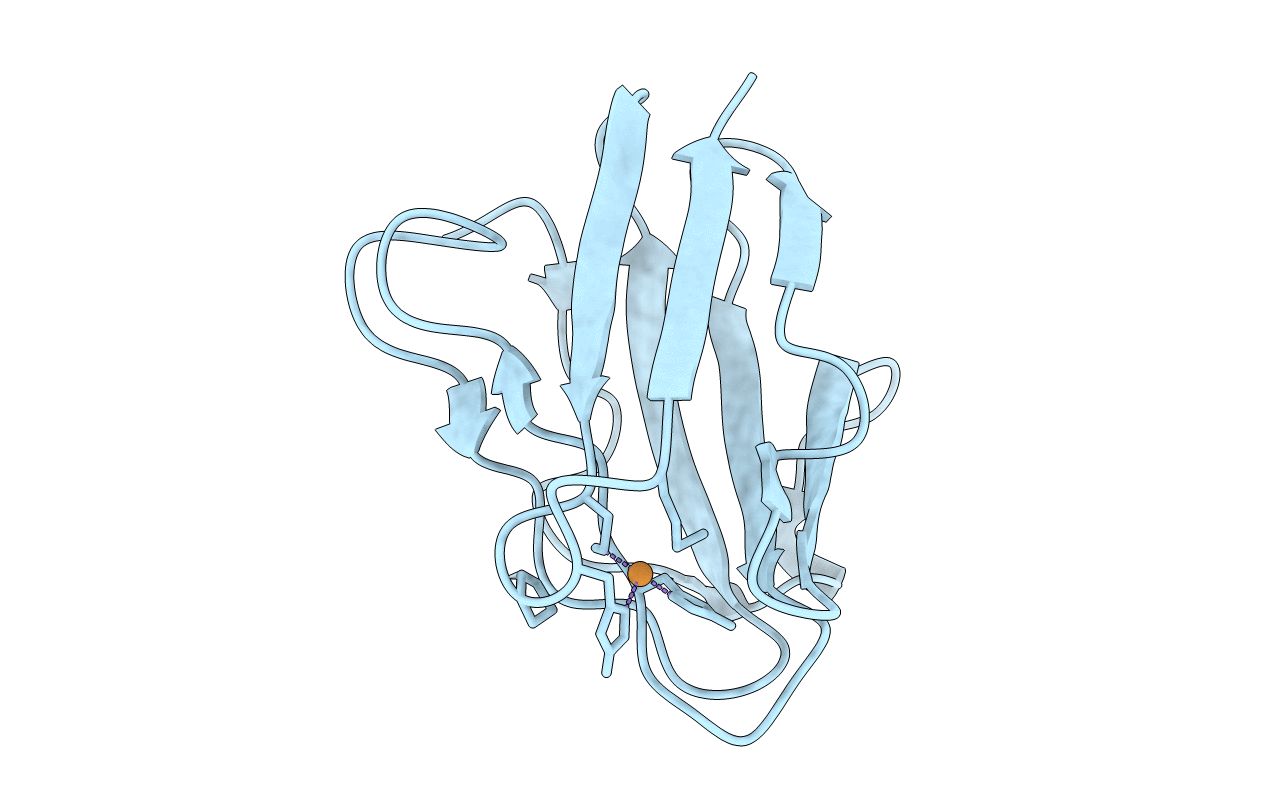
3L45 image
Deposition Date 2009-12-18
Release Date 2010-04-28
Last Version Date 2023-09-13
Entry Detail
PDB ID:
3L45
Title:
A Joint Neutron and X-ray structure of Oxidized Amicyanin
Biological Source:
Source Organism(s):
Expression System(s):
Method Details:
R-Value Free:
['0.23
R-Value Work:
['0.20
R-Value Observed:
['0.20
Space Group:
P 1 21 1
Macromolecular Entities
Structures with similar UniProt ID
Protein Blast
Polymer Type:polypeptide(L)
Molecule:Amicyanin
Gene (Uniprot):mauC
Chain IDs:A
Chain Length:105
Number of Molecules:1
Biological Source:Paracoccus denitrificans
Primary Citation
A joint x-ray and neutron study on amicyanin reveals the role of protein dynamics in electron transfer.
Proc. Natl. Acad. Sci. U.S.A. 107 6817 6822 (2010)
PMID: 20351252 DOI: 10.1073/pnas.0912672107

Abstact

The joint x-ray/neutron diffraction model of the Type I copper protein, amicyanin from Paracoccus denitrificans was determined at 1.8 A resolution. The protein was crystallized using reagents prepared in D(2)O. About 86% of the amide hydrogen atoms are either partially or fully exchanged, which correlates well with the atomic depth of the amide nitrogen atom and the secondary structure type, but with notable exceptions. Each of the four residues that provide copper ligands is partially deuterated. The model reveals the dynamic nature of the protein, especially around the copper-binding site. A detailed analysis of the presence of deuterated water molecules near the exchange sites indicates that amide hydrogen exchange is primarily due to the flexibility of the protein. Analysis of the electron transfer path through the protein shows that residues in that region are highly dynamic, as judged by hydrogen/deuterium exchange. This could increase the rate of electron transfer by transiently shortening through-space jumps in pathways or by increasing the atomic packing density. Analysis of C-HX bonding reveals previously undefined roles of these relatively weak H bonds, which, when present in sufficient number can collectively influence the structure, redox, and electron transfer properties of amicyanin.

Legend

Protein

Chemical

Disease

Primary Citation of related structures
Feedback Form
Name
Email
Institute
Feedback