

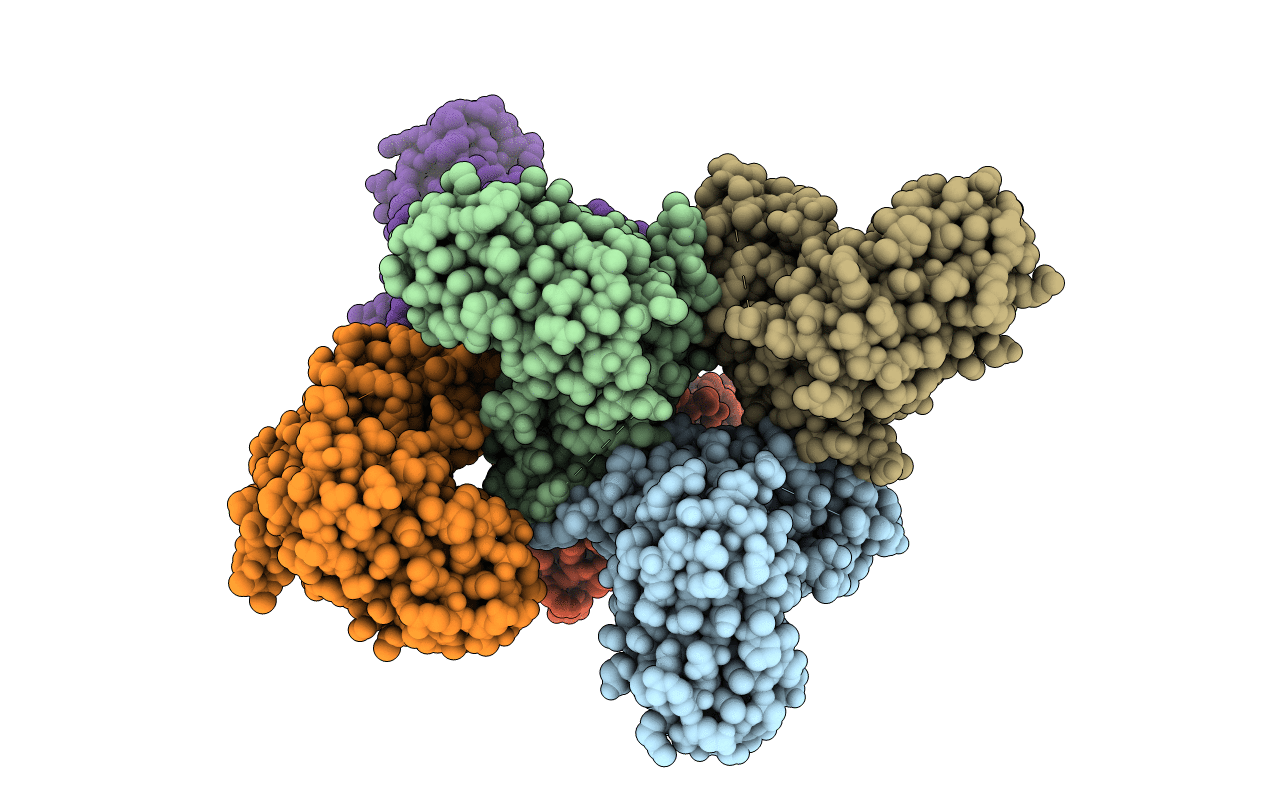
3JUY image
Deposition Date 2009-09-15
Release Date 2009-12-08
Last Version Date 2024-11-27
Entry Detail
PDB ID:
3JUY
Keywords:
Title:
Crystal Structure of a 3B3 Variant, a Broadly Neutralizing HIV-1 scFv Antibody
Biological Source:
Source Organism(s):
Homo sapiens (Taxon ID: 9606)
Expression System(s):
Method Details:
Experimental Method:
Resolution:
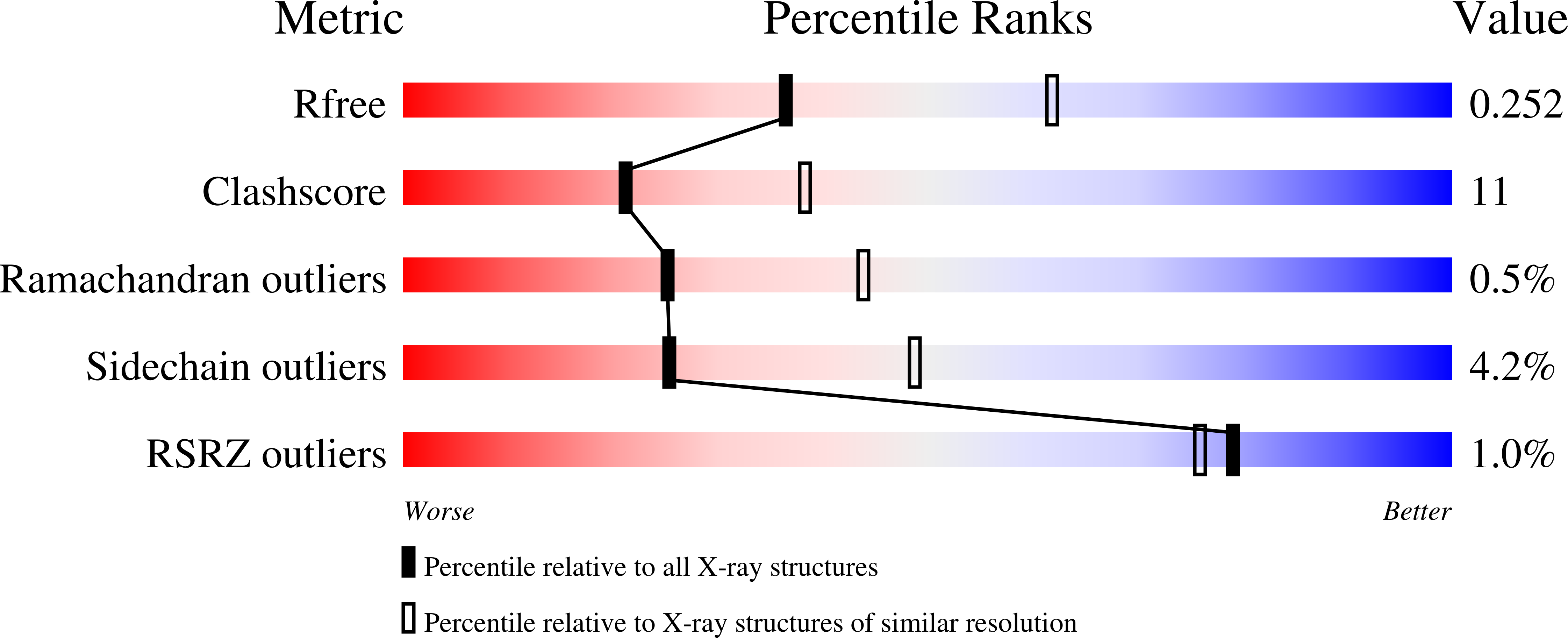
2.50 Å
R-Value Free:
0.26
R-Value Work:
0.19
R-Value Observed:
0.20
Space Group:
C 1 2 1
Macromolecular Entities
Structures with similar UniProt ID
Protein Blast
Polymer Type:polypeptide(L)
Molecule:3B3 single chain variant HIV-
Chain IDs:A (auth: B), B (auth: A), C, D (auth: E), E (auth: F), F (auth: D)
Chain Length:256
Number of Molecules:6
Biological Source:Homo sapiens
Primary Citation
Crystal structure of a 3B3 variant-A broadly neutralizing HIV-1 scFv antibody.
Protein Sci. 18 2429 2441 (2009)
PMID: 19785005 DOI: 10.1002/pro.255

Abstact

We present the crystal structure determination of an anti-HIV-1 gp120 single-chain variable fragment antibody variant, 3B3, at 2.5 A resolution. This 3B3 variant was derived from the b12 antibody, using phage display and site-directed mutagenesis of the variable heavy chain (V(H)) complementary-determining regions (CDRs). 3B3 exhibits enhanced binding affinity and neutralization activity against several cross-clade primary isolates of HIV-1 by interaction with the recessed CD4-binding site on the gp120 envelope protein. Comparison with the structures of the unbound and bound forms of b12, the 3B3 structure closely resembles these structures with minimal differences with two notable exceptions. First, there is a reorientation of the CDR-H3 of the V(H) domain where the primary sequences evolved from b12 to 3B3. The structural changes in CDR-H3 of 3B3, in light of the b12-gp120 complex structure, allow for positioning an additional Trp side chain in the binding interface with gp120. Finally, the second region of structural change involves two peptide bond flips in CDR-L3 of the variable light (V(L)) domain triggered by a point mutation in CDR-H3 of Q100eY resulting in changes in the intramolecular hydrogen bonding patterning between the V(L) and V(H) domains. Thus, the enhanced binding affinities and neutralization capabilities of 3B3 relative to b12 probably result from higher hydrophobic driving potential by burying more aromatic residues at the 3B3-gp120 interface and by indirect stabilization of intramolecular contacts of the core framework residues between the V(L) and V(H) domains possibly through more favorable entropic effect through the expulsion of water.

Legend

Protein

Chemical

Disease

Primary Citation of related structures
Feedback Form
Name
Email
Institute
Feedback