

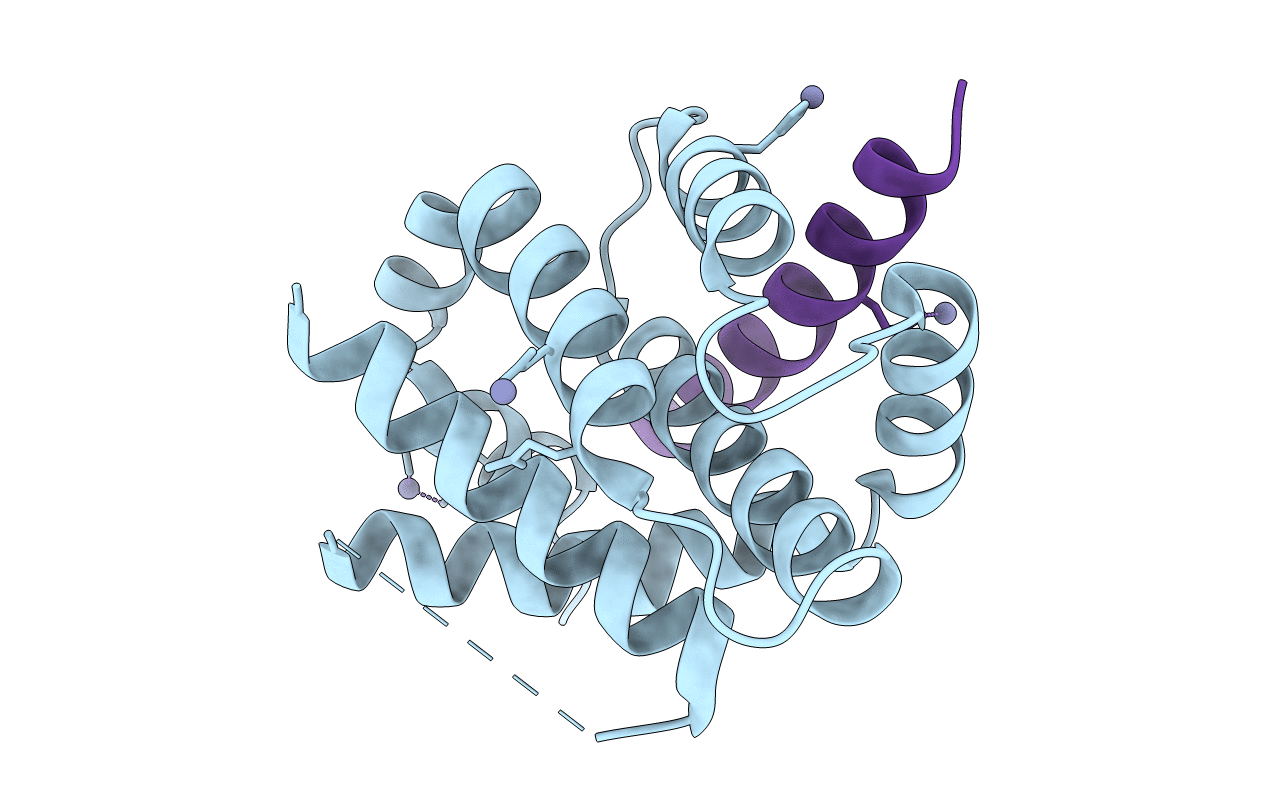
3IO9 image
Deposition Date 2009-08-14
Release Date 2009-09-01
Last Version Date 2023-09-06
Entry Detail
PDB ID:
3IO9
Keywords:
Title:
BimL12Y in complex with Mcl-1
Biological Source:
Source Organism(s):
Homo sapiens (Taxon ID: 9606)
Mus musculus (Taxon ID: 10090)
Expression System(s):
Method Details:
Experimental Method:
Resolution:
2.40 Å
R-Value Free:
0.25
R-Value Work:
0.20
R-Value Observed:
0.21
Space Group:
I 2 2 2
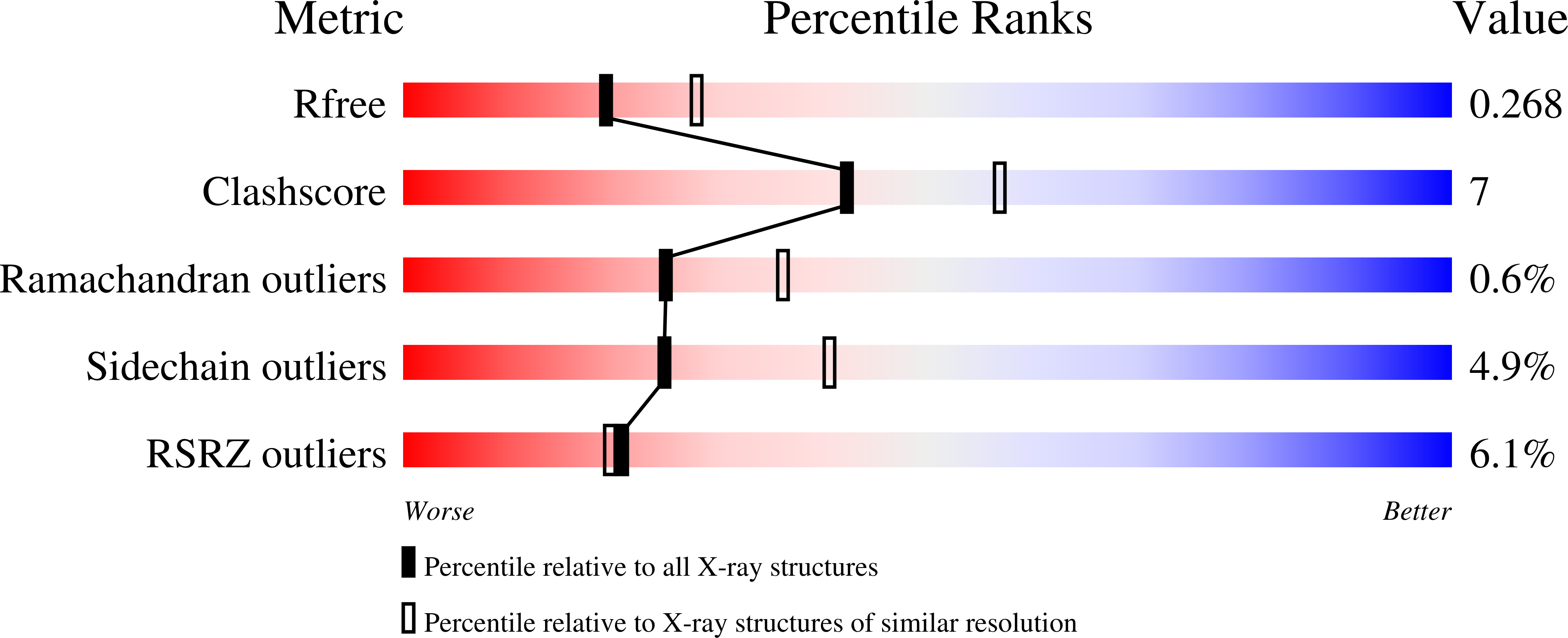
Macromolecular Entities
Protein Blast
Polymer Type:polypeptide(L)
Molecule:Induced myeloid leukemia cell
Gene (Uniprot):Mcl1, MCL1
Chain IDs:A
Chain Length:162
Number of Molecules:1
Biological Source:Homo sapiens, Mus musculus
Structures with similar UniProt ID
Protein Blast
Polymer Type:polypeptide(L)
Molecule:Bcl-2-like protein 11
Gene (Uniprot):BCL2L11
Mutagens:L152P
Chain IDs:B
Chain Length:26
Number of Molecules:1
Biological Source:Homo sapiens
Ligand Molecules
Primary Citation
Conformational changes in Bcl-2 pro-survival proteins determine their capacity to bind ligands.
J. Biol. Chem. 284 30508 30517 (2009)
PMID: 19726685 DOI: 10.1074/jbc.M109.040725

Abstact

Antagonists of anti-apoptotic Bcl-2 family members hold promise as cancer therapeutics. Apoptosis is triggered when a peptide containing a BH3 motif or a small molecule BH3 peptidomimetic, such as ABT 737, binds to the relevant Bcl-2 family members. ABT-737 is an antagonist of Bcl-2, Bcl-x(L), and Bcl-w but not of Mcl-1. Here we describe new structures of mutant BH3 peptides bound to Bcl-x(L) and Mcl-1. These structures suggested a rationale for the failure of ABT-737 to bind Mcl-1, but a designed variant of ABT-737 failed to acquire binding affinity for Mcl-1. Rather, it was selective for Bcl-x(L), a result attributable in part to significant backbone refolding and movements of helical segments in its ligand binding site. To date there are few reported crystal structures of organic ligands in complex with their pro-survival protein targets. Our structure of this new organic ligand provided insights into the structural transitions that occur within the BH3 binding groove, highlighting significant differences in the structural properties of members of the Bcl-2 pro-survival protein family. Such differences are likely to influence and be important in the quest for compounds capable of selectively antagonizing the different family members.

Legend

Protein

Chemical

Disease

Primary Citation of related structures
Feedback Form
Name
Email
Institute
Feedback