

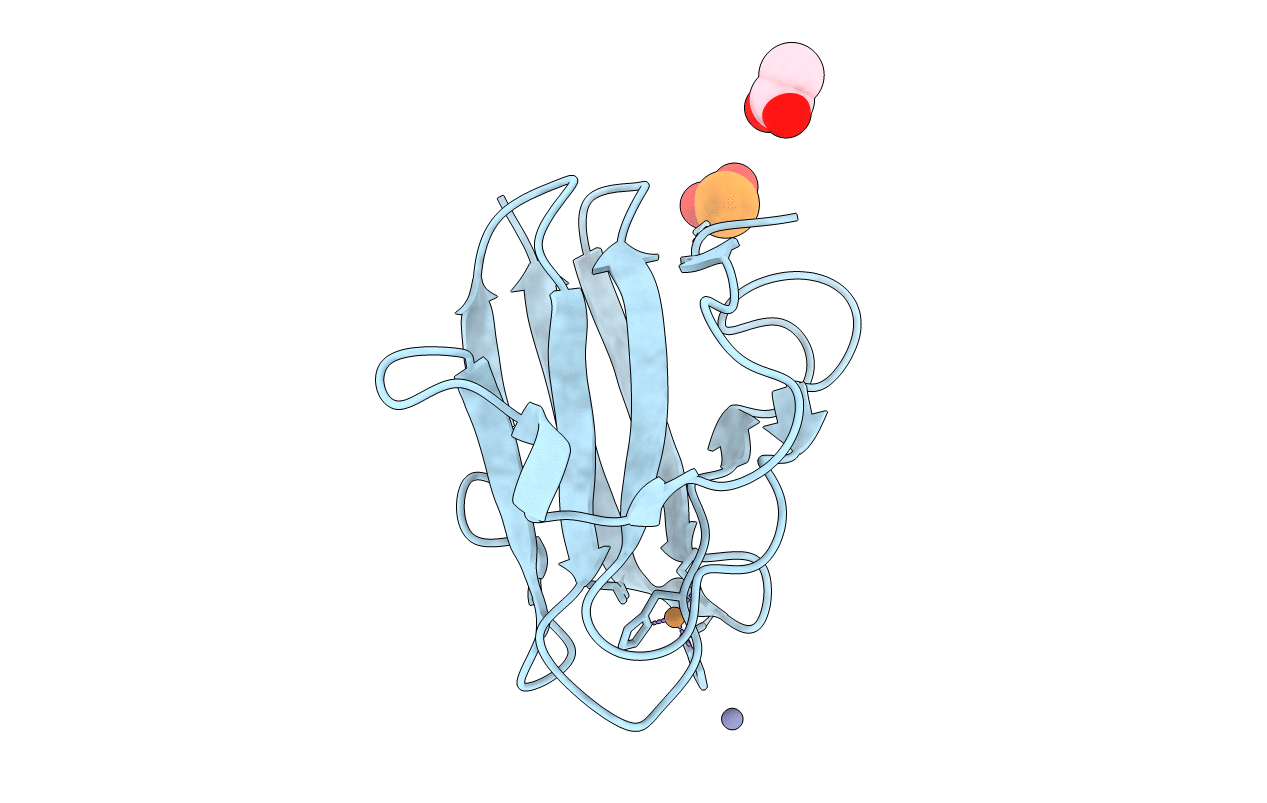
3IEA image
Deposition Date 2009-07-22
Release Date 2009-10-06
Last Version Date 2023-09-06
Entry Detail
PDB ID:
3IEA
Title:
Structure of reduced M98L mutant of amicyanin
Biological Source:
Source Organism(s):
Expression System(s):
Method Details:
Experimental Method:
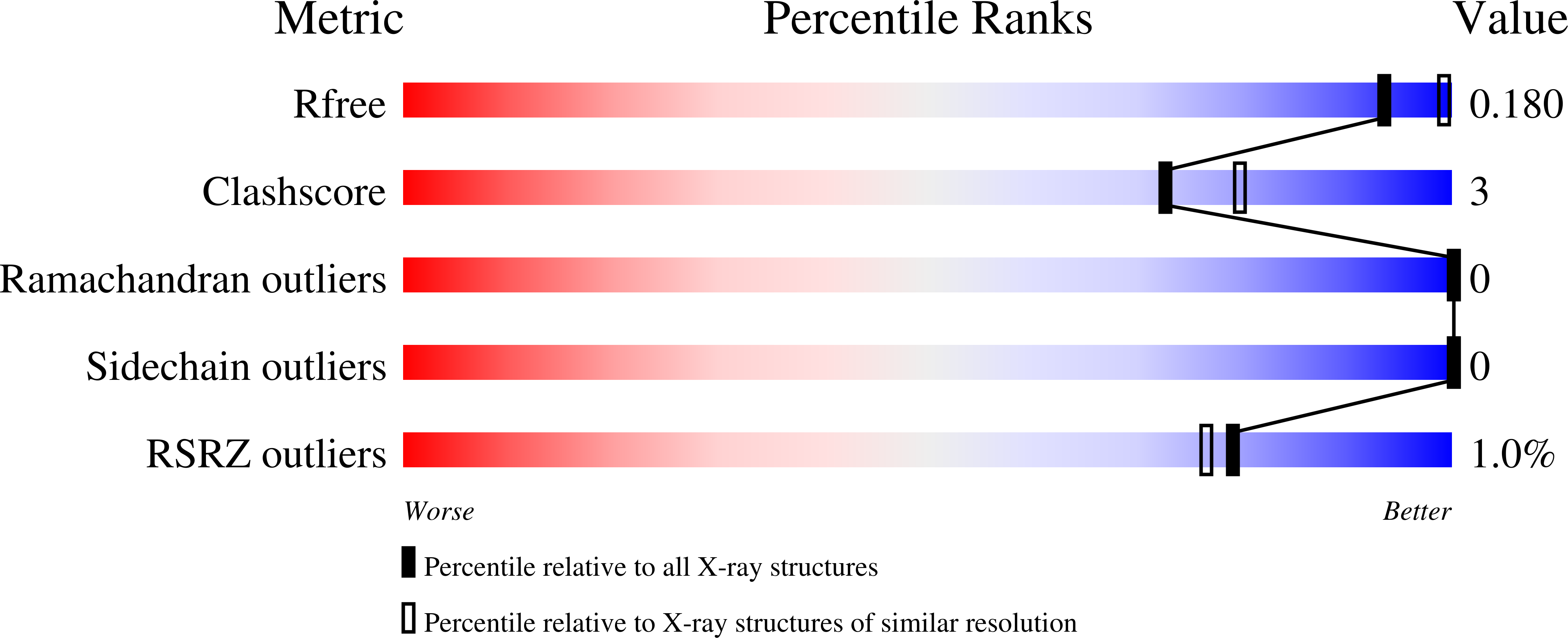
Resolution:
2.20 Å
R-Value Free:
0.20
R-Value Work:
0.18
R-Value Observed:
0.18
Space Group:
P 63 2 2
Macromolecular Entities
Structures with similar UniProt ID
Protein Blast
Polymer Type:polypeptide(L)
Molecule:Amicyanin
Gene (Uniprot):mauC
Mutagens:M124L
Chain IDs:A
Chain Length:105
Number of Molecules:1
Biological Source:Paracoccus denitrificans
Primary Citation
Defining the role of the axial ligand of the type 1 copper site in amicyanin by replacement of methionine with leucine.
Biochemistry 48 9174 9184 (2009)
PMID: 19715303 DOI: 10.1021/bi900836h

Abstact

The effects of replacing the axial methionine ligand of the type 1 copper site with leucine on the structure and function of amicyanin have been characterized. The crystal structures of the oxidized and reduced forms of the protein reveal that the copper site is now tricoordinate with no axial ligand, and that the copper coordination distances for the two ligands provided by histidines are significantly increased. Despite these structural changes, the absorption and EPR spectra of M98L amicyanin are only slightly altered and still consistent with that of a typical type 1 site. The oxidation-reduction midpoint potential (E(m)) value becomes 127 mV more positive as a consequence of the M98L mutation, most likely because of the increased hydrophobicity of the copper site. The most dramatic effect of the mutation was on the electron transfer (ET) reaction from reduced M98L amicyanin to cytochrome c(551i) within the protein ET complex. The rate decreased 435-fold, which was much more than expected from the change in E(m). Examination of the temperature dependence of the ET rate (k(ET)) revealed that the mutation caused a 13.6-fold decrease in the electronic coupling (H(AB)) for the reaction. A similar decrease was predicted from a comparative analysis of the crystal structures of reduced M98L and native amicyanins. The most direct route of ET for this reaction is through the Met98 ligand. Inspection of the structures suggests that the major determinant of the large decrease in the experimentally determined values of H(AB) and k(ET) is the increased distance from the copper to the protein within the type 1 site of M98L amicyanin.

Legend

Protein

Chemical

Disease

Primary Citation of related structures
Feedback Form
Name
Email
Institute
Feedback