

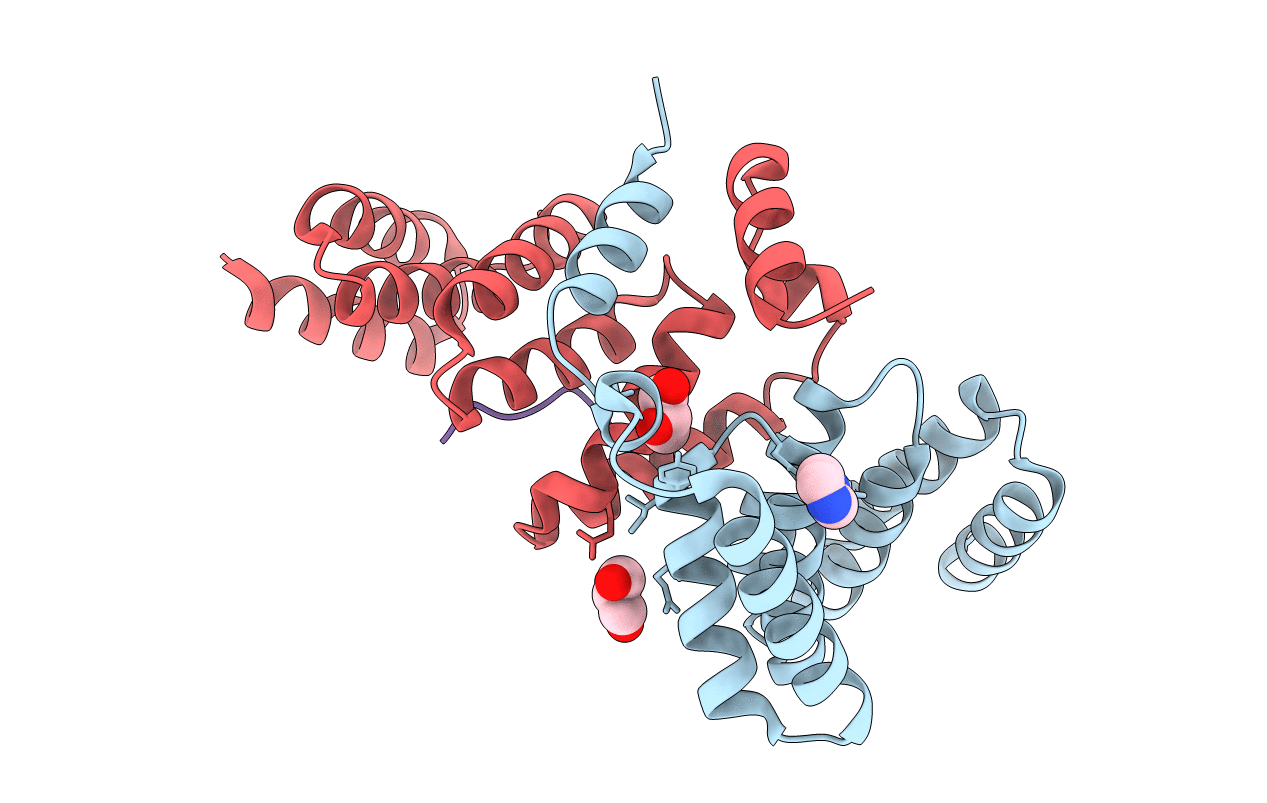
3GZ2 image
Deposition Date 2009-04-06
Release Date 2010-04-21
Last Version Date 2023-11-01
Entry Detail
PDB ID:
3GZ2
Keywords:
Title:
Crystal structure of IpgC in complex with an IpaB peptide
Biological Source:
Source Organism(s):
Expression System(s):
Method Details:
Experimental Method:
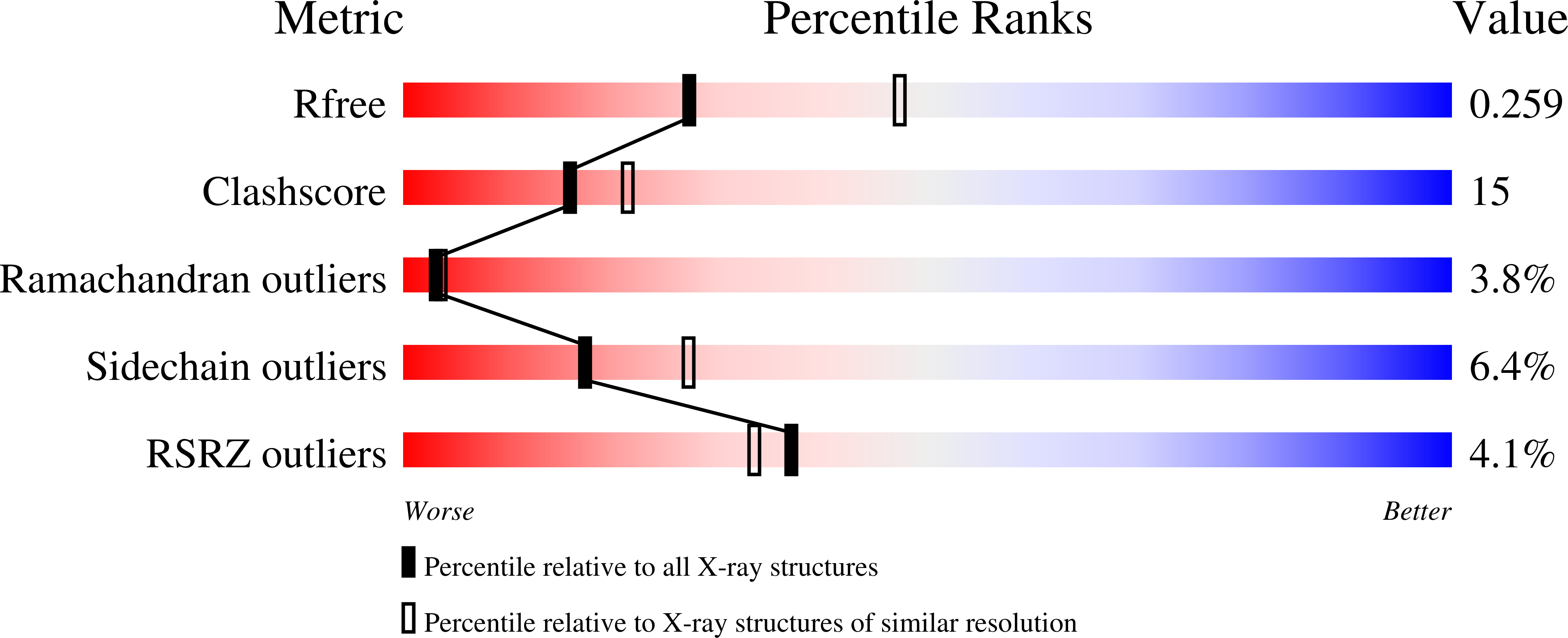
Resolution:
2.65 Å
R-Value Free:
0.27
R-Value Work:
0.23
R-Value Observed:
0.23
Space Group:
P 31 2 1
Macromolecular Entities
Structures with similar UniProt ID
Protein Blast
Polymer Type:polypeptide(L)
Molecule:Chaperone protein ipgC
Gene (Uniprot):ipgC
Mutagens:M1G
Chain IDs:A, B
Chain Length:151
Number of Molecules:2
Biological Source:Shigella flexneri
Structures with similar UniProt ID
Protein Blast
Polymer Type:polypeptide(L)
Molecule:Invasin ipaB
Gene (Uniprot):sctE
Chain IDs:C (auth: P)
Chain Length:78
Number of Molecules:1
Biological Source:Shigella flexneri
Primary Citation
Combination of two separate binding domains defines stoichiometry between type III secretion system chaperone IpgC and translocator protein IpaB
J. Biol. Chem. 285 39965 39975 (2010)
PMID: 20937829 DOI: 10.1074/jbc.M110.135616

Abstact

Type III secretion systems (TTSSs) utilized by enteropathogenic bacteria require the presence of small, acidic virulence-associated chaperones for effective host cell infection. We adopted a combination of biochemical and cellular techniques to define the chaperone binding domains (CBDs) in the translocators IpaB and IpaC associated with the chaperone IpgC from Shigella flexneri. We identified a novel CBD in IpaB and furthermore precisely mapped the boundaries of the CBDs in both translocator proteins. In IpaC a single binding domain associates with IpgC. In IpaB, we show that the binding of the newly characterized CBD is essential in maintaining the ternary arrangement of chaperone-translocator complex. This hitherto unknown function is reflected in the co-crystal structure as well, with an IpgC dimer bound to an IpaB fragment comprising both CBDs. Moreover, in the absence of this novel CBD the IpaB/IpgC complex aggregates. This dual-recognition of a domain in the protein by the chaperone in facilitating the correct chaperone-substrate organization describes a new function for the TTSS associated chaperone-substrate complexes.

Legend

Protein

Chemical

Disease

Primary Citation of related structures
Feedback Form
Name
Email
Institute
Feedback