

3D6E image
Deposition Date 2008-05-19
Release Date 2009-05-19
Last Version Date 2023-11-01
Entry Detail
PDB ID:
3D6E
Keywords:
Title:
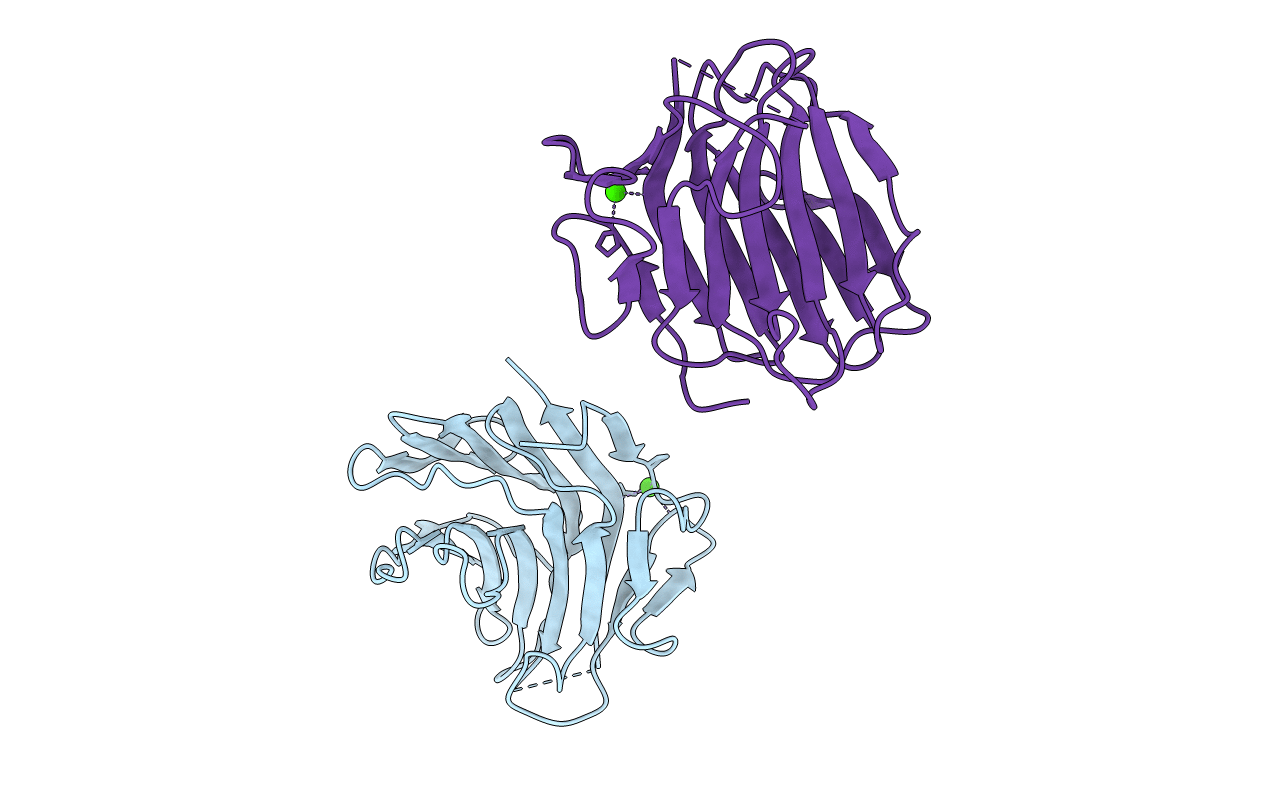
Crystal structure of the engineered 1,3-1,4-beta-glucanase protein from Bacillus licheniformis
Biological Source:
Source Organism(s):
Expression System(s):
Method Details:
Experimental Method:
Resolution:
2.40 Å
R-Value Free:
0.25
R-Value Work:
0.21
R-Value Observed:
0.21
Space Group:
P 1
Macromolecular Entities
Structures with similar UniProt ID
Protein Blast
Polymer Type:polypeptide(L)
Molecule:Beta-glucanase
Gene (Uniprot):bg1
Mutagens:R22A, A23F, N24D, N25H, C48G, E50G, R52Q, S77A, F79Y, Y81S, M167Y, N169S, N172A
Chain IDs:A, B
Chain Length:201
Number of Molecules:2
Biological Source:Bacillus licheniformis
Ligand Molecules
Primary Citation
Re-engineering specificity in 1,3-1,4-beta-glucanase to accept branched xyloglucan substrates
Proteins 79 365 375 (2011)
PMID: 21069723 DOI: 10.1002/prot.22884

Abstact

Family 16 carbohydrate active enzyme members Bacillus licheniformis 1,3-1,4-β-glucanase and Populus tremula x tremuloides xyloglucan endotransglycosylase (XET16-34) are highly structurally related but display different substrate specificities. Although the first binds linear gluco-oligosaccharides, the second binds branched xylogluco-oligosaccharides. Prior engineered nucleophile mutants of both enzymes are glycosynthases that catalyze the condensation between a glycosyl fluoride donor and a glycoside acceptor. With the aim of expanding the glycosynthase technology to produce designer oligosaccharides consisting of hybrids between branched xylogluco- and linear gluco-oligosaccharides, enzyme engineering on the negative subsites of 1,3-1,4-β-glucanase to accept branched substrates has been undertaken. Removal of the 1,3-1,4-β-glucanase major loop and replacement with that of XET16-34 to open the binding cleft resulted in a folded protein, which still maintained some β-glucan hydrolase activity, but the corresponding nucleophile mutant did not display glycosynthase activity with either linear or branched glycosyl donors. Next, point mutations of the 1,3-1,4-β-glucanase β-sheets forming the binding site cleft were mutated to resemble XET16-34 residues. The final chimeric protein acquired binding affinity for xyloglucan and did not bind β-glucan. Therefore, binding specificity has been re-engineered, but affinity was low and the nucleophile mutant of the chimeric enzyme did not show glycosynthase activity to produce the target hybrid oligosaccharides. Structural analysis by X-ray crystallography explains these results in terms of changes in the protein structure and highlights further engineering approaches toward introducing the desired activity.

Legend

Protein

Chemical

Disease

Primary Citation of related structures
Feedback Form
Name
Email
Institute
Feedback