

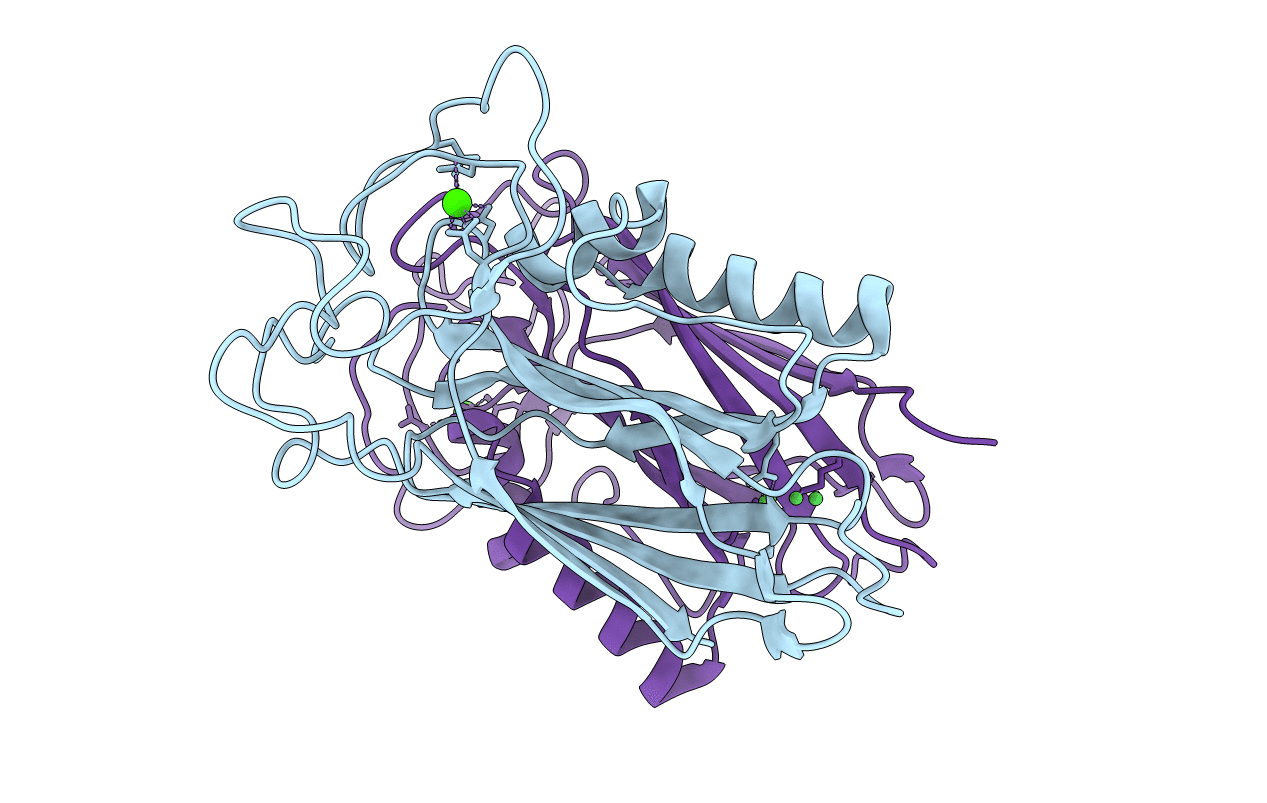
3D34 image
Deposition Date 2008-05-09
Release Date 2009-02-17
Last Version Date 2024-10-30
Entry Detail
PDB ID:
3D34
Keywords:
Title:
Structure of the F-spondin domain of mindin
Biological Source:
Source Organism(s):
Homo sapiens (Taxon ID: 9606)
Expression System(s):
Method Details:
Experimental Method:
Resolution:
1.80 Å
R-Value Free:
0.21
R-Value Work:
0.18
Space Group:
P 21 21 21

Macromolecular Entities
Structures with similar UniProt ID
Protein Blast
Polymer Type:polypeptide(L)
Molecule:Spondin-2
Gene (Uniprot):SPON2
Chain IDs:A, B
Chain Length:223
Number of Molecules:2
Biological Source:Homo sapiens
Primary Citation
Structure of the F-spondin domain of mindin, an integrin ligand and pattern recognition molecule.
EMBO J. 28 286 297 (2009)
PMID: 19153605 DOI: 10.1038/emboj.2008.288

Abstact

Mindin (spondin-2) is an extracellular matrix protein of unknown structure that is required for efficient T-cell priming by dendritic cells. Additionally, mindin functions as a pattern recognition molecule for initiating innate immune responses. These dual functions are mediated by interactions with integrins and microbial pathogens, respectively. Mindin comprises an N-terminal F-spondin (FS) domain and C-terminal thrombospondin type 1 repeat (TSR). We determined the structure of the FS domain at 1.8-A resolution. The structure revealed an eight-stranded antiparallel beta-sandwich motif resembling that of membrane-targeting C2 domains, including a bound calcium ion. We demonstrated that the FS domain mediates integrin binding and identified the binding site by mutagenesis. The mindin FS domain therefore represents a new integrin ligand. We further showed that mindin recognizes lipopolysaccharide (LPS) through its TSR domain, and obtained evidence that C-mannosylation of the TSR influences LPS binding. Through these dual interactions, the FS and TSR domains of mindin promote activation of both adaptive and innate immune responses.

Legend

Protein

Chemical

Disease

Primary Citation of related structures
Feedback Form
Name
Email
Institute
Feedback