

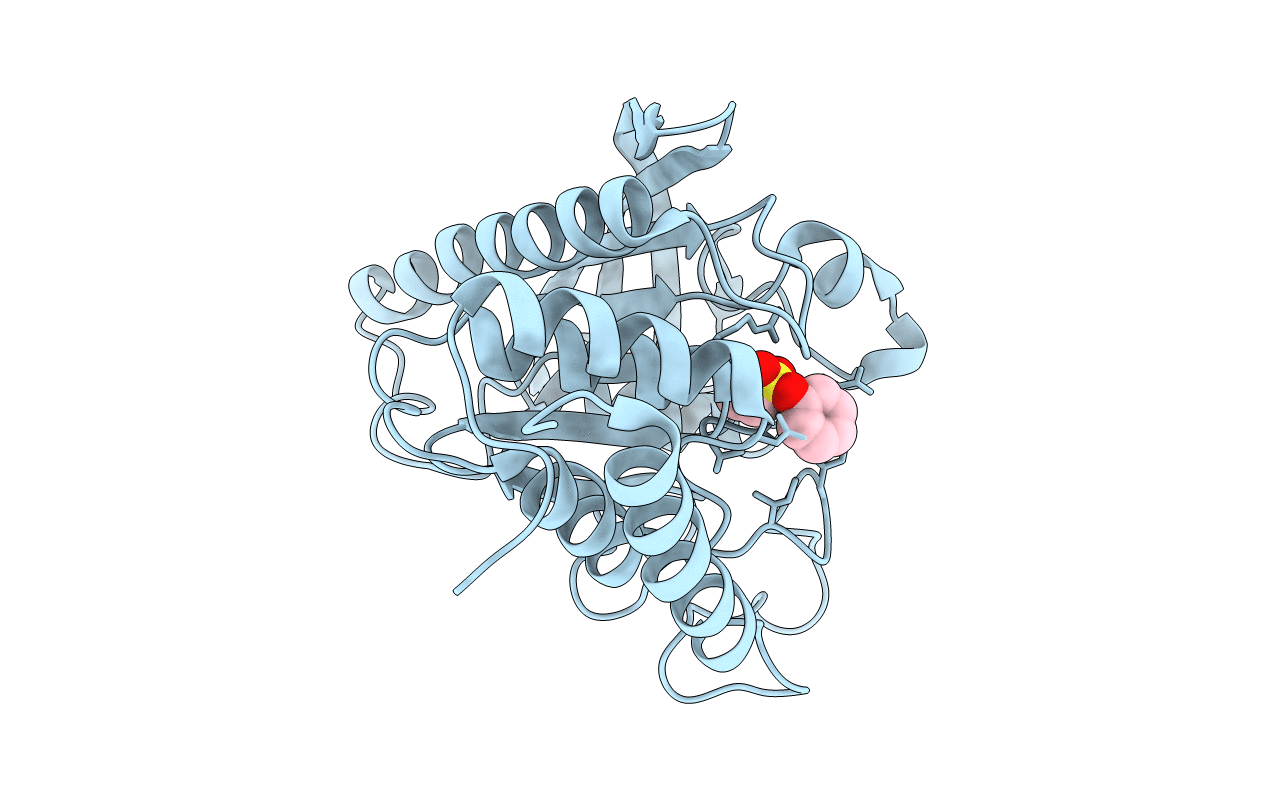
3BM8 image
Deposition Date 2007-12-12
Release Date 2008-06-17
Last Version Date 2024-10-30
Entry Detail
PDB ID:
3BM8
Keywords:
Title:
crystal structure of YopH mutant D356A complexed with irreversible inhibitor PVSN
Biological Source:
Source Organism(s):
Expression System(s):
Method Details:
Experimental Method:
Resolution:
2.70 Å
R-Value Free:
0.27
R-Value Work:
0.17
Space Group:
P 21 21 21

Macromolecular Entities
Structures with similar UniProt ID
Protein Blast
Polymer Type:polypeptide(L)
Molecule:Tyrosine-protein phosphatase
Gene (Uniprot):yopH
Mutagens:C235R, D356A
Chain IDs:A
Chain Length:305
Number of Molecules:1
Biological Source:Yersinia enterocolitica
Ligand Molecules
Primary Citation
Aryl vinyl sulfonates and sulfones as active site-directed and mechanism-based probes for protein tyrosine phosphatases.
J. Am. Chem. Soc. 130 8251 8260 (2008)
PMID: 18528979 DOI: 10.1021/ja711125p

Abstact

Protein tyrosine phosphatases (PTPs) play key roles in the regulation of normal and pathological processes ranging from cell proliferation, differentiation, metabolism, and survival to many human diseases including cancer and diabetes. Functional studies of PTP can be greatly facilitated by small molecule probes that covalently label the active site of a PTP through an activity-dependent chemical reaction. In this article, we characterize phenyl vinyl sulfonate (PVSN) and phenyl vinyl sulfone (PVS) as a new class of mechanism-based PTP probes. PVSN and PVS inactivate a broad range of PTPs in a time- and concentration-dependent fashion. The PVSN- and PVS-mediated PTP inactivation is active site-directed and irreversible, resulting from a Michael addition of the active-site Cys Sgamma onto the terminal carbon of the vinyl group. Structural and mechanistic analyses reveal the molecular basis for the preference of PVSN/PVS toward the PTPs, which lies in the ability of PVSN and PVS to engage the conserved structural and catalytic machinery of the PTP active site. In contrast to early alpha-bromobenzyl phosphonate-based probes, PVSN and PVS are resistant to solvolysis and are cell-permeable and thus hold promise for in vivo applications. Collectively, these properties bode well for the development of aryl vinyl sulfonate/sulfone-based PTP probes to interrogate PTP activity in complex proteomes.

Legend

Protein

Chemical

Disease

Primary Citation of related structures
Feedback Form
Name
Email
Institute
Feedback