

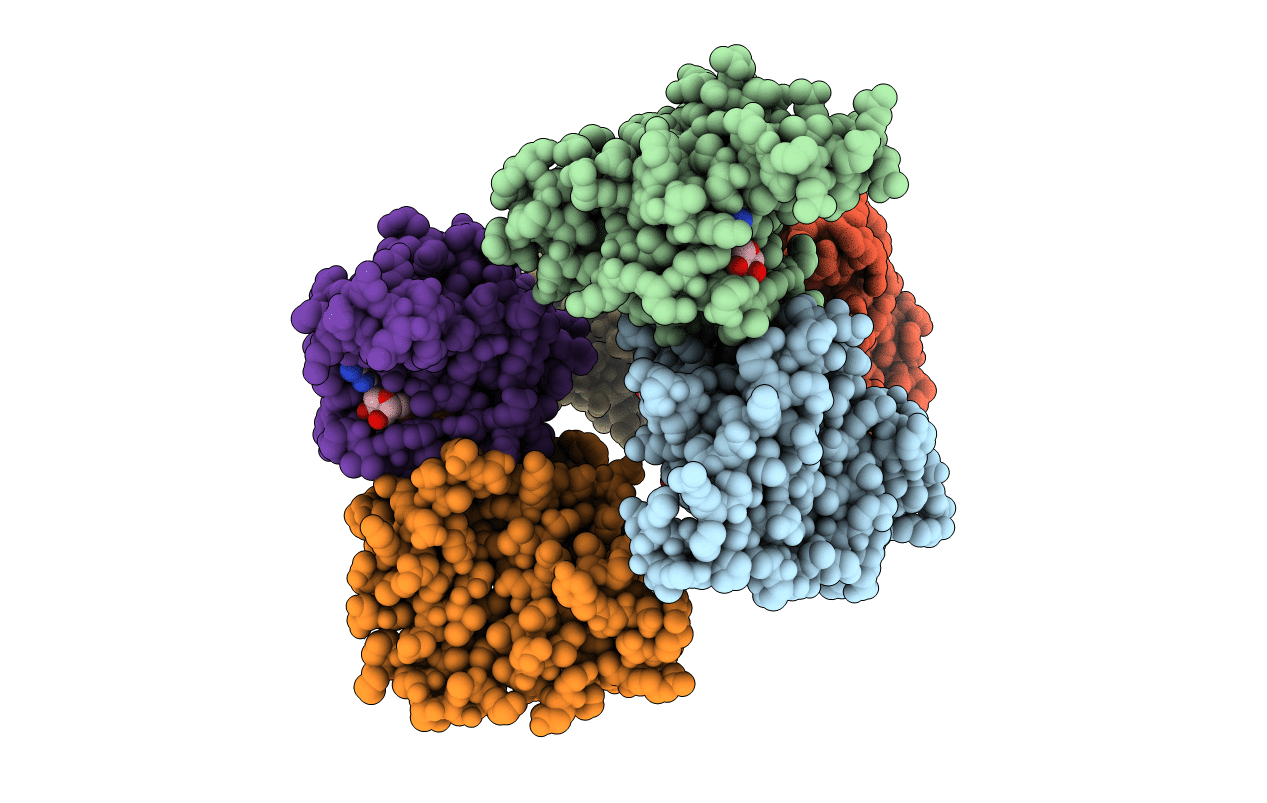
3A58 image
Deposition Date 2009-08-03
Release Date 2010-01-12
Last Version Date 2024-10-23
Entry Detail
PDB ID:
3A58
Title:
Crystal structure of Sec3p - Rho1p complex from Saccharomyces cerevisiae
Biological Source:
Source Organism(s):
Expression System(s):
Method Details:
Experimental Method:
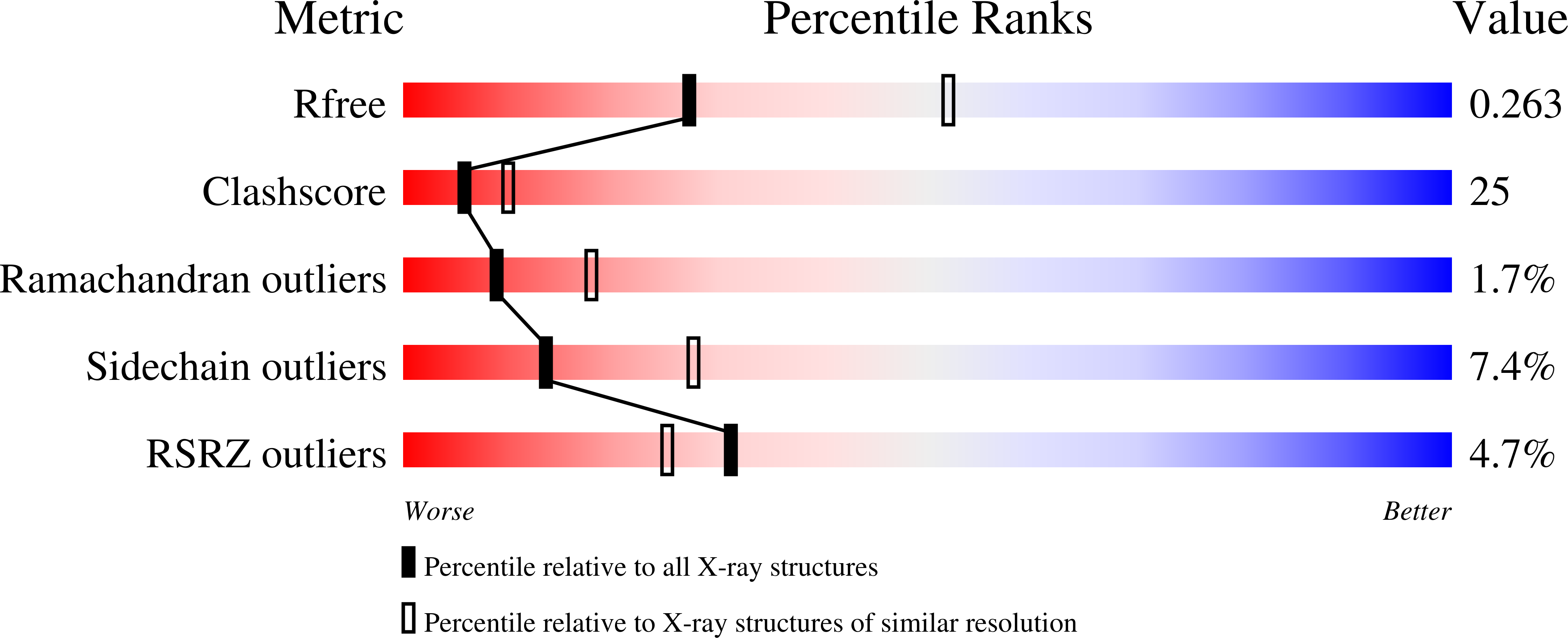
Resolution:
2.60 Å
R-Value Free:
0.26
R-Value Work:
0.23
R-Value Observed:
0.23
Space Group:
P 41 21 2
Macromolecular Entities
Structures with similar UniProt ID
Protein Blast
Polymer Type:polypeptide(L)
Molecule:Exocyst complex component SEC
Gene (Uniprot):SEC3
Chain IDs:A, C, E
Chain Length:320
Number of Molecules:3
Biological Source:Saccharomyces cerevisiae
Structures with similar UniProt ID
Protein Blast
Polymer Type:polypeptide(L)
Molecule:GTP-binding protein RHO1
Gene (Uniprot):RHO1
Mutagens:F30N
Chain IDs:B, D, F
Chain Length:188
Number of Molecules:3
Biological Source:Saccharomyces cerevisiae
Modified Residue
Compound ID Chain ID Parent Comp ID Details 2D Image
MSE A MET SELENOMETHIONINE
Primary Citation
Structural basis for the Rho- and phosphoinositide-dependent localization of the exocyst subunit Sec3
Nat. Struct. Mol. Biol. 17 180 186 (2010)
PMID: 20062059 DOI: 10.1038/nsmb.1722

Abstact

The exocyst complex is a hetero-octameric protein complex that functions during cell polarization by tethering the secretory vesicle to the target membrane. The yeast exocyst subunit Sec3 binds to phosphatidylinositol 4,5-bisphosphate (PtdIns(4,5)P(2)) and the small GTPases Rho1 and Cdc42 via its N-terminal domain (Sec3-N), and these interactions target Sec3 to the plasma membrane. Here we report the crystal structure of the Sec3-N in complex with Rho1 at 2.6-A resolution. Sec3-N adopts a pleckstrin homology (PH) fold, despite having no detectable sequence homology with other PH domains of known structure. Clusters of conserved basic residues constitute a positively charged cleft, which was identified as a binding site for PtdIns(4,5)P(2). Residues Phe77, Ile115 and Leu131 of Sec3 bind to an extended hydrophobic surface formed around switch regions I and II of Rho1. To our knowledge, these are the first structural insights into how an exocyst subunit might interact with both protein and phospholipid factors on the target membrane.

Legend

Protein

Chemical

Disease

Primary Citation of related structures
Feedback Form
Name
Email
Institute
Feedback