

2ZZB image
Deposition Date 2009-02-09
Release Date 2009-08-18
Last Version Date 2024-10-30
Entry Detail
PDB ID:
2ZZB
Keywords:
Title:
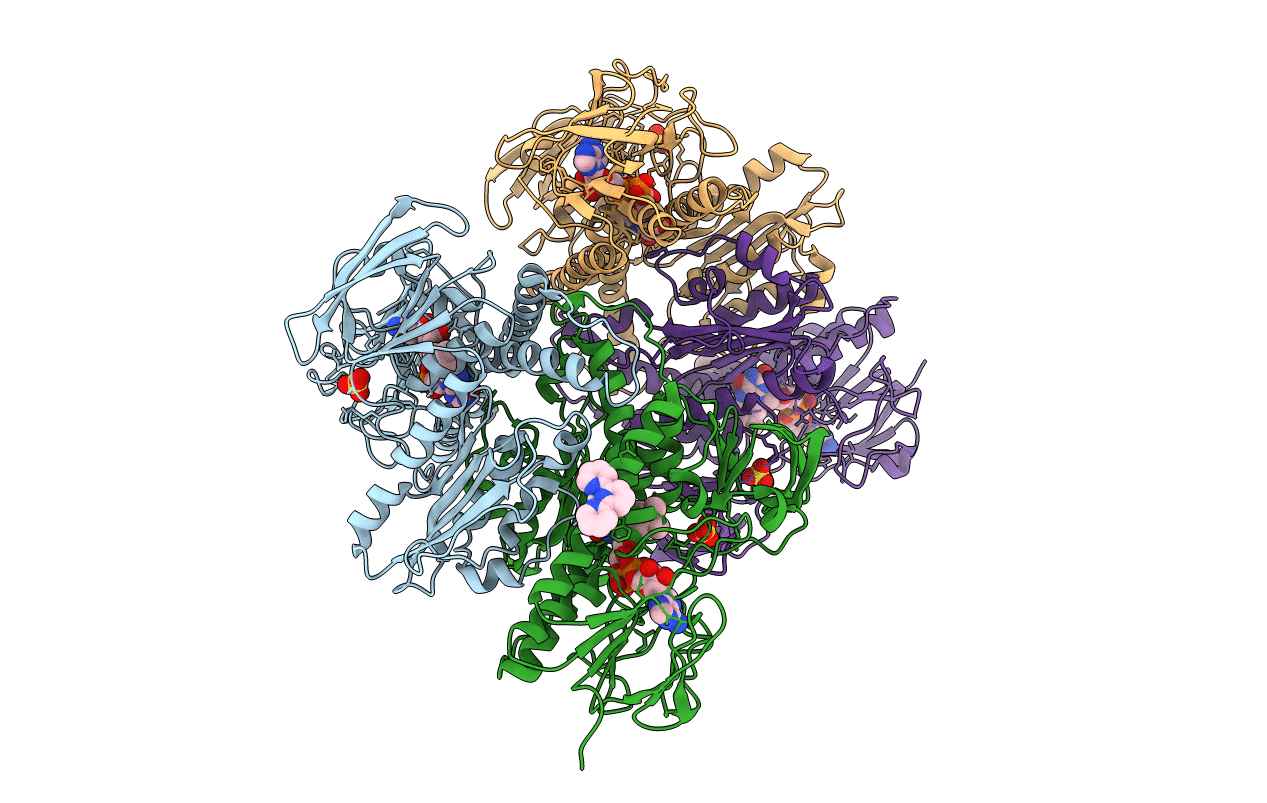
Crystal structure of human thioredoxin reductase I and terpyridine platinum(II)
Biological Source:
Source Organism(s):
Homo sapiens (Taxon ID: 9606)
Expression System(s):
Method Details:
Experimental Method:
Resolution:
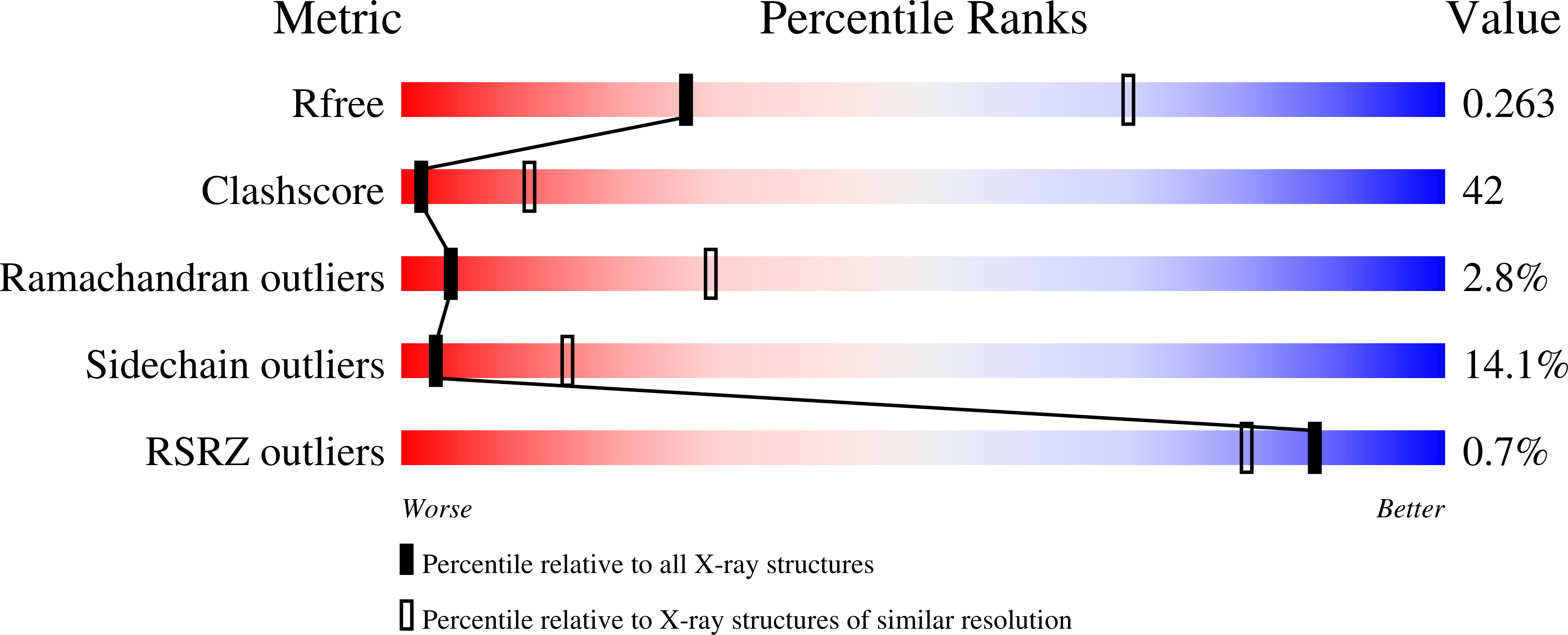
3.20 Å
R-Value Free:
0.30
R-Value Work:
0.24
R-Value Observed:
0.24
Space Group:
C 2 2 21
Macromolecular Entities
Structures with similar UniProt ID
Protein Blast
Polymer Type:polypeptide(L)
Molecule:Thioredoxin reductase 1, cyto
Gene (Uniprot):TXNRD1
Mutagens:SeCys498Cys
Chain IDs:A, B, C, D
Chain Length:513
Number of Molecules:4
Biological Source:Homo sapiens
Primary Citation
Terpyridine-platinum(II) complexes are effective inhibitors of mammalian topoisomerases and human thioredoxin reductase 1.
J. Inorg. Biochem. 103 1082 1092 (2009)
PMID: 19525010 DOI: 10.1016/j.jinorgbio.2009.05.006

Abstact

Terpyridine-platinum(II) (TP-Pt(II)) complexes are known to possess DNA-intercalating activity and have been regarded as potential antitumor agents. However, their cytotoxic mechanism remains unclear. To investigate the possible mechanism, a series of TP-Pt(II) compounds were prepared and their biological activities assessed. The DNA binding activities of the aromatic thiolato[TP-Pt(II)] complexes were stronger than the aliphatic 2-hydroxylethanethiolato(2,2':6',2''-terpyridine)platinum(II) [TP(HET)]. TP-Pt(II) complexes inhibited topoisomerase IIalpha or topoisomerase I activity at IC(50) values of about 5 microM and 10-20 microM, respectively, whereas the human thioredoxin reductase 1 (hTrxR1) activity was inhibited with IC(50) values in the range of 58-78 nM. At the cellular level, they possessed cytotoxicity with IC(50) values between 7 and 19 microM against HeLa cells. Additionally, using X-ray crystallography and matrix-assisted laser desorption/ionization (MALDI) mass spectrometry, we elucidated that the TP-Pt(II) complexes inhibited hTrxR1 activity by blocking its C-terminal active-site selenocysteine. Therefore, TP-Pt(II) complexes possess inhibitory activities against multiple biological targets, and they may be further studied as anticancer agents.

Legend

Protein

Chemical

Disease

Primary Citation of related structures
Feedback Form
Name
Email
Institute
Feedback