

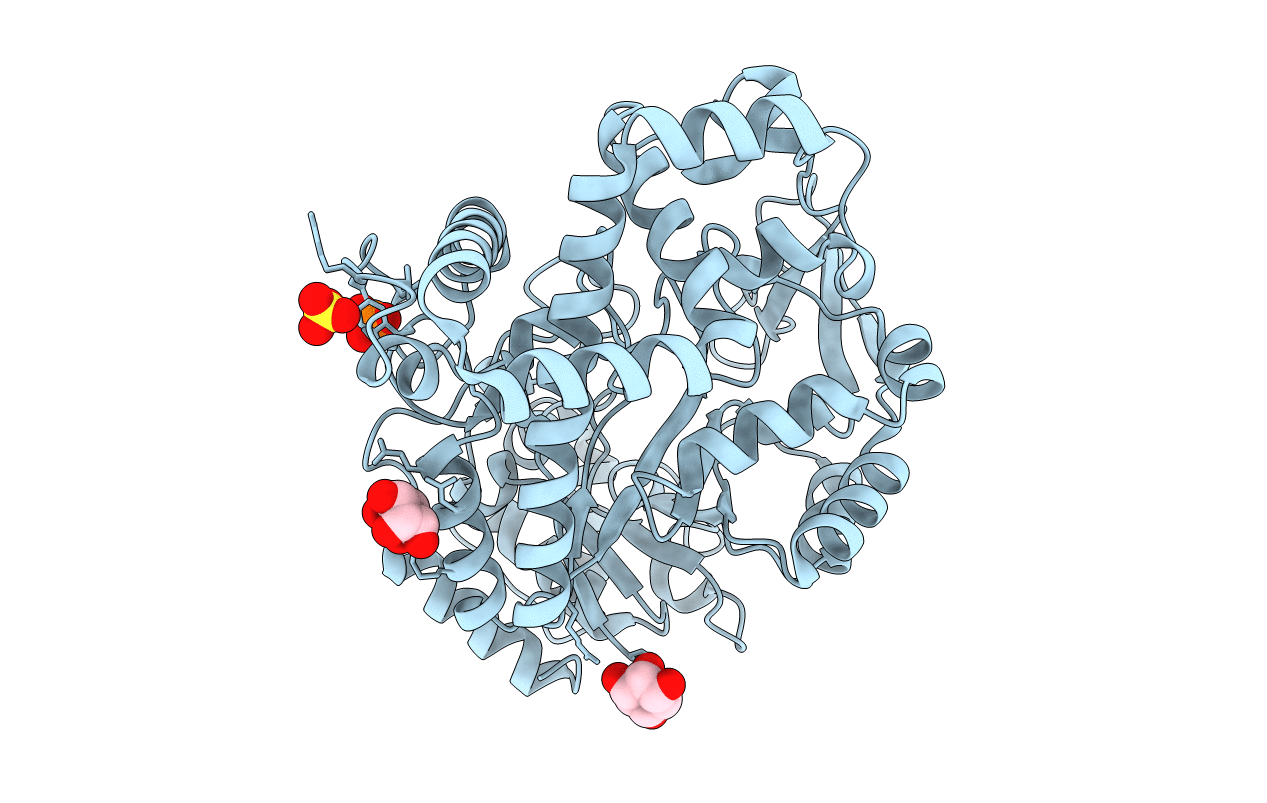
2X1I image
Deposition Date 2009-12-28
Release Date 2010-10-27
Last Version Date 2023-12-20
Entry Detail
PDB ID:
2X1I
Keywords:
Title:
glycoside hydrolase family 77 4-alpha-glucanotransferase from thermus brockianus
Biological Source:
Source Organism(s):
Method Details:
Experimental Method:
Resolution:
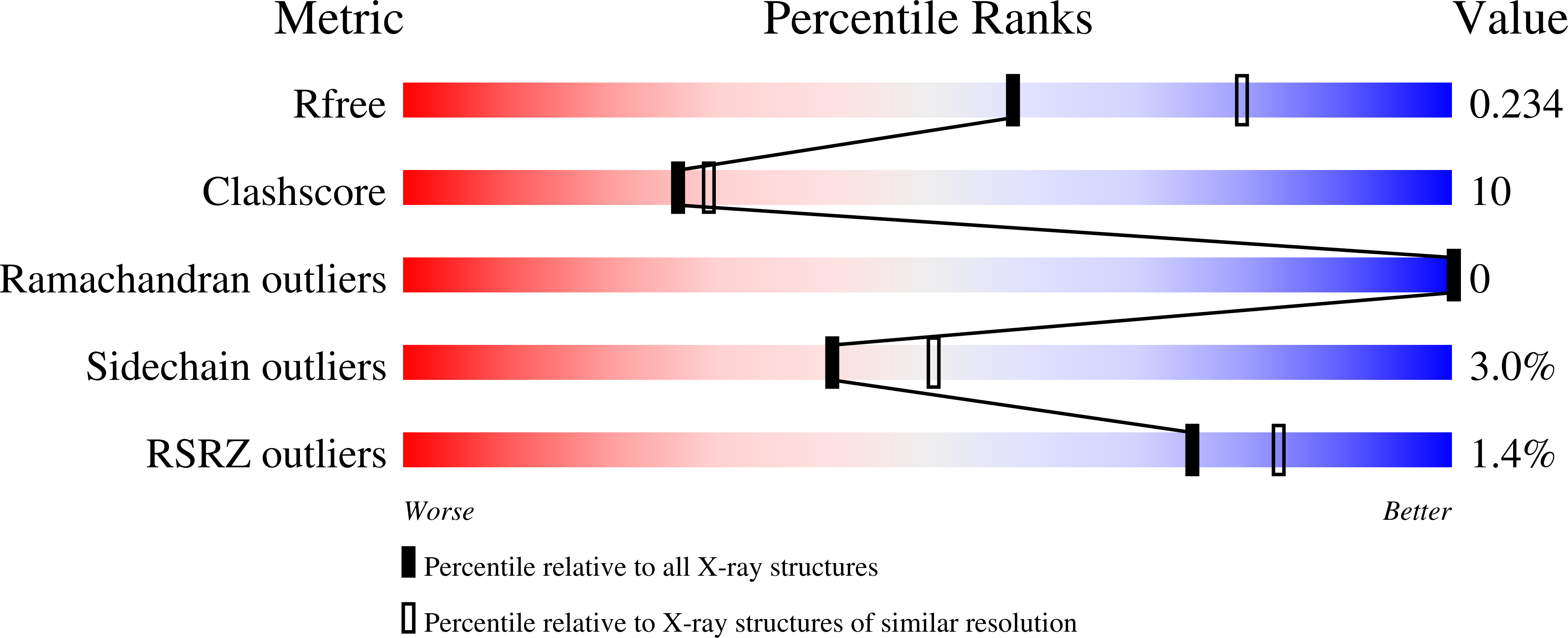
2.36 Å
R-Value Free:
0.24
R-Value Work:
0.21
R-Value Observed:
0.21
Space Group:
P 65 2 2
Macromolecular Entities
Structures with similar UniProt ID
Protein Blast
Polymer Type:polypeptide(L)
Molecule:4-ALPHA-GLUCANOTRANSFERASE
Chain IDs:A
Chain Length:500
Number of Molecules:1
Biological Source:THERMUS BROCKIANUS
Primary Citation
Structural and Functional Analysis of Substrate Recognition by the 250S Loop in Amylomaltase from Thermus Brockianus.
Proteins 79 633 ? (2011)
PMID: 21117235 DOI: 10.1002/PROT.22911

Abstact

Amylomaltase, or 4-α-glucanotransferase (EC 2.4.1.25), is involved in glycogen and maltooligosaccharide metabolism in microorganisms, catalyzing both the hydrolysis and transfer of an α-1,4-oligosacchraride to other sugar molecules. In this study, we determined the crystal structure of amylomaltase from Thermus brockianus at a resolution of 2.3 Å and conducted a biochemical study to understand the detailed mechanism for its activity. Careful comparison with previous amylomaltase structures showed a pattern of conformational flexibility in the 250s loop with higher B-factor. Amylomaltase from T. brockianus exhibited a high transglycosylation factor for glucose and a lower value for maltose. Mutation of Gln256 resulted in increased K(m) for maltotriose and a sharp decrease of the transglycosylation factor for maltose, suggesting the involvement of Gln 256 in substrate binding between subsites +1 and +2. Mutation of Phe251 resulted in significantly lower glucose production but increased maltose production from maltopentose substrates, showing an altered substrate-binding affinity. The mutational data suggest the conformational flexibility of the loop may be involved in substrate binding in the GH77 family. Here, we present an action model of the 250s loop providing the molecular basis for the involvement of residues Phe251, Gln256, and Trp258 in the hydrolysis and transglycosylation activities in amylomaltase.

Legend

Protein

Chemical

Disease

Primary Citation of related structures
Feedback Form
Name
Email
Institute
Feedback