

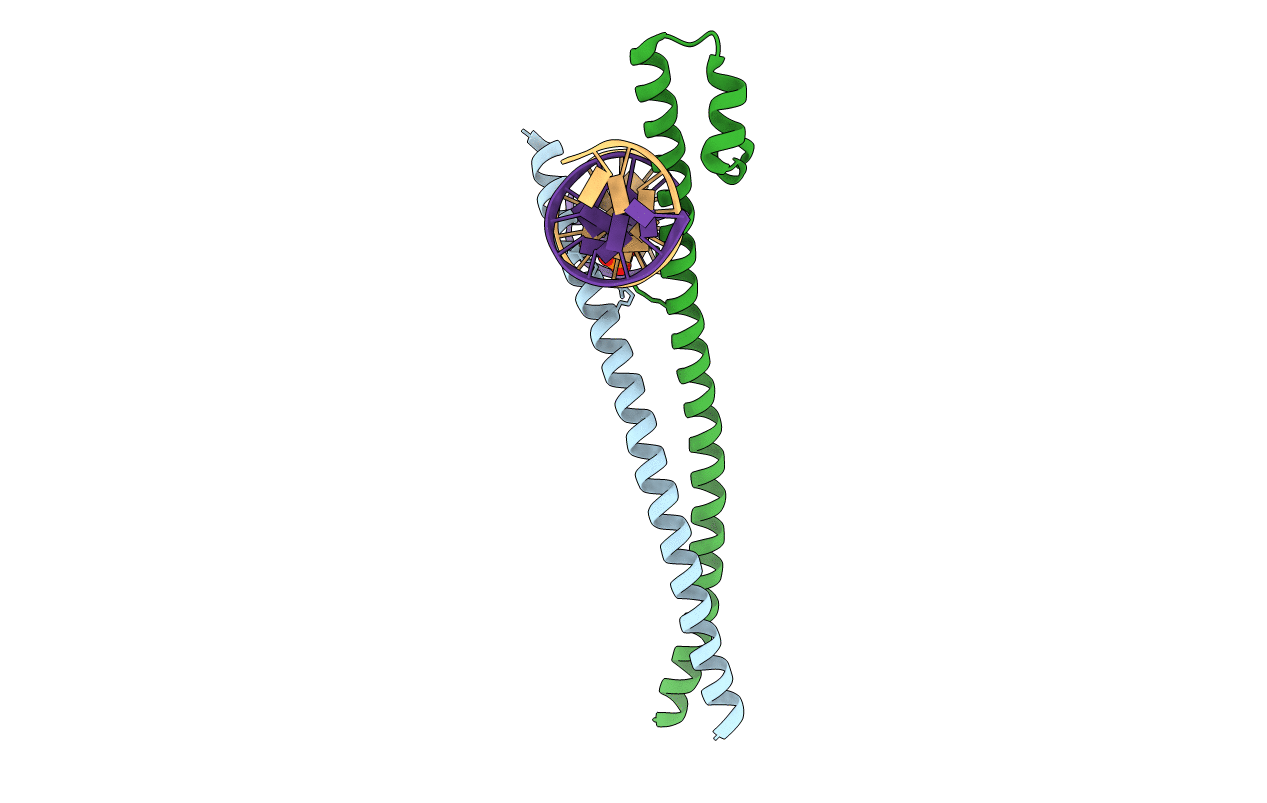
2WT7 image
Deposition Date 2009-09-11
Release Date 2010-09-29
Last Version Date 2024-05-08
Entry Detail
PDB ID:
2WT7
Keywords:
Title:
Crystal structure of the bZIP heterodimeric complex MafB:cFos bound to DNA
Biological Source:
Source Organism(s):
Expression System(s):
Method Details:
Experimental Method:
Resolution:
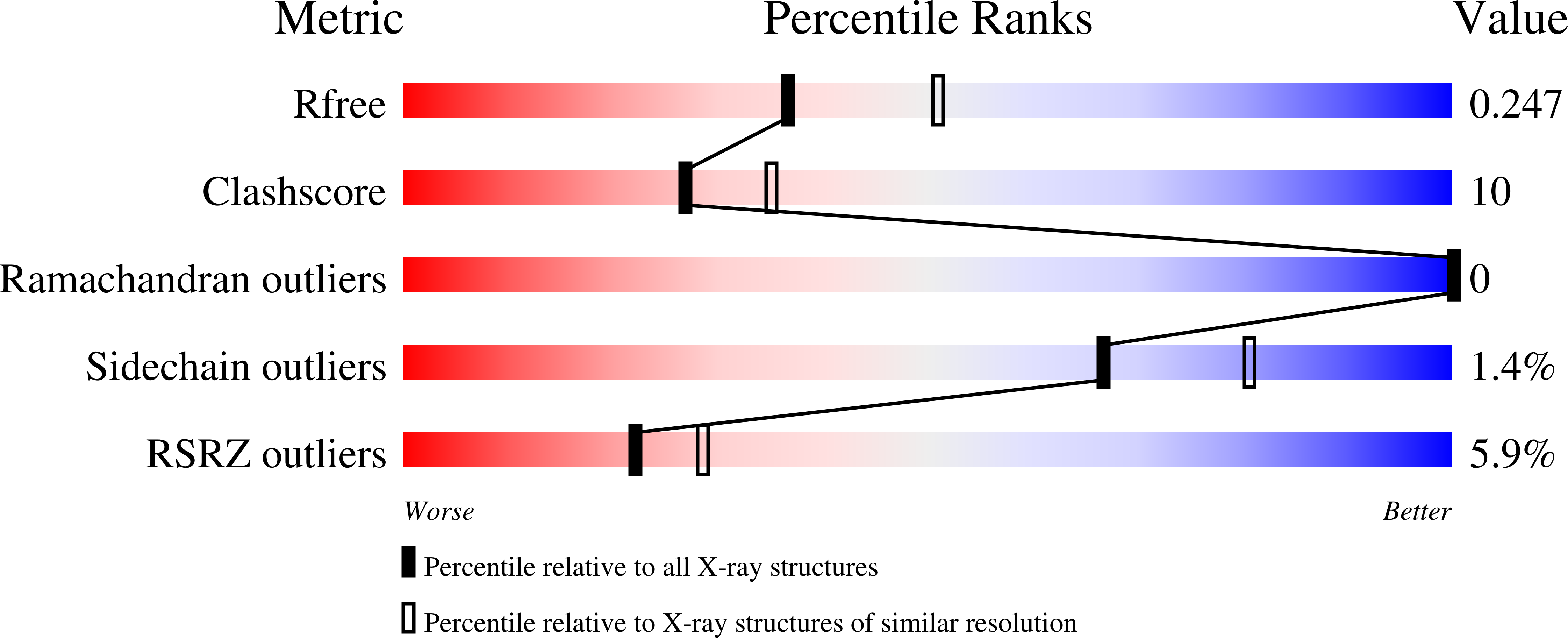
2.30 Å
R-Value Free:
0.25
R-Value Work:
0.22
R-Value Observed:
0.22
Space Group:
P 62
Macromolecular Entities
Structures with similar UniProt ID
Protein Blast
Polymer Type:polypeptide(L)
Molecule:PROTO-ONCOGENE PROTEIN C-FOS
Gene (Uniprot):Fos
Chain IDs:A
Chain Length:63
Number of Molecules:1
Biological Source:MUS MUSCULUS
Structures with similar UniProt ID
Protein Blast
Polymer Type:polypeptide(L)
Molecule:TRANSCRIPTION FACTOR MAFB
Gene (Uniprot):Mafb
Mutagens:YES
Chain IDs:B
Chain Length:90
Number of Molecules:1
Biological Source:MUS MUSCULUS
Polymer Type:polydeoxyribonucleotide
Molecule:MODIFIED T-MARE MOTIF
Chain IDs:C
Chain Length:16
Number of Molecules:1
Biological Source:SYNTHETIC CONSTRUCT
Polymer Type:polydeoxyribonucleotide
Molecule:MODIFIED T-MARE MOTIF
Chain IDs:D
Chain Length:16
Number of Molecules:1
Biological Source:SYNTHETIC CONSTRUCT
Ligand Molecules
Primary Citation
Design of a bZIP Transcription Factor with Homo/Heterodimer-Induced DNA-Binding Preference.
Structure 22 466 ? (2014)
PMID: 24530283 DOI: 10.1016/J.STR.2013.12.017

Abstact

The ability of basic leucine zipper transcription factors for homo- or heterodimerization provides a paradigm for combinatorial control of eukaryotic gene expression. It has been unclear, however, how facultative dimerization results in alternative DNA-binding repertoires on distinct regulatory elements. To unravel the molecular basis of such coupled preferences, we determined two high-resolution structures of the transcription factor MafB as a homodimer and as a heterodimer with c-Fos bound to variants of the Maf-recognition element. The structures revealed several unexpected and dimer-specific coiled-coil-heptad interactions. Based on these findings, we have engineered two MafB mutants with opposite dimerization preferences. One of them showed a strong preference for MafB/c-Fos heterodimerization and enabled selection of heterodimer-favoring over homodimer-specific Maf-recognition element variants. Our data provide a concept for transcription factor design to selectively activate dimer-specific pathways and binding repertoires.

Legend

Protein

Chemical

Disease

Primary Citation of related structures
Feedback Form
Name
Email
Institute
Feedback