

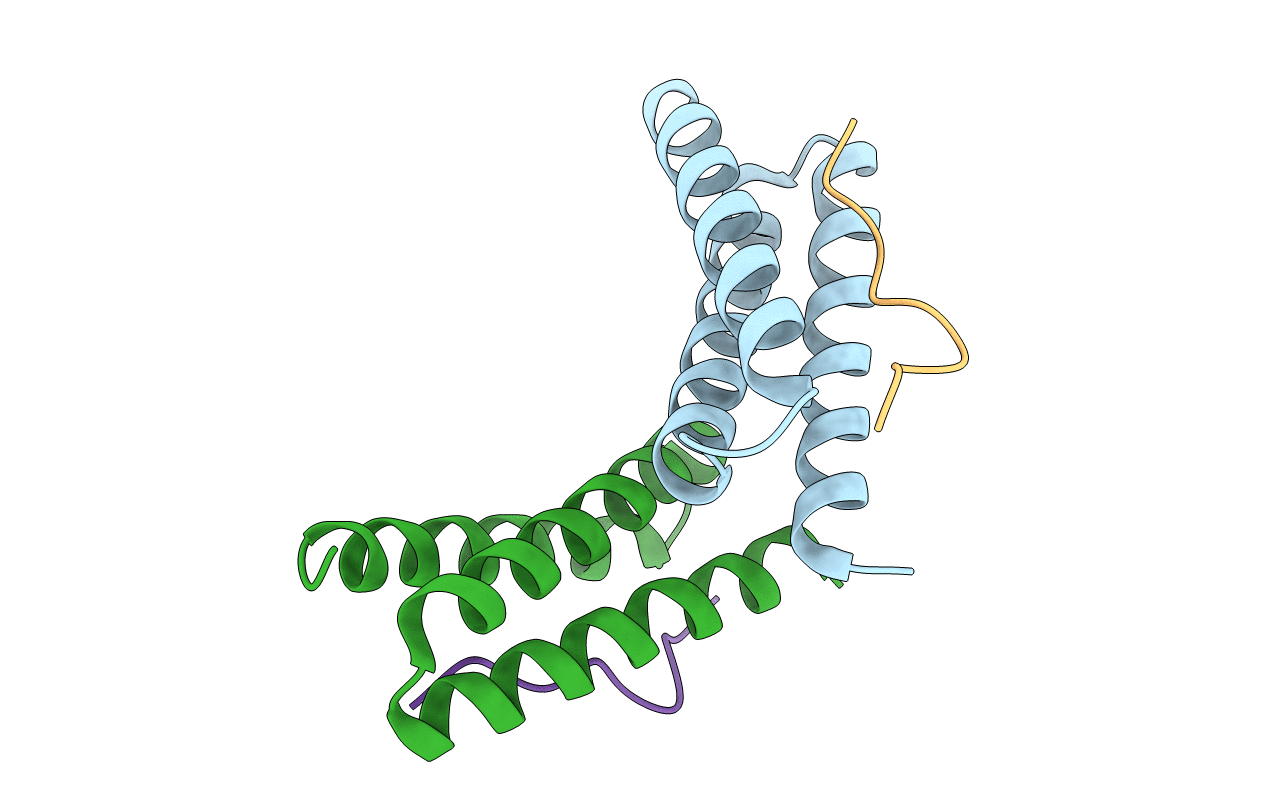
2W2U image
Deposition Date 2008-11-04
Release Date 2009-07-14
Last Version Date 2023-12-13
Entry Detail
PDB ID:
2W2U
Title:
STRUCTURAL INSIGHT INTO THE INTERACTION BETWEEN ARCHAEAL ESCRT-III AND AAA-ATPASE
Biological Source:
Source Organism(s):
Expression System(s):
Method Details:
Experimental Method:
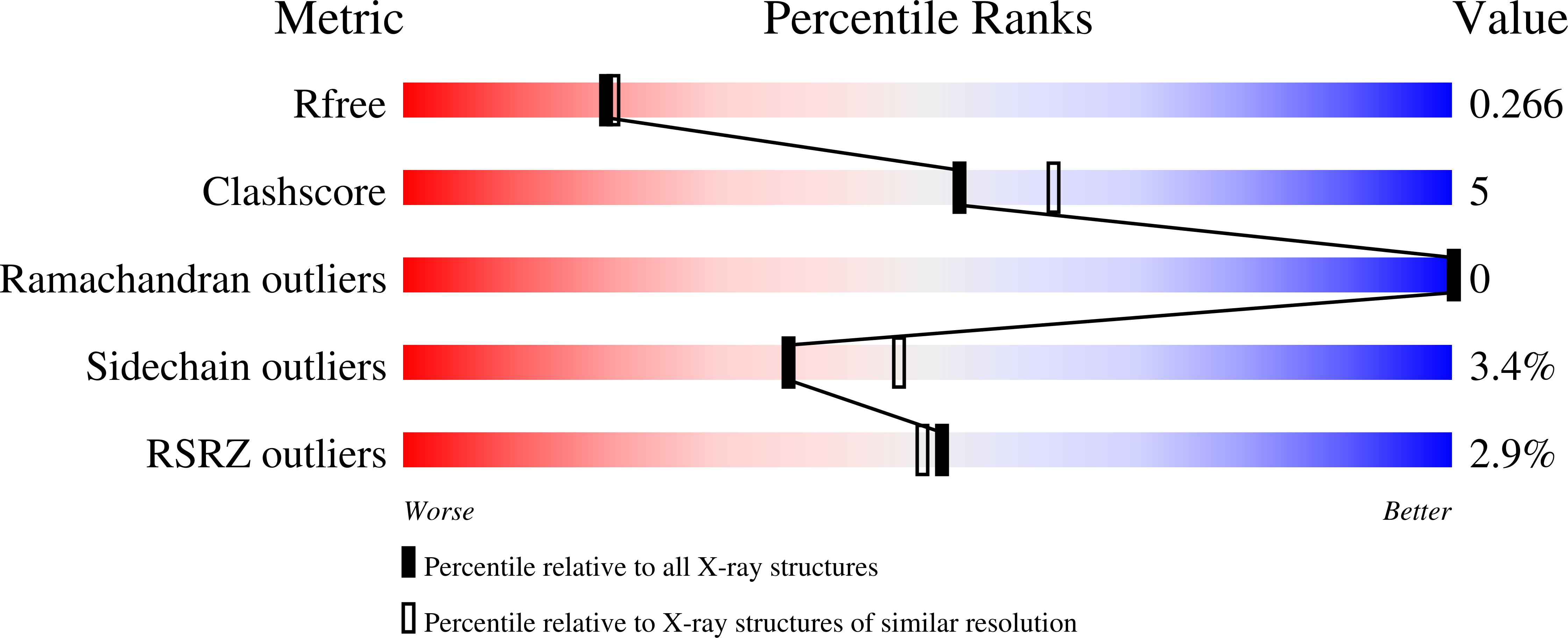
Resolution:
2.20 Å
R-Value Free:
0.26
R-Value Work:
0.22
R-Value Observed:
0.22
Space Group:
P 43
Macromolecular Entities
Structures with similar UniProt ID
Protein Blast
Polymer Type:polypeptide(L)
Molecule:HYPOTHETICAL P60 KATANIN
Gene (Uniprot):ATY89_11140, ATZ20_02695
Chain IDs:A, B
Chain Length:83
Number of Molecules:2
Biological Source:SULFOLOBUS ACIDOCALDARIUS
Structures with similar UniProt ID
Protein Blast
Polymer Type:polypeptide(L)
Molecule:CONSERVED ARCHAEAL PROTEIN
Gene (Uniprot):cdvB
Chain IDs:C, D
Chain Length:14
Number of Molecules:2
Biological Source:SULFOLOBUS ACIDOCALDARIUS
Primary Citation
A Role for the Escrt System in Cell Division in Archaea.
Science 322 1710 ? (2008)
PMID: 19008417 DOI: 10.1126/SCIENCE.1165322

Abstact

Archaea are prokaryotic organisms that lack endomembrane structures. However, a number of hyperthermophilic members of the Kingdom Crenarchaea, including members of the Sulfolobus genus, encode homologs of the eukaryotic endosomal sorting system components Vps4 and ESCRT-III (endosomal sorting complex required for transport-III). We found that Sulfolobus ESCRT-III and Vps4 homologs underwent regulation of their expression during the cell cycle. The proteins interacted and we established the structural basis of this interaction. Furthermore, these proteins specifically localized to the mid-cell during cell division. Overexpression of a catalytically inactive mutant Vps4 in Sulfolobus resulted in the accumulation of enlarged cells, indicative of failed cell division. Thus, the archaeal ESCRT system plays a key role in cell division.

Legend

Protein

Chemical

Disease

Primary Citation of related structures
Feedback Form
Name
Email
Institute
Feedback