

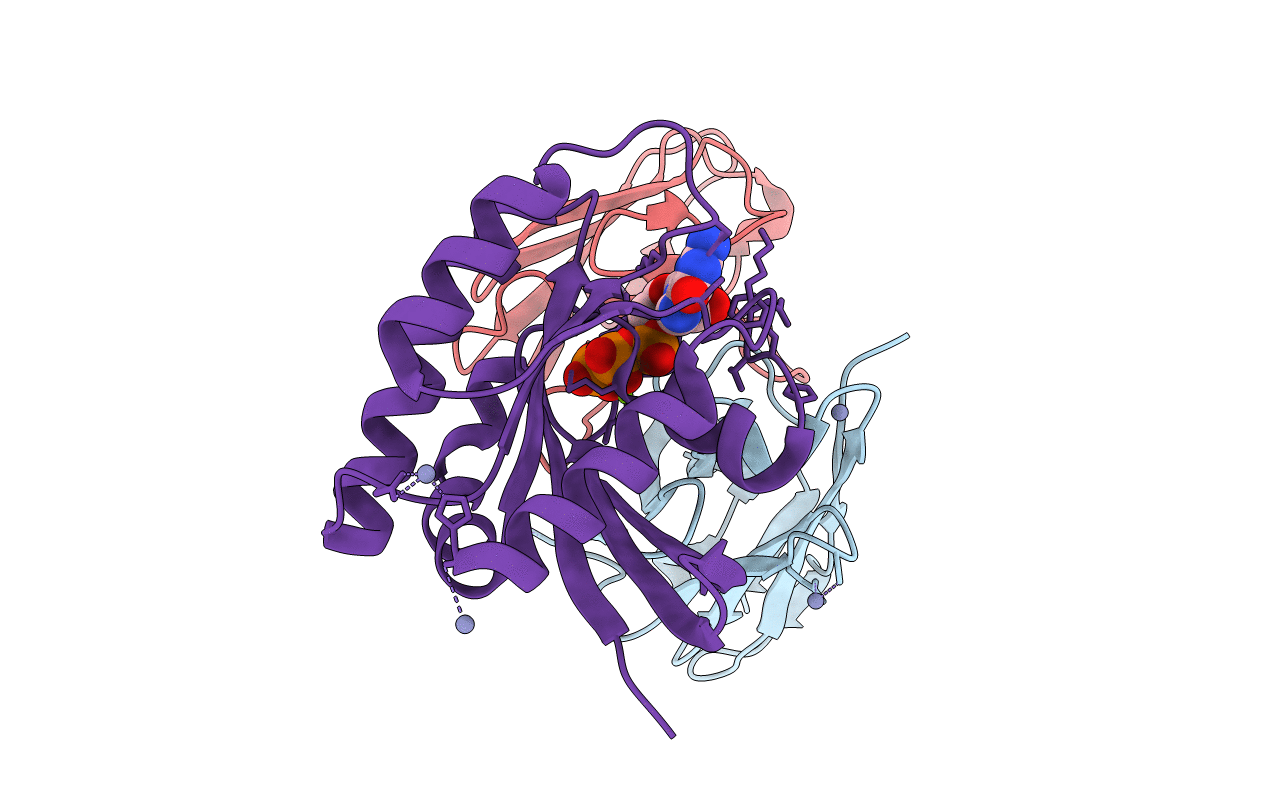
2UZI image
Deposition Date 2007-04-27
Release Date 2007-06-26
Last Version Date 2024-11-13
Entry Detail
PDB ID:
2UZI
Title:
Crystal structure of HRAS(G12V) - anti-RAS Fv complex
Biological Source:
Source Organism(s):
HOMO SAPIENS (Taxon ID: 9606)
Expression System(s):
Method Details:
Experimental Method:
Resolution:
2.00 Å
R-Value Free:
0.27
R-Value Work:
0.19
R-Value Observed:
0.19
Space Group:
P 21 21 2

Macromolecular Entities
Structures with similar UniProt ID
Protein Blast
Polymer Type:polypeptide(L)
Molecule:ANTI-RAS FV HEAVY CHAIN
Chain IDs:A (auth: H)
Chain Length:114
Number of Molecules:1
Biological Source:HOMO SAPIENS
Structures with similar UniProt ID
Protein Blast
Polymer Type:polypeptide(L)
Molecule:ANTI-RAS FV LIGHT CHAIN
Chain IDs:B (auth: L)
Chain Length:104
Number of Molecules:1
Biological Source:HOMO SAPIENS
Structures with similar UniProt ID
Protein Blast
Polymer Type:polypeptide(L)
Molecule:GTPASE HRAS
Gene (Uniprot):HRAS
Mutagens:YES
Chain IDs:C (auth: R)
Chain Length:166
Number of Molecules:1
Biological Source:HOMO SAPIENS
Primary Citation
Tumour Prevention by a Single Antibody Domain Targeting the Interaction of Signal Transduction Proteins with Ras.
EMBO J. 26 3250 ? (2007)
PMID: 17568777 DOI: 10.1038/SJ.EMBOJ.7601744

Abstact

Many disease-related processes occur via protein complexes that are considered undruggable with small molecules. An example is RAS, which is frequently mutated in cancer and contributes to initiation and maintenance of the disease by constitutive signal transduction through protein interaction with effector proteins, like PI3K, RAF and RALGDS. Such protein interactions are therefore significant targets for therapy. We describe a single immunoglobulin variable region domain that specifically binds to activated GTP-bound RAS and prevents RAS-dependent tumorigenesis in a mouse model. The crystal structure of the immunoglobulin-RAS complex shows that the variable region competitively binds to the conformationally variant regions of RAS, where its signalling effector molecules interact. This allows the plasma membrane targeted single domain intrabody to inhibit signalling by mutant RAS. This mode of action is a novel advance to directly interfere with oncogenic RAS function in human cancer and shows a universally applicable approach to develop macromolecules to combat cancer. In addition, this method illustrates a general means for interfering with protein interactions that are commonly considered intractable as conventional drug targets.

Legend

Protein

Chemical

Disease

Feedback Form
Name
Email
Institute
Feedback