

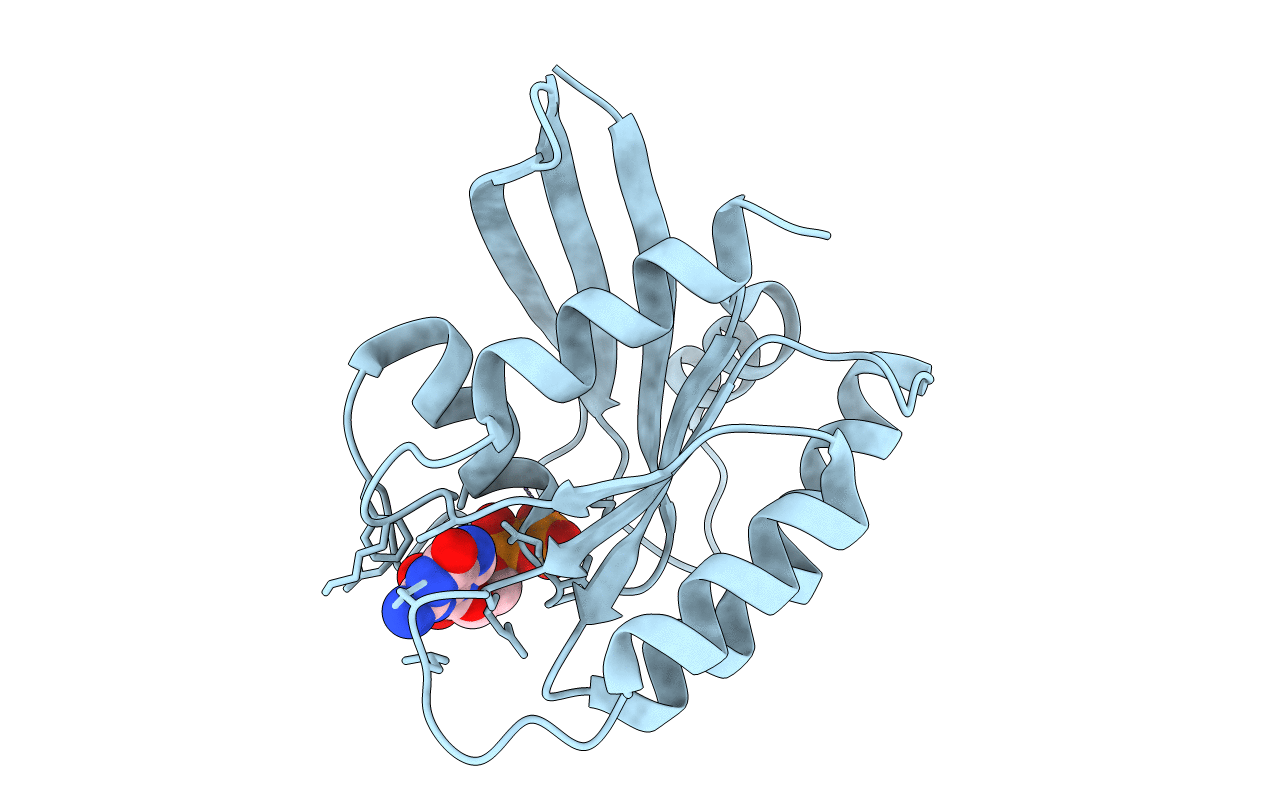
2QUZ image
Deposition Date 2007-08-07
Release Date 2007-12-11
Last Version Date 2023-08-30
Entry Detail
PDB ID:
2QUZ
Title:
Crystal Structure of the activating H-RasK117R mutant in Costello Syndrome, bound to Mg-GDP
Biological Source:
Source Organism(s):
Homo sapiens (Taxon ID: 9606)
Expression System(s):
Method Details:
Experimental Method:
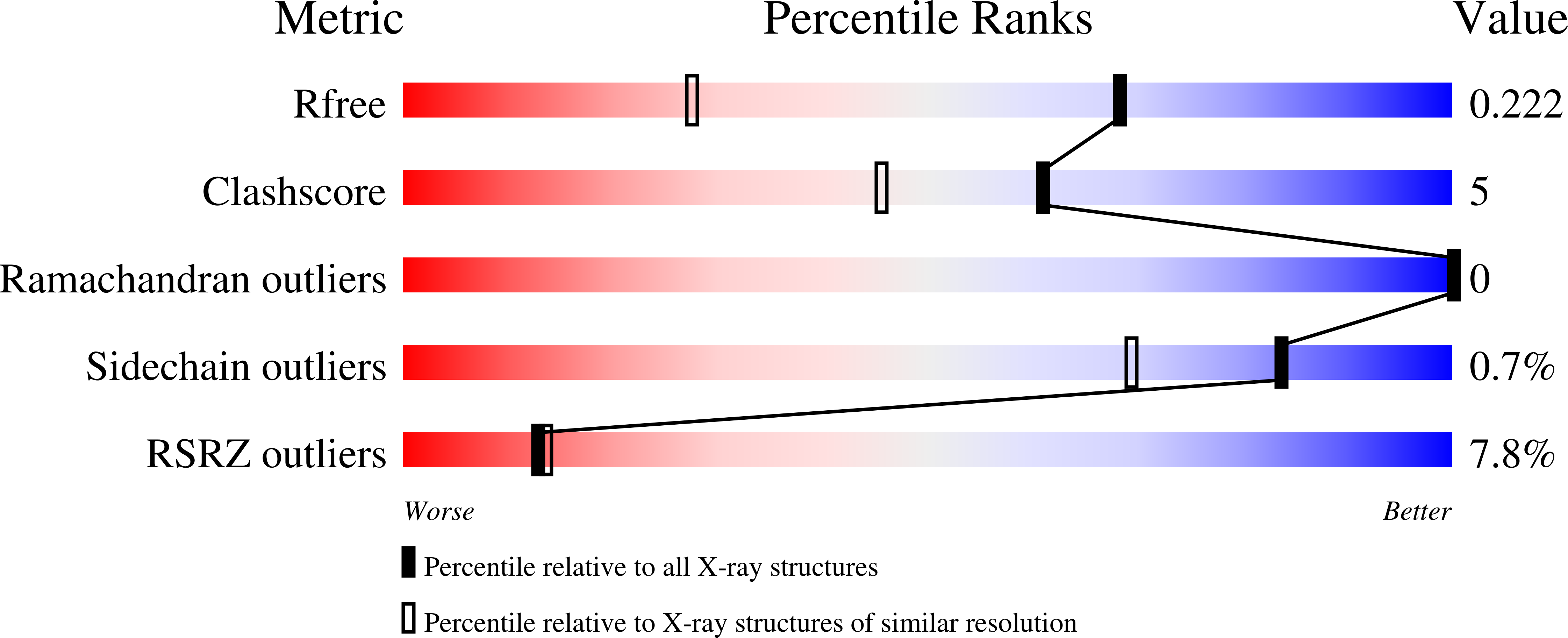
Resolution:
1.49 Å
R-Value Free:
0.22
R-Value Work:
0.20
R-Value Observed:
0.20
Space Group:
H 3 2
Macromolecular Entities
Structures with similar UniProt ID
Protein Blast
Polymer Type:polypeptide(L)
Molecule:GTPase HRas
Gene (Uniprot):HRAS
Mutagens:K117R
Chain IDs:A
Chain Length:166
Number of Molecules:1
Biological Source:Homo sapiens
Primary Citation
Mutation analysis in Costello syndrome: functional and structural characterization of the HRAS p.Lys117Arg mutation.
Hum. Mutat. 29 232 239 (2008)
PMID: 17979197 DOI: 10.1002/humu.20616

Abstact

Costello syndrome is a mental retardation syndrome characterized by high birth weight, postnatal growth retardation, coarse face, loose skin, cardiovascular problems, and tumor predisposition. De novo heterozygous missense mutations in HRAS codon 12 and 13 disturbing the intrinsic GTP hydrolysis cause Costello syndrome. We report a patient with typical Costello syndrome and a novel heterozygous missense mutation in codon 117 (c.350A>G, p.Lys117Arg) of the HRAS gene, resulting in constitutive activation of the RAS/MAPK pathway similar to the typical p.Gly12Ser and p.Gly12Ala mutations. Recombinant HRAS p.Lys117Arg demonstrates normal intrinsic GTP hydrolysis and responsiveness to GTPase-activating proteins, but the nucleotide dissociation rate is increased 80-fold. Consistent with the biochemical data, the crystal structure of the p.Lys117Arg mutant indicates an altered interaction pattern of the side chain that is associated with unfavorable nucleotide binding properties. Together, these data show that a RAS mutation that only perturbs guanine nucleotide binding has similar functional consequences as mutations that impair GTP hydrolysis and causes human disease.

Legend

Protein

Chemical

Disease

Primary Citation of related structures
Feedback Form
Name
Email
Institute
Feedback