

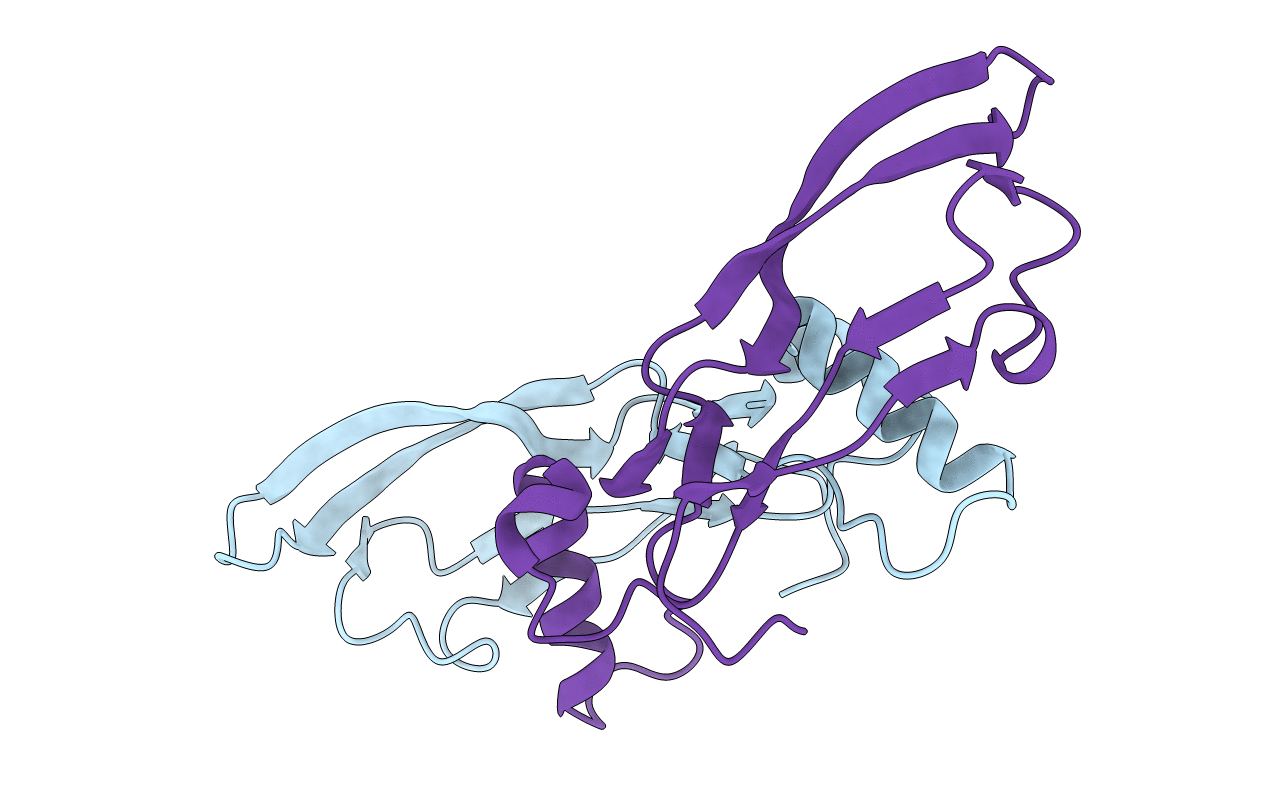
2QCQ image
Deposition Date 2007-06-19
Release Date 2007-10-23
Last Version Date 2024-11-06
Entry Detail
PDB ID:
2QCQ
Title:
Crystal structure of Bone Morphogenetic Protein-3 (BMP-3)
Biological Source:
Source Organism(s):
Homo sapiens (Taxon ID: 9606)
Expression System(s):
Method Details:
Experimental Method:
Resolution:
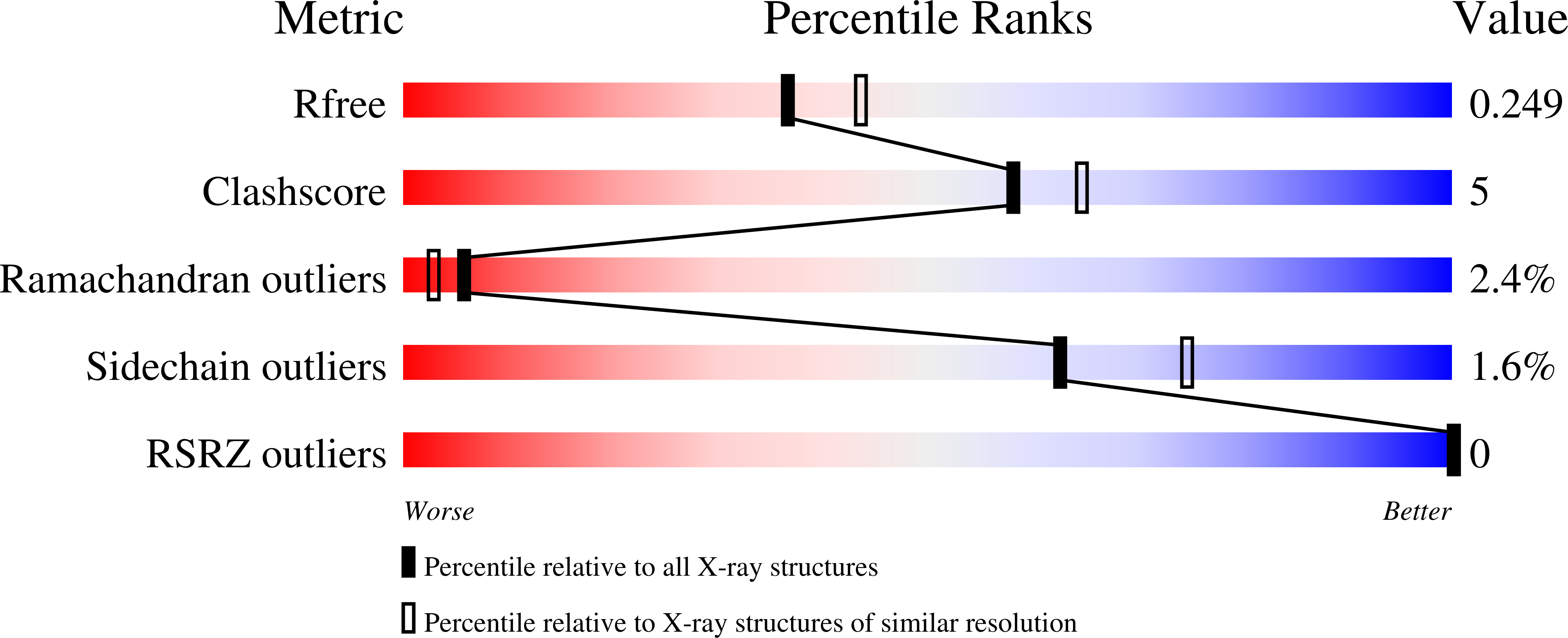
2.21 Å
R-Value Free:
0.25
R-Value Work:
0.22
R-Value Observed:
0.22
Space Group:
H 3
Macromolecular Entities
Structures with similar UniProt ID
Protein Blast
Polymer Type:polypeptide(L)
Molecule:Bone morphogenetic protein 3
Gene (Uniprot):BMP3
Chain IDs:A, B
Chain Length:110
Number of Molecules:2
Biological Source:Homo sapiens
Primary Citation
BMP-3 and BMP-6 Structures Illuminate the Nature of Binding Specificity with Receptors.
Biochemistry 46 12238 12247 (2007)
PMID: 17924656 DOI: 10.1021/bi700907k

Abstact

Bone morphogenetic proteins (BMPs) are extracellular messenger ligands involved in controlling a wide array of developmental and intercellular signaling processes. To initiate their specific intracellular signaling pathways, the ligands recognize and bind two structurally related serine/threonine kinase receptors, termed type I and type II, on the cell surface. Here, we present the crystal structures of BMP-3 and BMP-6, of which BMP-3 has remained poorly understood with respect to its receptor identity, affinity, and specificity. Using surface plasmon resonance (BIAcore) we show that BMP-3 binds Activin Receptor type II (ActRII) with Kd approximately 1.8 microM but ActRIIb with 30-fold higher affinity at Kd approximately 53 nM. This low affinity for ActRII may involve Ser-28 and Asp-33 of BMP-3, which are found only in BMP-3's type II receptor-binding interfaces. Point mutations of either residue to alanine results in up to 20-fold higher affinity to either receptor. We further demonstrate by Smad-based whole cell luciferase assays that the increased affinity of BMP-3S28A to ActRII enables the ligand's signaling ability to a level comparable to that of BMP-6. Focusing on BMP-3's preference for ActRIIb, we find that Lys-76 of ActRII and the structurally equivalent Glu-76 of ActRIIb are distinct between the two receptors. We demonstrate that ActRIIbE76K and ActRII bind BMP-3 with similar affinity, indicating BMP-3 receptor specificity is controlled by the interaction of Lys-30 of BMP-3 with Glu-76 of ActRIIb. These studies illustrate how a single amino acid can regulate the specificity of ligand-receptor binding and potentially alter biological signaling and function in vivo.

Legend

Protein

Chemical

Disease

Primary Citation of related structures
Feedback Form
Name
Email
Institute
Feedback