

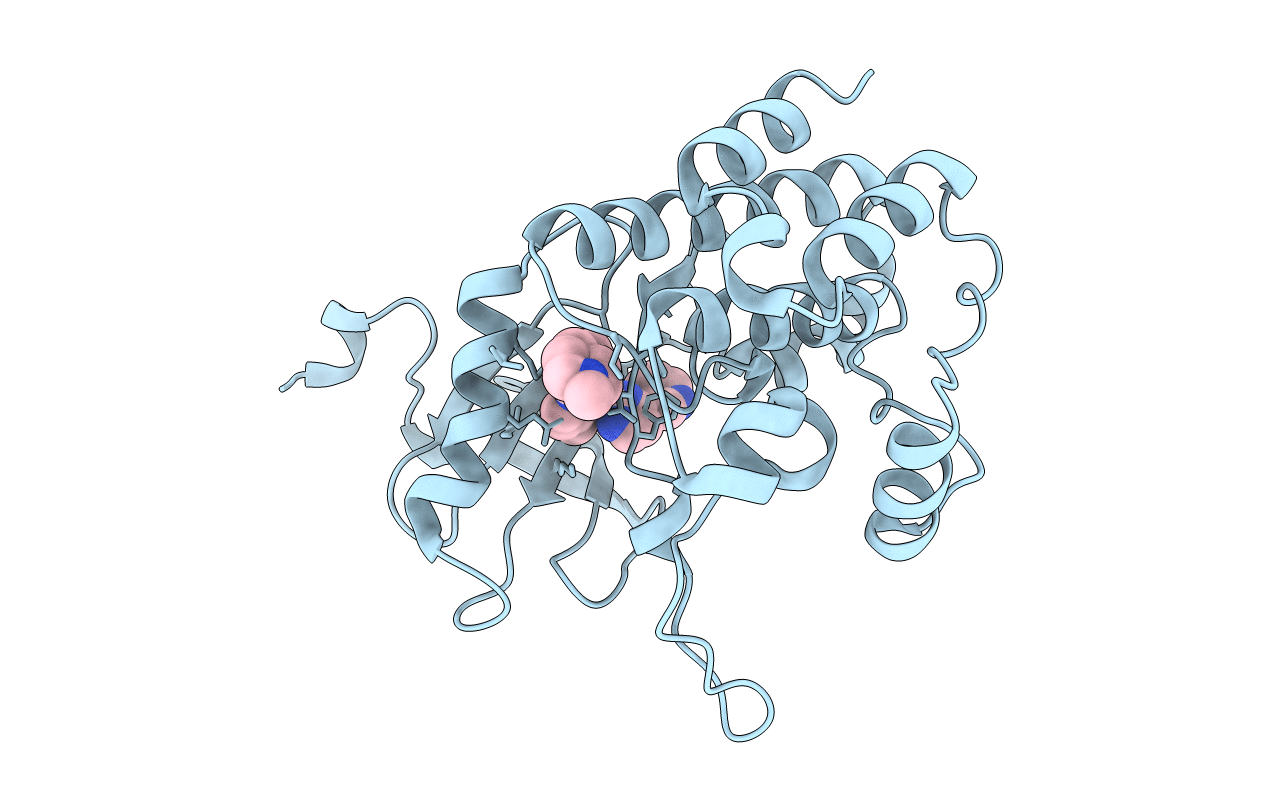
2PL0 image
Deposition Date 2007-04-18
Release Date 2007-10-09
Last Version Date 2024-02-21
Entry Detail
PDB ID:
2PL0
Keywords:
Title:
LCK bound to imatinib
Biological Source:
Source Organism(s):
Homo sapiens (Taxon ID: 9606)
Expression System(s):
Method Details:
Experimental Method:
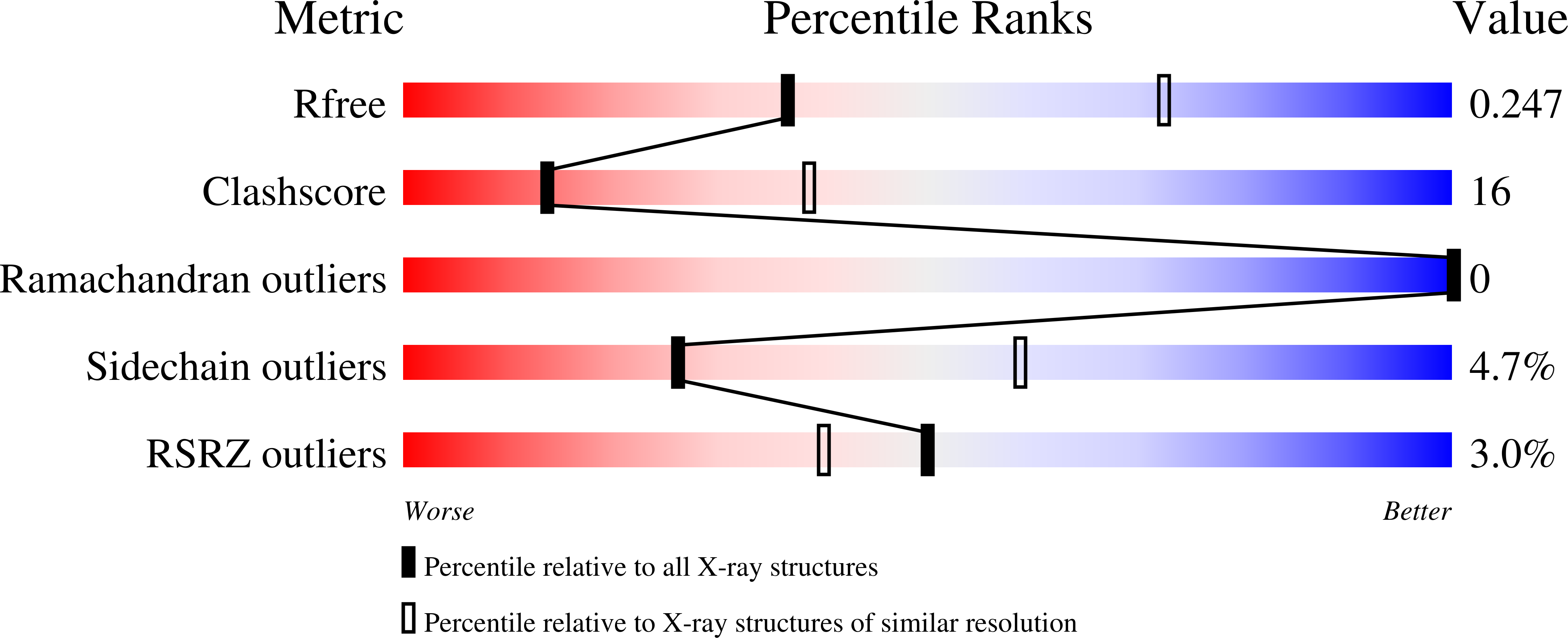
Resolution:
2.80 Å
R-Value Free:
0.26
R-Value Work:
0.21
R-Value Observed:
0.21
Space Group:
P 21 21 2
Macromolecular Entities
Structures with similar UniProt ID
Protein Blast
Polymer Type:polypeptide(L)
Molecule:Proto-oncogene tyrosine-prote
Gene (Uniprot):LCK
Chain IDs:A
Chain Length:289
Number of Molecules:1
Biological Source:Homo sapiens
Ligand Molecules
Primary Citation
Classifying protein kinase structures guides use of ligand-selectivity profiles to predict inactive conformations: Structure of lck/imatinib complex.
Proteins 70 1451 1460 (2007)
PMID: 17910071 DOI: 10.1002/prot.21633

Abstact

We report a clustering of public human protein kinase structures based on the conformations of two structural elements, the activation segment and the C-helix, revealing three discrete clusters. One cluster includes kinases in catalytically active conformations. Each of the other clusters contains a distinct inactive conformation. Typically, kinases adopt at most one of the inactive conformations in available X-ray structures, implying that one of the conformations is preferred for many kinases. The classification is consistent with selectivity profiles of several well-characterized kinase inhibitors. We show further that inhibitor selectivity profiles guide kinase classification. For example, selective inhibition of lck among src-family kinases by imatinib (Gleevec) suggests that the relative stabilities of inactive conformations of lck are different from other src-family kinases. We report the X-ray structure of the lck/imatinib complex, confirming that the conformation adopted by lck is distinct from other structurally-characterized src-family kinases and instead resembles kinases abl1 and kit in complex with imatinib. Our classification creates new paths for designing small-molecule inhibitors.

Legend

Protein

Chemical

Disease

Primary Citation of related structures
Feedback Form
Name
Email
Institute
Feedback