

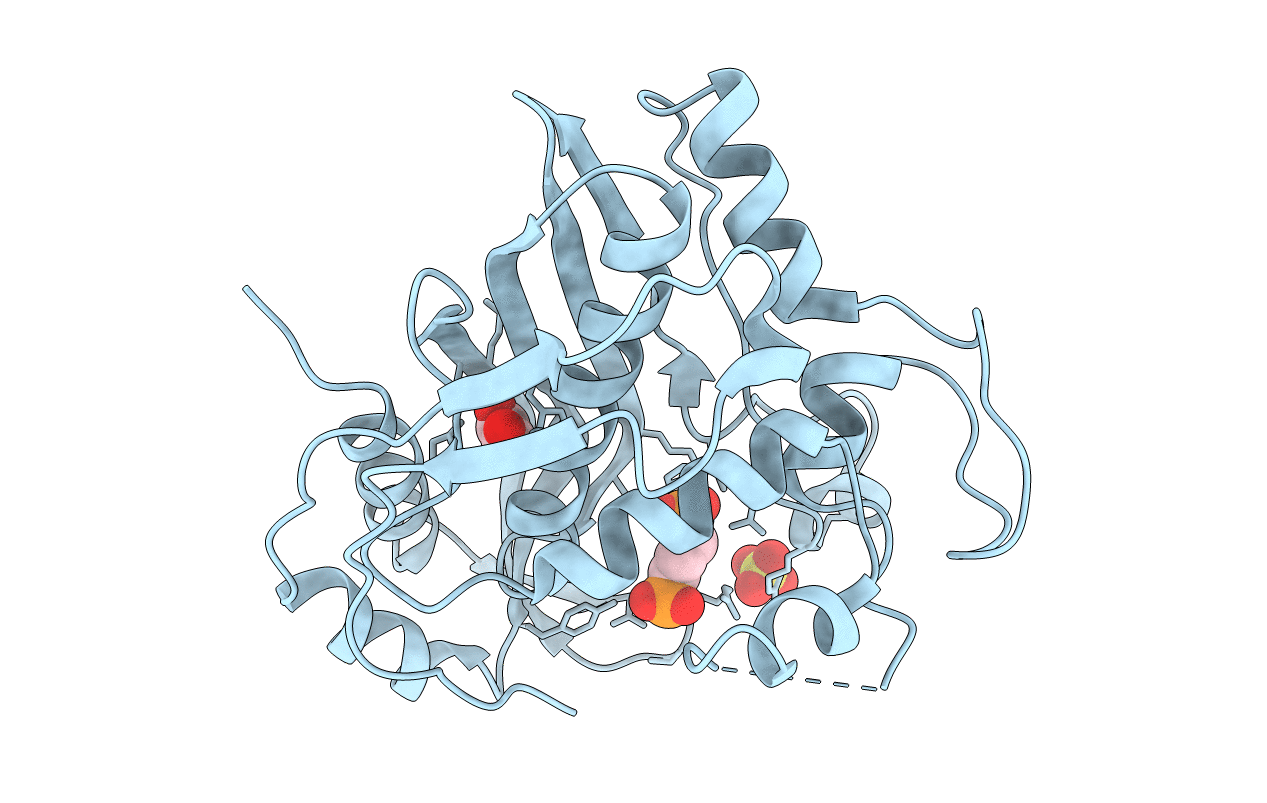
2ONB image
Deposition Date 2007-01-23
Release Date 2007-04-10
Last Version Date 2024-10-30
Entry Detail
PDB ID:
2ONB
Keywords:
Title:
Human Thymidylate Synthase at low salt conditions with PDPA bound
Biological Source:
Source Organism(s):
Homo sapiens (Taxon ID: 9606)
Expression System(s):
Method Details:
Experimental Method:
Resolution:
2.70 Å
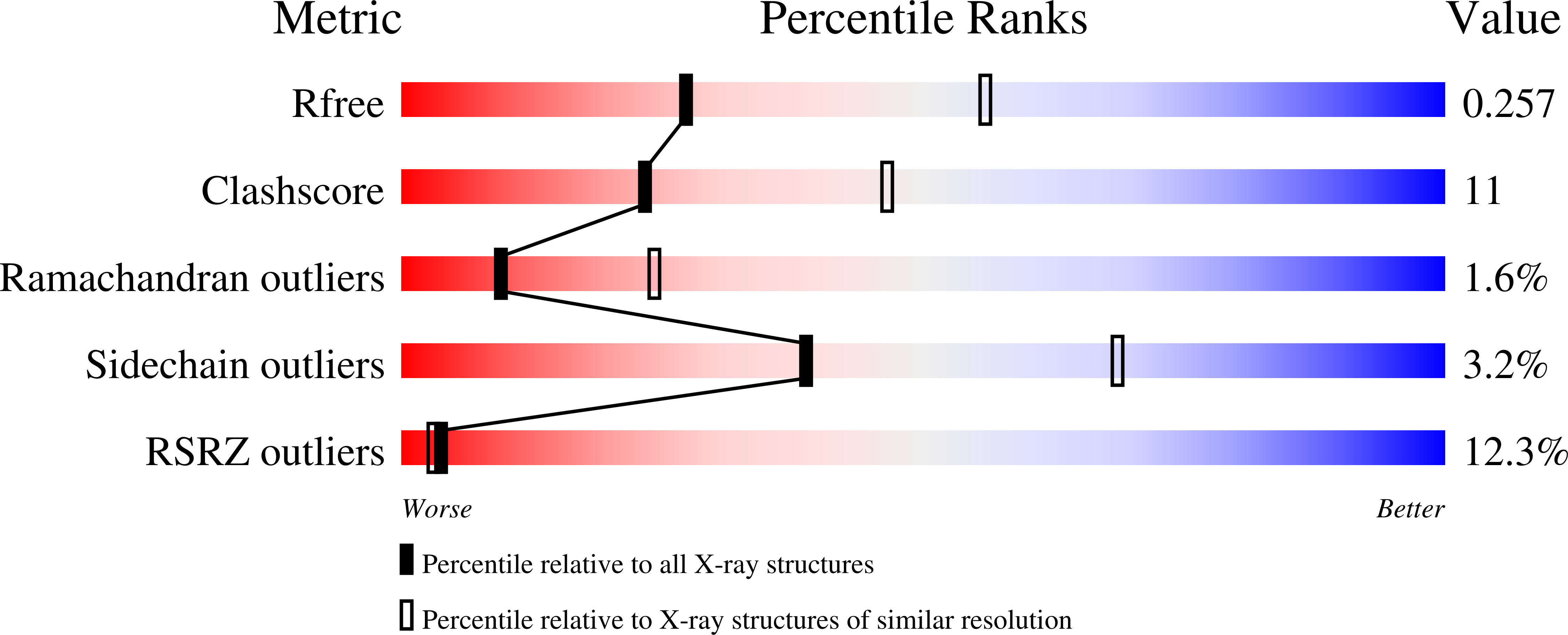
R-Value Free:
0.25
R-Value Work:
0.21
Space Group:
P 31 2 1
Macromolecular Entities
Structures with similar UniProt ID
Protein Blast
Polymer Type:polypeptide(L)
Molecule:Thymidylate synthetase
Chain IDs:A
Chain Length:313
Number of Molecules:1
Biological Source:Homo sapiens
Modified Residue
Compound ID Chain ID Parent Comp ID Details 2D Image
CME A CYS S,S-(2-HYDROXYETHYL)THIOCYSTEINE
Primary Citation
Cooperative Inhibition of Human Thymidylate Synthase by Mixtures of Active Site Binding and Allosteric Inhibitors
Biochemistry 46 2823 2830 (2007)
PMID: 17297914 DOI: 10.1021/bi061309j

Abstact

Thymidylate synthase (TS) is a target in the chemotherapy of colorectal cancer and some other neoplasms. It catalyzes the transfer of a methyl group from methylenetetrahydrofolate to dUMP to form dTMP. On the basis of structural considerations, we have introduced 1,3-propanediphosphonic acid (PDPA) as an allosteric inhibitor of human TS (hTS); it is proposed that PDPA acts by stabilizing an inactive conformer of loop 181-197. Kinetic studies showed that PDPA is a mixed (noncompetitive) inhibitor versus dUMP. In contrast, versus methylenetrahydrofolate at concentrations lower than 0.25 microM, PDPA is an uncompetitive inhibitor, while at PDPA concentrations higher than 1 microM the inhibiton is noncompetive, as expected. At the concentrations corresponding to uncompetitive inhibition, PDPA shows positive cooperativity with an antifolate inhibitor, ZD9331, which binds to the active conformer. PDPA binding leads to the formation of hTS tetramers, but not higher oligomers. These data are consistent with a model in which hTS exists preferably as an asymmetric dimer with one subunit in the active conformation of loop 181-197 and the other in the inactive conformation.

Legend

Protein

Chemical

Disease

Primary Citation of related structures
Feedback Form
Name
Email
Institute
Feedback