

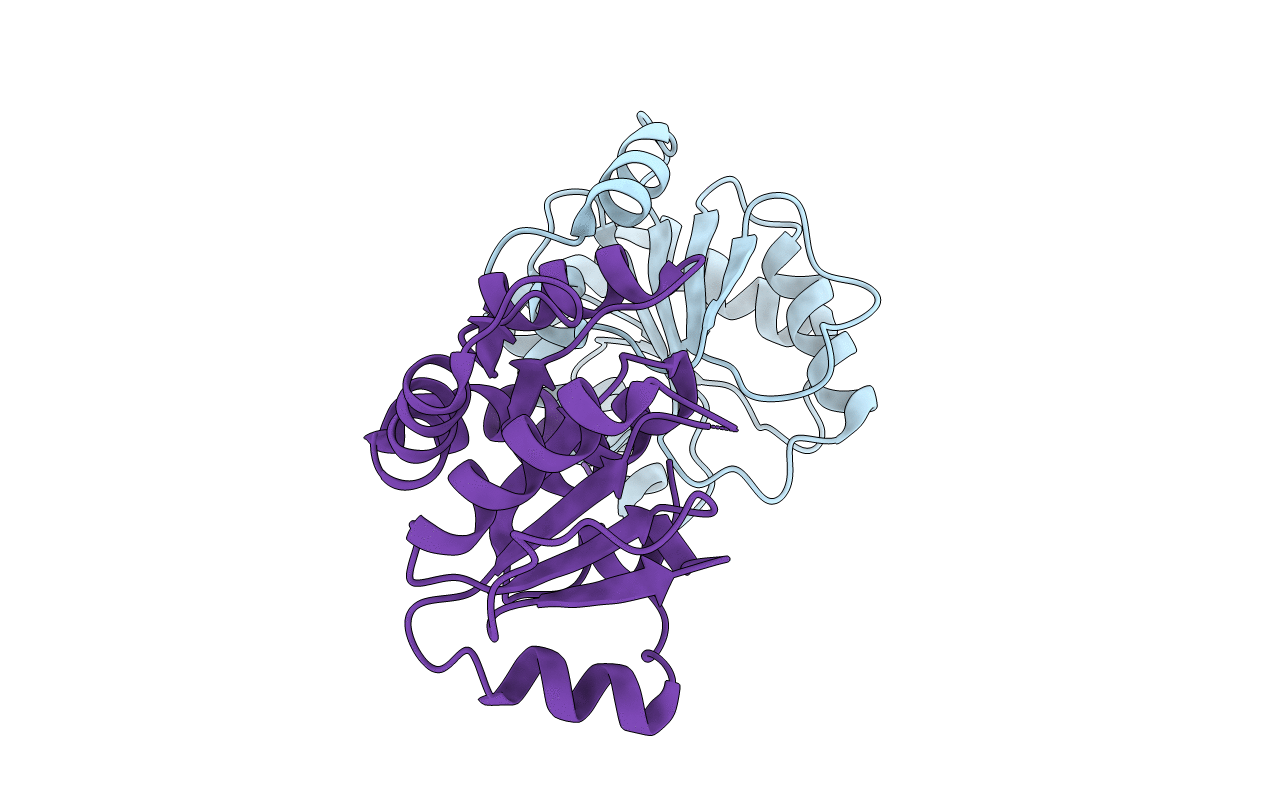
2O6L image
Deposition Date 2006-12-07
Release Date 2007-05-01
Last Version Date 2024-10-30
Entry Detail
PDB ID:
2O6L
Keywords:
Title:
Crystal Structure of the UDP-Glucuronic Acid Binding Domain of the Human Drug Metabolizing UDP-Glucuronosyltransferase 2B7
Biological Source:
Source Organism(s):
Homo sapiens (Taxon ID: 9606)
Expression System(s):
Method Details:
Experimental Method:
Resolution:
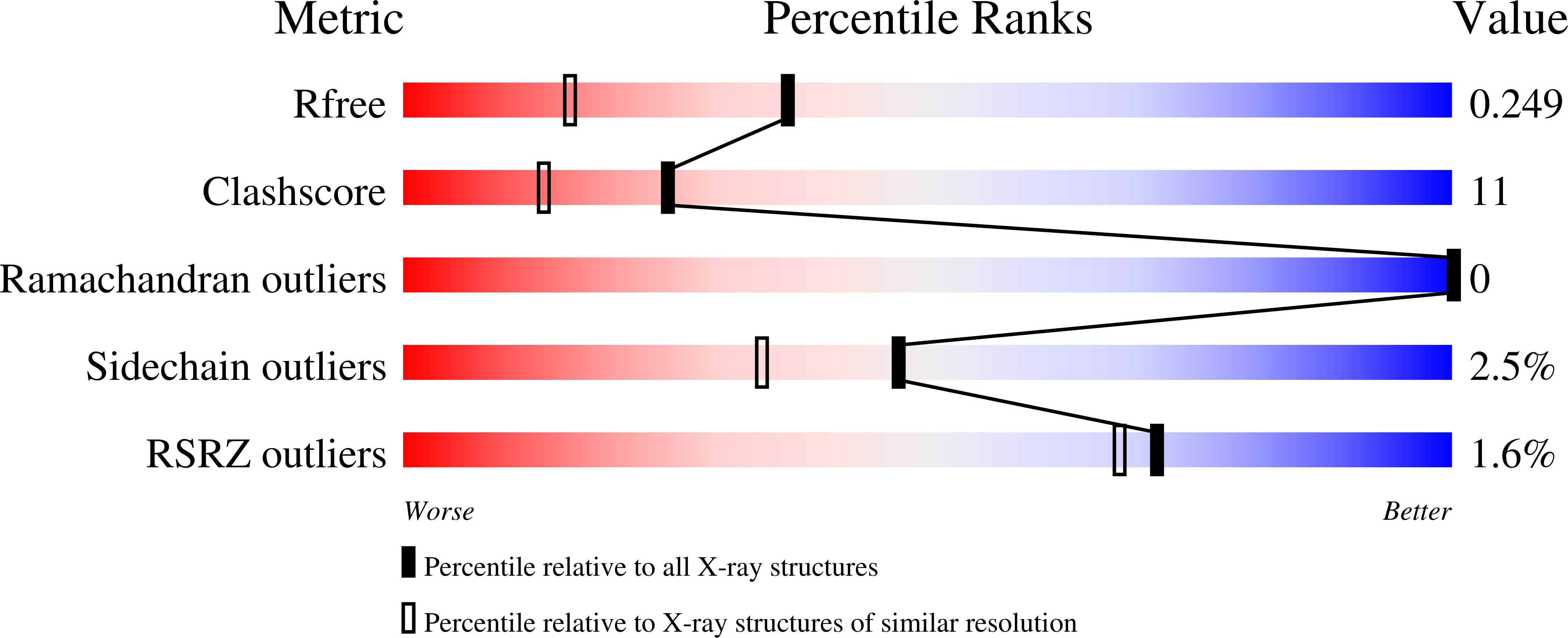
1.80 Å
R-Value Free:
0.24
R-Value Work:
0.21
R-Value Observed:
0.21
Space Group:
P 65 2 2
Macromolecular Entities
Structures with similar UniProt ID
Protein Blast
Polymer Type:polypeptide(L)
Molecule:UDP-glucuronosyltransferase 2
Gene (Uniprot):UGT2B7
Chain IDs:A, B
Chain Length:170
Number of Molecules:2
Biological Source:Homo sapiens
Modified Residue
Compound ID Chain ID Parent Comp ID Details 2D Image
MSE A MET SELENOMETHIONINE
Primary Citation
Crystal Structure of the Cofactor-Binding Domain of the Human Phase II Drug-Metabolism Enzyme UDP-Glucuronosyltransferase 2B7.
J. Mol. Biol. 369 498 511 (2007)
PMID: 17442341 DOI: 10.1016/j.jmb.2007.03.066

Abstact

Human UDP-glucuronosyltransferases (UGT) are the dominant phase II conjugative drug metabolism enzymes that also play a central role in processing a range of endobiotic compounds. UGTs catalyze the covalent addition of glucuronic acid sugar moieties to a host of therapeutics and environmental toxins, as well as to a variety of endogenous steroids and other signaling molecules. We report the 1.8-A resolution apo crystal structure of the UDP-glucuronic acid binding domain of human UGT isoform 2B7 (UGT2B7), which catalyzes the conjugative elimination of opioid, antiviral, and anticancer drugs. This is the first crystal structure of any region of a mammalian UGT drug metabolism enzyme. Designated UGT2B7 mutants at residues predicted to interact with the UDP-glucuronic acid cofactor exhibited significantly impaired catalytic activity, with maximum effects observed for amino acids closest to the glucuronic acid sugar transferred to the acceptor molecule. Homology modeling of UGT2B7 with related plant flavonoid glucosyltransferases indicates human UGTs share a common catalytic mechanism. Point mutations at predicted catalytic residues in UGT2B7 abrogated activity, strongly suggesting human UGTs also utilize a serine hydrolase-like catalytic mechanism to facilitate glucuronic acid transfer.

Legend

Protein

Chemical

Disease

Primary Citation of related structures
Feedback Form
Name
Email
Institute
Feedback