

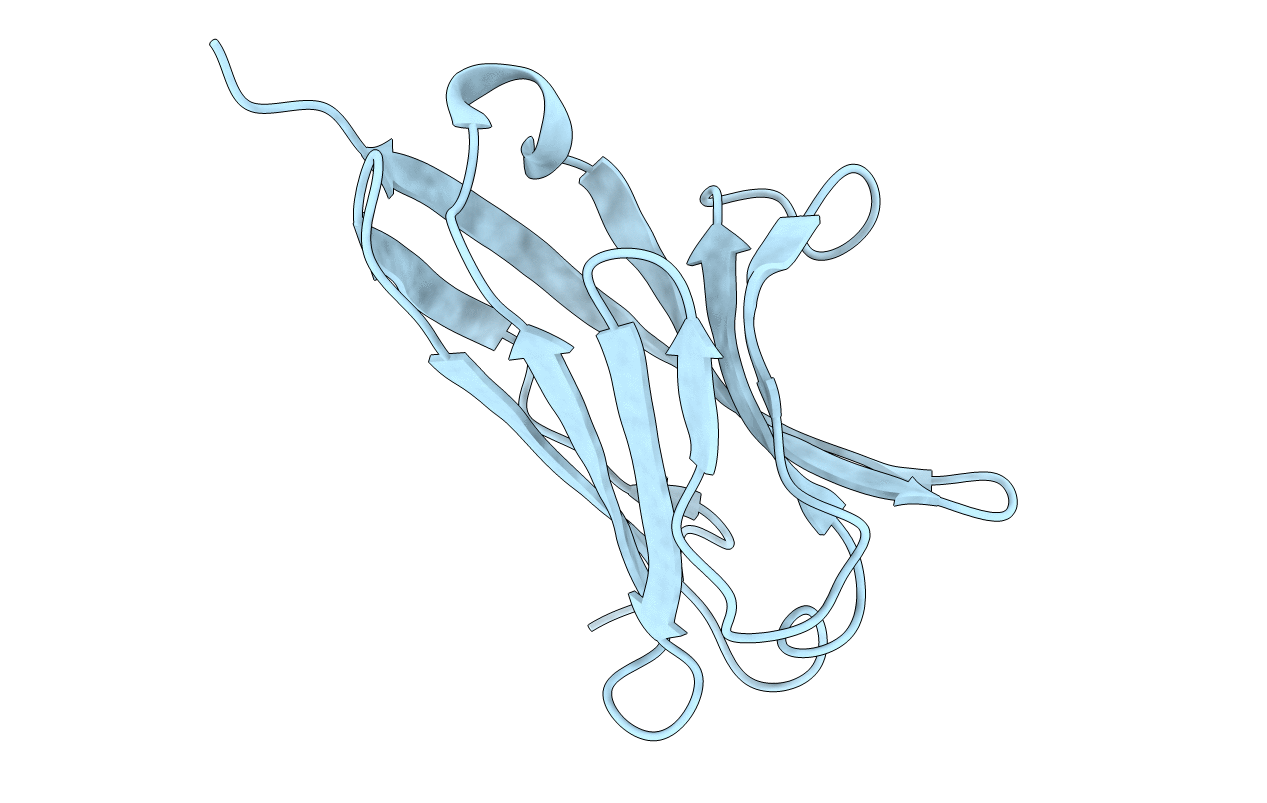
2NMS image
Deposition Date 2006-10-23
Release Date 2006-11-07
Last Version Date 2024-10-09
Entry Detail
PDB ID:
2NMS
Keywords:
Title:
The Crystal Structure of the Extracellular Domain of the Inhibitor Receptor Expressed on Myeloid Cells IREM-1
Biological Source:
Source Organism(s):
Homo sapiens (Taxon ID: 9606)
Expression System(s):
Method Details:
Experimental Method:
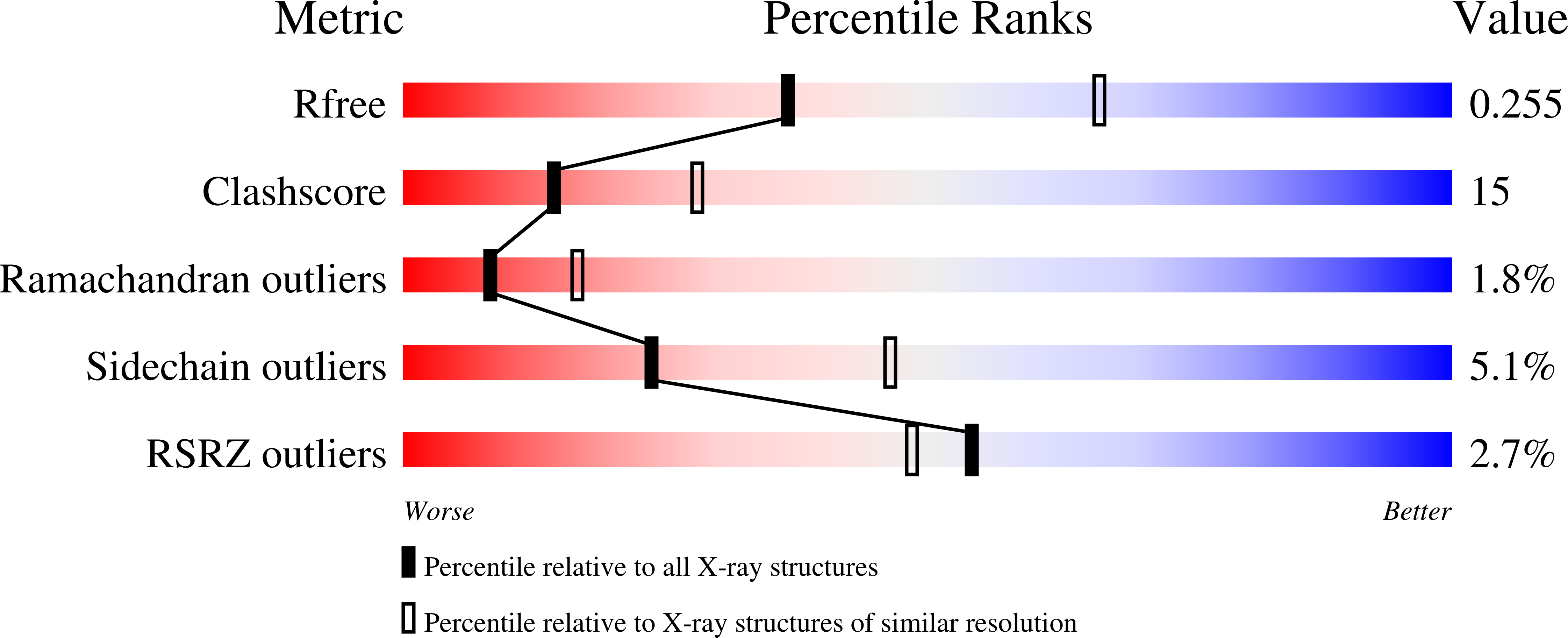
Resolution:
2.60 Å
R-Value Free:
0.25
R-Value Work:
0.21
Space Group:
P 31 2 1
Macromolecular Entities
Structures with similar UniProt ID
Protein Blast
Polymer Type:polypeptide(L)
Molecule:CMRF35-like-molecule 1
Gene (Uniprot):CD300LF
Chain IDs:A
Chain Length:124
Number of Molecules:1
Biological Source:Homo sapiens
Primary Citation
The Crystal Structure of the Extracellular Domain of the Inhibitor Receptor Expressed on Myeloid Cells IREM-1.
J. Mol. Biol. 367 310 318 (2007)
PMID: 17275839 DOI: 10.1016/j.jmb.2007.01.011

Abstact

The immune receptors expressed on myeloid cells (IREM) are type I transmembrane proteins encoded on human chromosome 17 (17q25.1), whose function is believed to be important in controlling inflammation. To date, three IREM receptors have been identified. IREM-1 functions as an inhibitory receptor, whereas IREM-2 and IREM-3 serve an activating function. Here, we report the crystal structure of IREM-1 extracellular domain at 2.6 A resolution. The overall fold of IREM-1 resembles that of a V-type immunoglobulin domain, and reveals overall close homology with immunoglobulin domains from other immunoreceptors such as CLM-1, TREM-1, TLT-1 and NKp44. Comparing the surface electrostatic potential and hydrophobicity of IREM-1 with its murine homologous CLM-1, we observed unique structural properties for the complementary determining region of IREM-1, which suggests that they may be involved in recognition of the IREM-1 ligand. Particularly interesting is the structural conformation and physical properties of the antibody's equivalent CDR3 loop, which we show to be a structurally variable region of the molecule and therefore could be the main structural determinant for ligand discrimination and binding. In addition, the analysis of the IREM-1 structure revealed the presence of four structurally different cavities. Three of these cavities form a continuous hydrophobic groove on the IREM-1 surface, which point to a region of the molecule capable of accommodating potential ligands.

Legend

Protein

Chemical

Disease

Primary Citation of related structures
Feedback Form
Name
Email
Institute
Feedback