

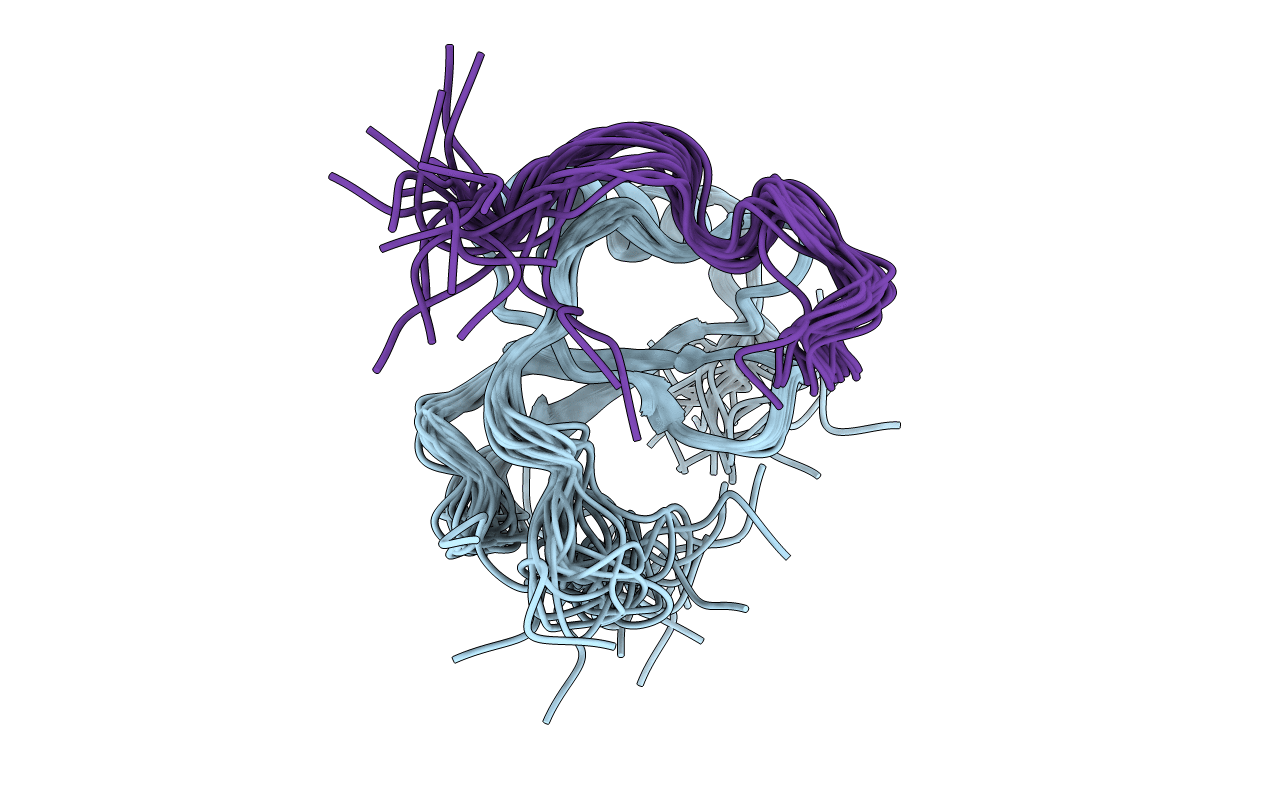
2MPM image
Deposition Date 2014-05-26
Release Date 2014-12-10
Last Version Date 2024-11-06
Entry Detail
PDB ID:
2MPM
Keywords:
Title:
Structural Basis of Receptor Sulfotyrosine Recognition by a CC Chemokine: the N-terminal Region of CCR3 Bound to CCL11/Eotaxin-1
Biological Source:
Source Organism(s):
Homo sapiens (Taxon ID: 9606)
Expression System(s):
Method Details:
Experimental Method:
Conformers Calculated:
64
Conformers Submitted:
20
Selection Criteria:
structures with the lowest energy

Macromolecular Entities
Structures with similar UniProt ID
Protein Blast
Polymer Type:polypeptide(L)
Molecule:Eotaxin
Gene (Uniprot):CCL11
Chain IDs:A
Chain Length:74
Number of Molecules:1
Biological Source:Homo sapiens
Structures with similar UniProt ID
Protein Blast
Polymer Type:polypeptide(L)
Molecule:CCR3
Chain IDs:B
Chain Length:16
Number of Molecules:1
Biological Source:HOMO SAPIENS
Modified Residue
Compound ID Chain ID Parent Comp ID Details 2D Image
TYS B TYR O-SULFO-L-TYROSINE
Ligand Molecules
Primary Citation
Structural Basis of Receptor Sulfotyrosine Recognition by a CC Chemokine: The N-Terminal Region of CCR3 Bound to CCL11/Eotaxin-1.
Structure 22 1571 1581 (2014)
PMID: 25450766 DOI: 10.1016/j.str.2014.08.023

Abstact

Trafficking of leukocytes in immune surveillance and inflammatory responses is activated by chemokines engaging their receptors. Sulfation of tyrosine residues in peptides derived from the eosinophil chemokine receptor CCR3 dramatically enhances binding to cognate chemokines. We report the structural basis of this recognition and affinity enhancement. We describe the structure of a CC chemokine (CCL11/eotaxin-1) bound to a fragment of a chemokine receptor: residues 8–23 of CCR3, including two sulfotyrosine residues. We also show that intact CCR3 is sulfated and sulfation enhances receptor activity. The CCR3 sulfotyrosine residues form hydrophobic, salt bridge and cation-p interactions with residues that are highly conserved in CC chemokines. However, the orientation of the chemokine relative to the receptor N terminus differs substantially from those observed for two CXC chemokines, suggesting that initial binding of the receptor sulfotyrosine residues guides subsequent steps in receptor activation, thereby influencing the receptor conformational changes and signaling.

Legend

Protein

Chemical

Disease

Primary Citation of related structures
Feedback Form
Name
Email
Institute
Feedback