

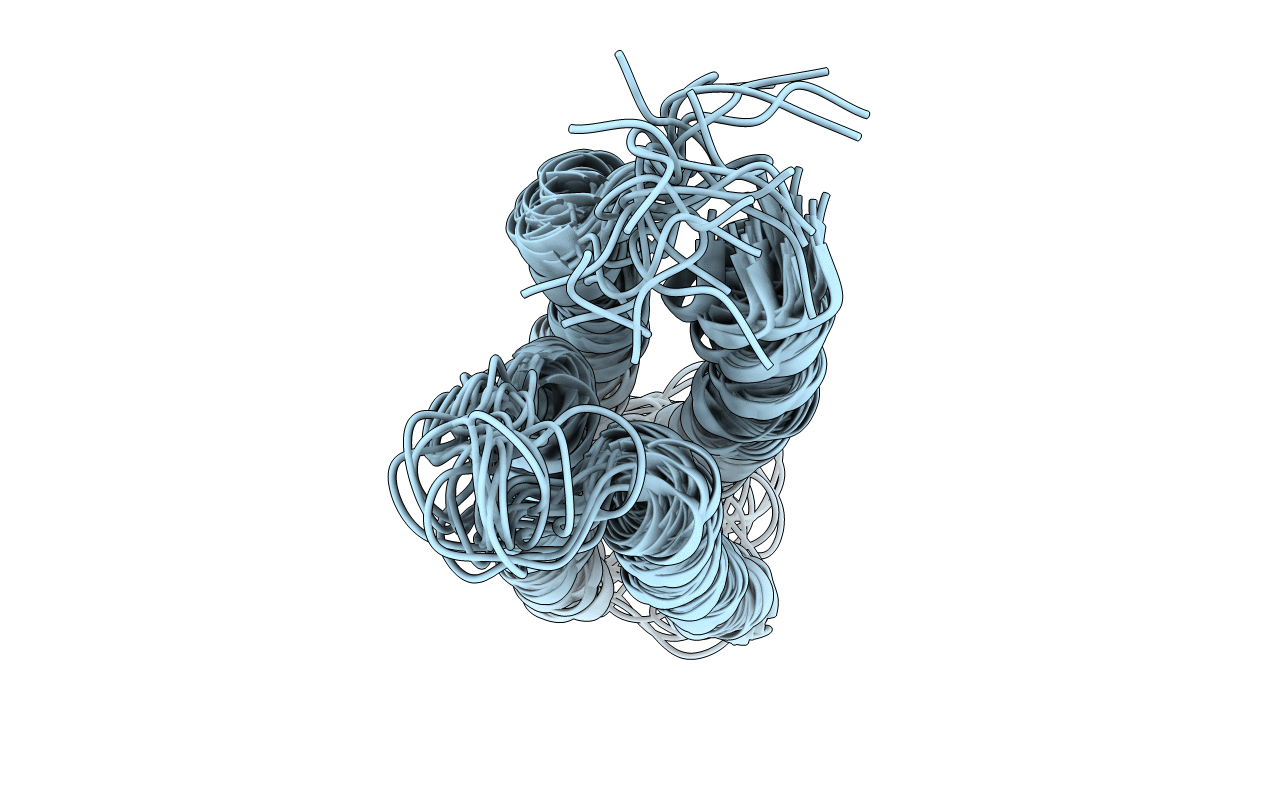
2MAW image
Deposition Date 2013-07-19
Release Date 2013-11-13
Last Version Date 2024-05-15
Entry Detail
PDB ID:
2MAW
Title:
NMR structures of the alpha7 nAChR transmembrane domain.
Biological Source:
Source Organism(s):
Homo sapiens (Taxon ID: 9606)
Expression System(s):
Method Details:
Experimental Method:
Conformers Calculated:
25
Conformers Submitted:
20
Selection Criteria:
structures with the lowest energy

Macromolecular Entities
Structures with similar UniProt ID
Protein Blast
Polymer Type:polypeptide(L)
Molecule:Neuronal acetylcholine recept
Gene (Uniprot):CHRNA7
Mutagens:A195S, V200S, L202S
Chain IDs:A
Chain Length:137
Number of Molecules:1
Biological Source:Homo sapiens
Ligand Molecules
Primary Citation
Insights into distinct modulation of alpha 7 and alpha 7 beta 2 nicotinic acetylcholine receptors by the volatile anesthetic isoflurane.
J. Biol. Chem. 288 35793 35800 (2013)
PMID: 24194515 DOI: 10.1074/jbc.M113.508333

Abstact

Nicotinic acetylcholine receptors (nAChRs) are targets of general anesthetics, but functional sensitivity to anesthetic inhibition varies dramatically among different subtypes of nAChRs. Potential causes underlying different functional responses to anesthetics remain elusive. Here we show that in contrast to the α7 nAChR, the α7β2 nAChR is highly susceptible to inhibition by the volatile anesthetic isoflurane in electrophysiology measurements. Isoflurane-binding sites in β2 and α7 were found at the extracellular and intracellular end of their respective transmembrane domains using NMR. Functional relevance of the identified β2 site was validated via point mutations and subsequent functional measurements. Consistent with their functional responses to isoflurane, β2 but not α7 showed pronounced dynamics changes, particularly for the channel gate residue Leu-249(9'). These results suggest that anesthetic binding alone is not sufficient to generate functional impact; only those sites that can modulate channel dynamics upon anesthetic binding will produce functional effects.

Legend

Protein

Chemical

Disease

Primary Citation of related structures
Feedback Form
Name
Email
Institute
Feedback