

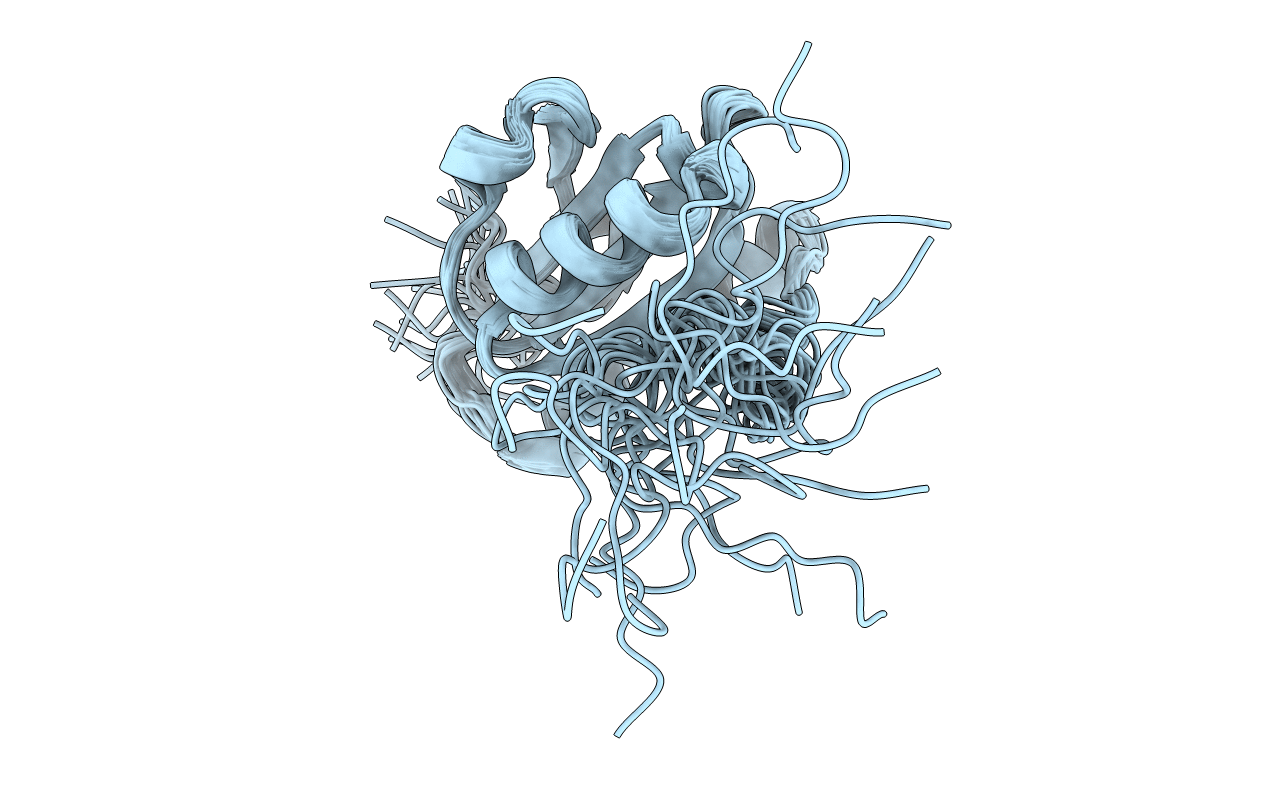
2LWF image
Deposition Date 2012-07-28
Release Date 2013-05-22
Last Version Date 2024-05-15
Entry Detail
PDB ID:
2LWF
Keywords:
Title:
Structure of N-terminal domain of a plant Grx
Biological Source:
Source Organism(s):
Expression System(s):
Method Details:
Experimental Method:
Conformers Calculated:
100
Conformers Submitted:
20
Selection Criteria:
structures with the lowest energy
Macromolecular Entities
Structures with similar UniProt ID
Protein Blast
Polymer Type:polypeptide(L)
Molecule:Monothiol glutaredoxin-S16, c
Gene (Uniprot):GRXS16
Chain IDs:A
Chain Length:119
Number of Molecules:1
Biological Source:Arabidopsis thaliana
Ligand Molecules
Primary Citation
Structural insights into the N-terminal GIY-YIG endonuclease activity of Arabidopsis glutaredoxin AtGRXS16 in chloroplasts.
Proc. Natl. Acad. Sci. U.S.A. 110 9565 9570 (2013)
PMID: 23690600 DOI: 10.1073/pnas.1306899110

Abstact

Glutaredoxins (Grxs) have been identified across taxa as important mediators in various physiological functions. A chloroplastic monothiol glutaredoxin, AtGRXS16 from Arabidopsis thaliana, comprises two distinct functional domains, an N-terminal domain (NTD) with GlyIleTyr-TyrIleGly (GIY-YIG) endonuclease motif and a C-terminal Grx module, to coordinate redox regulation and DNA cleavage in chloroplasts. Structural determination of AtGRXS16-NTD showed that it possesses a GIY-YIG endonuclease fold, but the critical residues for the nuclease activity are different from typical GIY-YIG endonucleases. AtGRXS16-NTD was able to cleave λDNA and chloroplast genomic DNA, and the nuclease activity was significantly reduced in AtGRXS16. Functional analysis indicated that AtGRXS16-NTD could inhibit the ability of AtGRXS16 to suppress the sensitivity of yeast grx5 cells to oxidative stress; however, the C-terminal Grx domain itself and AtGRXS16 with a Cys123Ser mutation were active in these cells and able to functionally complement a Grx5 deficiency in yeast. Furthermore, the two functional domains were shown to be negatively regulated through the formation of an intramolecular disulfide bond. These findings unravel a manner of regulation for Grxs and provide insights into the mechanistic link between redox regulation and DNA metabolism in chloroplasts.

Legend

Protein

Chemical

Disease

Primary Citation of related structures
Feedback Form
Name
Email
Institute
Feedback