

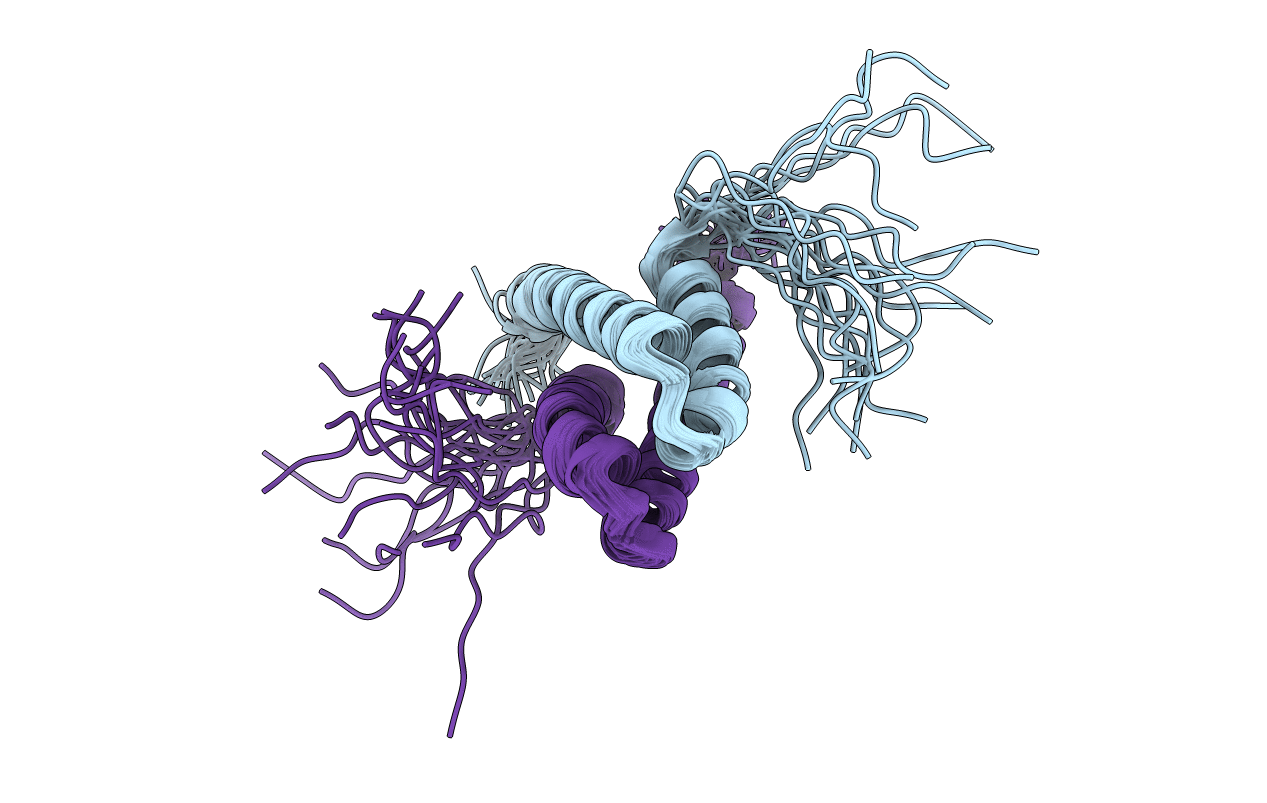
2KW6 image
Deposition Date 2010-03-31
Release Date 2010-05-26
Last Version Date 2024-05-15
Entry Detail
PDB ID:
2KW6
Keywords:
Title:
Solution NMR Structure of Cyclin-dependent kinase 2-associated protein 1 (CDK2-associated protein 1; oral cancer suppressor Deleted in oral cancer 1, DOC-1) from H.sapiens, Northeast Structural Genomics Consortium Target Target HR3057H
Biological Source:
Source Organism(s):
Homo sapiens (Taxon ID: 9606)
Expression System(s):
Method Details:
Experimental Method:
Conformers Calculated:
100
Conformers Submitted:
20
Selection Criteria:
structures with the lowest energy

Macromolecular Entities
Structures with similar UniProt ID
Protein Blast
Polymer Type:polypeptide(L)
Molecule:Cyclin-dependent kinase 2-ass
Gene (Uniprot):CDK2AP1
Chain IDs:A, B
Chain Length:65
Number of Molecules:2
Biological Source:Homo sapiens
Ligand Molecules
Primary Citation
Human cyclin-dependent kinase 2-associated protein 1 (CDK2AP1) is dimeric in its disulfide-reduced state, with natively disordered N-terminal region.
J. Biol. Chem. 287 16541 16549 (2012)
PMID: 22427660 DOI: 10.1074/jbc.M112.343863

Abstact

CDK2AP1 (cyclin-dependent kinase 2-associated protein 1), corresponding to the gene doc-1 (deleted in oral cancer 1), is a tumor suppressor protein. The doc-1 gene is absent or down-regulated in hamster oral cancer cells and in many other cancer cell types. The ubiquitously expressed CDK2AP1 protein is the only known specific inhibitor of CDK2, making it an important component of cell cycle regulation during G(1)-to-S phase transition. Here, we report the solution structure of CDK2AP1 by combined methods of solution state NMR and amide hydrogen/deuterium exchange measurements with mass spectrometry. The homodimeric structure of CDK2AP1 includes an intrinsically disordered 60-residue N-terminal region and a four-helix bundle dimeric structure with reduced Cys-105 in the C-terminal region. The Cys-105 residues are, however, poised for disulfide bond formation. CDK2AP1 is phosphorylated at a conserved Ser-46 site in the N-terminal "intrinsically disordered" region by IκB kinase ε.

Legend

Protein

Chemical

Disease

Primary Citation of related structures
Feedback Form
Name
Email
Institute
Feedback