

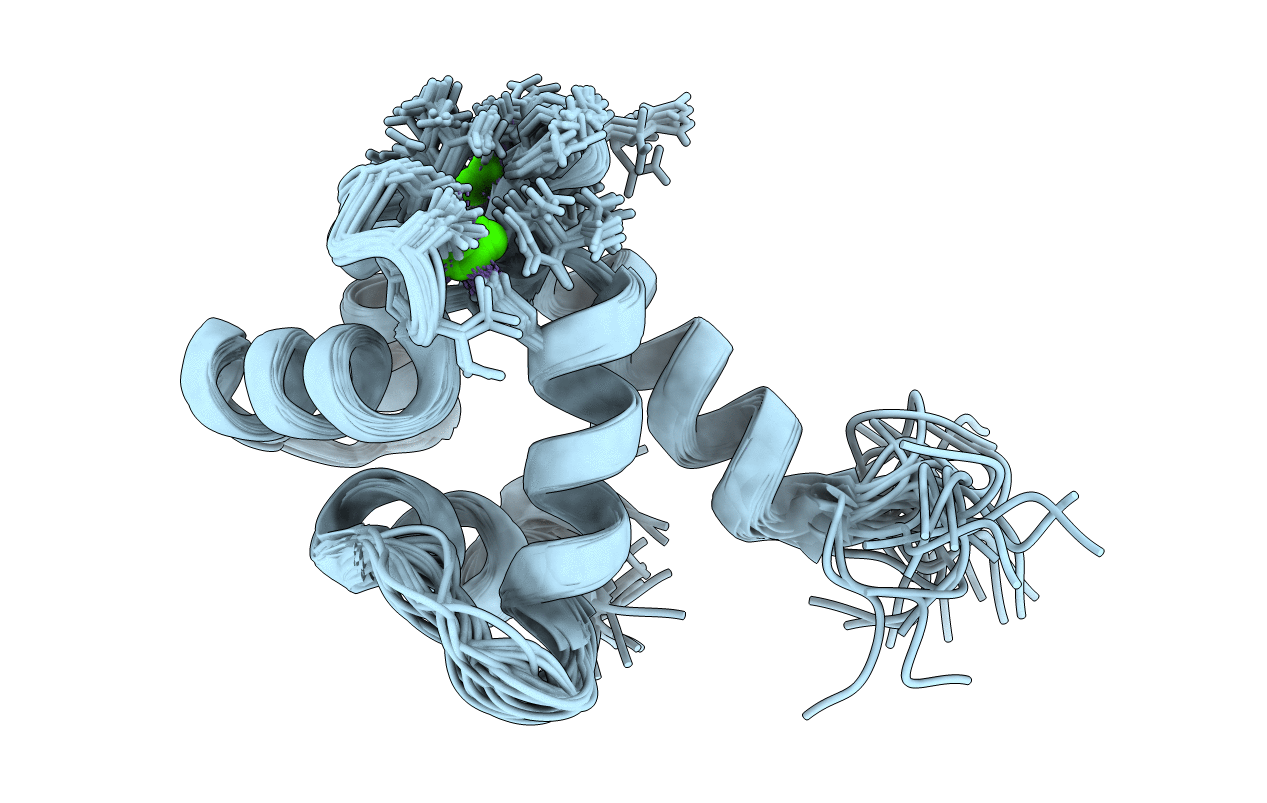
2KN2 image
Deposition Date 2009-08-12
Release Date 2009-08-25
Last Version Date 2024-05-22
Entry Detail
PDB ID:
2KN2
Title:
Solution structure of the C-terminal domain of soybean calmodulin isoform 4 fused with the calmodulin-binding domain of NtMKP1
Biological Source:
Source Organism(s):
Glycine max (Taxon ID: 3847)
Expression System(s):
Method Details:
Experimental Method:
Conformers Calculated:
200
Conformers Submitted:
30
Selection Criteria:
structures with the lowest energy

Macromolecular Entities
Structures with similar UniProt ID
Protein Blast
Polymer Type:polypeptide(L)
Molecule:Calmodulin
Gene (Uniprot):SCaM-4
Chain IDs:A
Chain Length:92
Number of Molecules:1
Biological Source:Glycine max
Ligand Molecules
Primary Citation
Structural studies of soybean calmodulin isoform 4 bound to the calmodulin-binding domain of tobacco mitogen-activated protein kinase phosphatase-1 provide insights into a sequential target binding mode.
J. Biol. Chem. 284 28292 28305 (2009)
PMID: 19667066 DOI: 10.1074/jbc.M109.025080

Abstact

The calcium regulatory protein calmodulin (CaM) binds in a calcium-dependent manner to numerous target proteins. The calmodulin-binding domain (CaMBD) region of Nicotiana tabacum MAPK phosphatase has an amino acid sequence that does not resemble the CaMBD of any other known Ca(2+)-CaM-binding proteins. Using a unique fusion protein strategy, we have been able to obtain a high resolution solution structure of the complex of soybean Ca(2+)-CaM4 (SCaM4) and this CaMBD. Complete isotope labeling of both parts of the complex in the fusion protein greatly facilitated the structure determination by NMR. The 12-residue CaMBD region was found to bind exclusively to the C-lobe of SCaM4. A specific Trp and Leu side chain are utilized to facilitate strong binding through a novel "double anchor" motif. Moreover, the orientation of the helical peptide on the surface of Ca(2+)-SCaM4 is distinct from other known complexes. The N-lobe of Ca(2+)-SCaM4 in the complex remains free for additional interactions and could possibly act as a calcium-dependent adapter protein. Signaling through the MAPK pathway and increases in intracellular Ca(2+) are both hallmarks of the plant stress response, and our data support the notion that coordination of these responses may occur through the formation of a unique CaM-MAPK phosphatase multiprotein complex.

Legend

Protein

Chemical

Disease

Primary Citation of related structures
Feedback Form
Name
Email
Institute
Feedback