

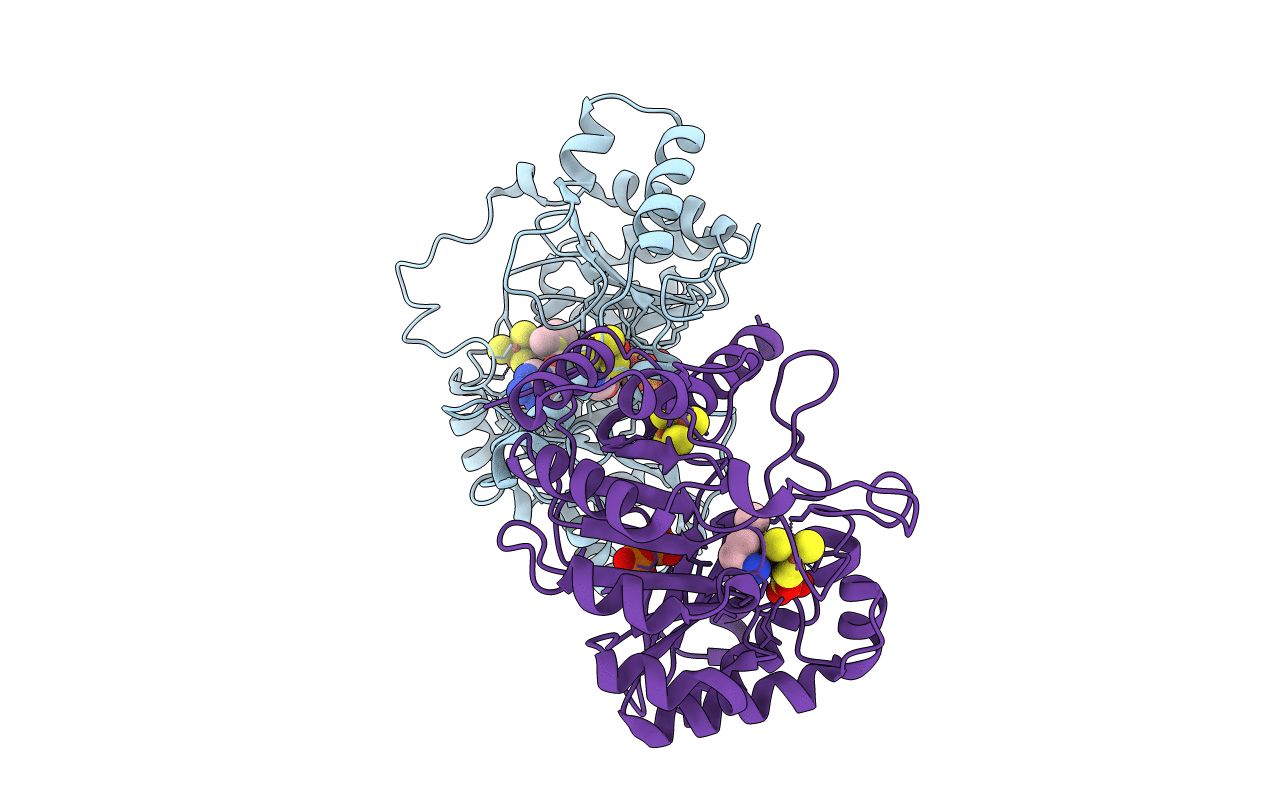
2FB3 image
Deposition Date 2005-12-08
Release Date 2006-05-09
Last Version Date 2024-02-14
Entry Detail
PDB ID:
2FB3
Title:
Structure of MoaA in complex with 5'-GTP
Biological Source:
Source Organism(s):
Expression System(s):
Method Details:
Experimental Method:
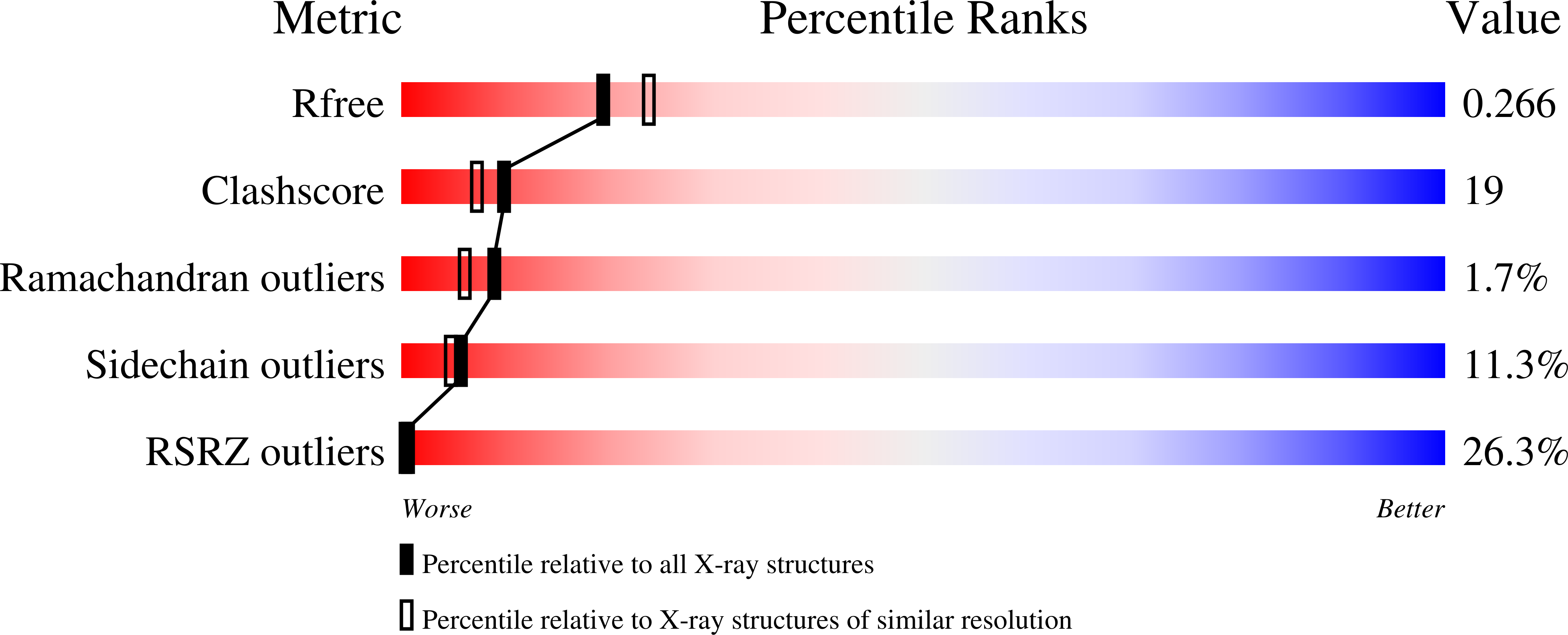
Resolution:
2.35 Å
R-Value Free:
0.27
R-Value Work:
0.22
R-Value Observed:
0.22
Space Group:
P 21 21 21
Macromolecular Entities
Structures with similar UniProt ID
Protein Blast
Polymer Type:polypeptide(L)
Molecule:Molybdenum cofactor biosynthe
Gene (Uniprot):moaA
Chain IDs:A, B
Chain Length:340
Number of Molecules:2
Biological Source:Staphylococcus aureus
Primary Citation
Binding of 5'-GTP to the C-terminal FeS cluster of the radical S-adenosylmethionine enzyme MoaA provides insights into its mechanism
Proc. Natl. Acad. Sci. U.S.A. 103 6829 6834 (2006)
PMID: 16632608 DOI: 10.1073/pnas.0510711103

Abstact

The first step in molybdenum cofactor biosynthesis, the conversion of 5'-GTP to precursor Z, an oxygen-sensitive tetrahydropyranopterin is catalyzed by the S-adenosylmethionine (SAM)-dependent enzyme MoaA and the accessory protein MoaC. This reaction involves the radical-initiated intramolecular rearrangement of the guanine C8 atom. MoaA harbors an N-terminal [4Fe-4S] cluster, which is involved in the reductive cleavage of SAM and generates a 5'-deoxyadenosyl radical (5'-dA*), and a C-terminal [4Fe-4S] cluster presumably involved in substrate binding and/or activation. Biochemical studies identified residues involved in 5'-GTP binding and the determinants of nucleotide specificity. The crystal structure of MoaA in complex with 5'-GTP confirms the biochemical data and provides valuable insights into the subsequent radical reaction. MoaA binds 5'-GTP with high affinity and interacts through its C-terminal [4Fe-4S] cluster with the guanine N1 and N2 atoms, in a yet uncharacterized binding mode. The tightly anchored triphosphate moiety prevents the escape of radical intermediates. This structure also visualizes the L-Met and 5'-dA cleavage products of SAM. Rotation of the 5'-dA ribose and/or conformational changes of the guanosine are proposed to bring the 5'-deoxyadenosyl radical into close proximity of either the ribose C2' and C3' or the guanine C8 carbon atoms leading to hydrogen abstraction.

Legend

Protein

Chemical

Disease

Primary Citation of related structures
Feedback Form
Name
Email
Institute
Feedback