

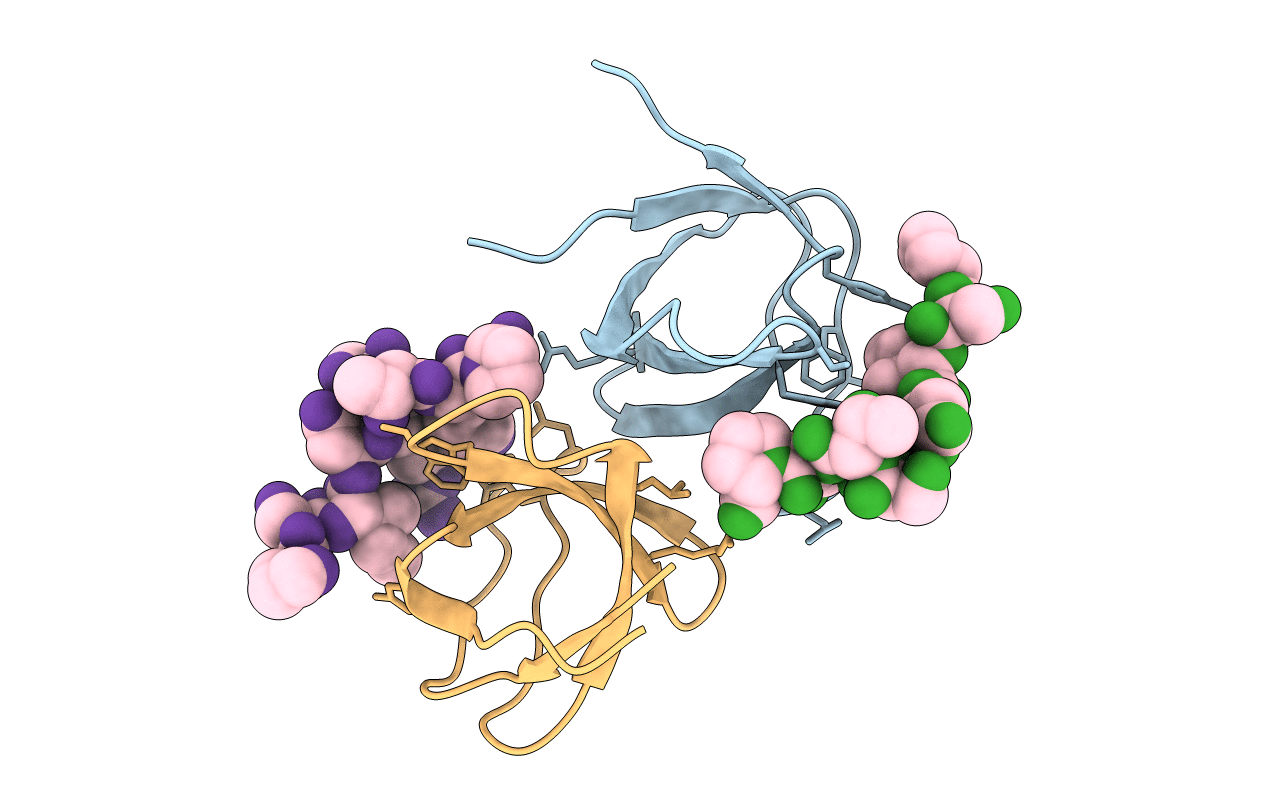
2D0N image
Deposition Date 2005-08-04
Release Date 2005-08-23
Last Version Date 2023-10-25
Entry Detail
PDB ID:
2D0N
Title:
Crystal structure of the C-terminal SH3 domain of the adaptor protein GADS in complex with SLP-76 motif peptide reveals a unique SH3-SH3 interaction
Biological Source:
Source Organism(s):
Mus musculus (Taxon ID: 10090)
Expression System(s):
Method Details:
Experimental Method:
Resolution:
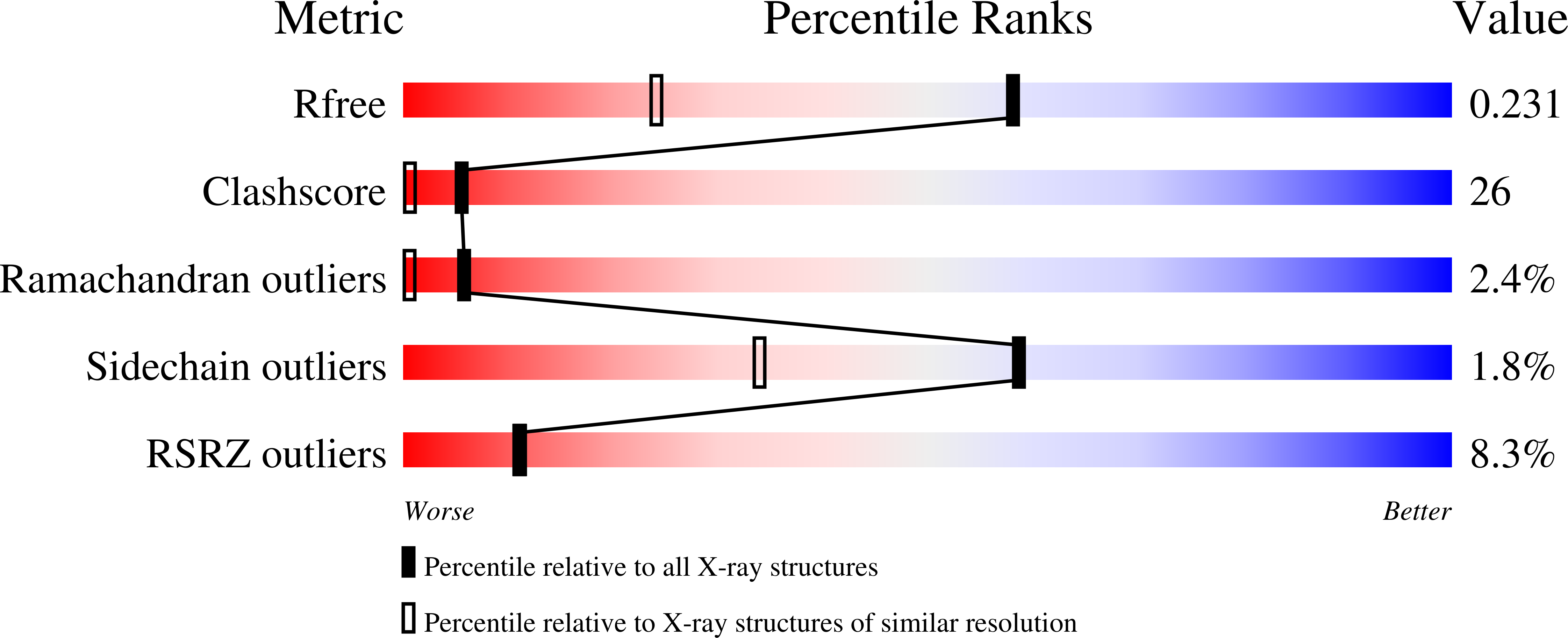
1.57 Å
R-Value Free:
0.28
R-Value Work:
0.22
R-Value Observed:
0.22
Space Group:
P 42 21 2
Macromolecular Entities
Structures with similar UniProt ID
Protein Blast
Polymer Type:polypeptide(L)
Molecule:GRB2-related adaptor protein
Gene (Uniprot):Grap2
Chain IDs:A, C
Chain Length:59
Number of Molecules:2
Biological Source:Mus musculus
Structures with similar UniProt ID
Protein Blast
Polymer Type:polypeptide(L)
Molecule:SLP-76 binding peptide
Chain IDs:B, D
Chain Length:9
Number of Molecules:2
Biological Source:
Primary Citation
Crystal structure of the C-terminal SH3 domain of the adaptor protein GADS in complex with SLP-76 motif peptide reveals a unique SH3-SH3 interaction
Int. J. Biochem. Cell Biol. 39 109 123 (2007)
PMID: 17010654 DOI: 10.1016/j.biocel.2006.07.003

Abstact

The Grb2-like adaptor protein GADS is essential for tyrosine kinase-dependent signaling in T lymphocytes. Following T cell receptor ligation, GADS interacts through its C-terminal SH3 domain with the adaptors SLP-76 and LAT, to form a multiprotein signaling complex that is crucial for T cell activation. To understand the structural basis for the selective recognition of GADS by SLP-76, herein is reported the crystal structure at 1.54 Angstrom of the C-terminal SH3 domain of GADS bound to the SLP-76 motif 233-PSIDRSTKP-241, which represents the minimal binding site. In addition to the unique structural features adopted by the bound SLP-76 peptide, the complex structure reveals a unique SH3-SH3 interaction. This homophilic interaction, which is observed in presence of the SLP-76 peptide and is present in solution, extends our understanding of the molecular mechanisms that could be employed by modular proteins to increase their signaling transduction specificity.

Legend

Protein

Chemical

Disease

Primary Citation of related structures
Feedback Form
Name
Email
Institute
Feedback