

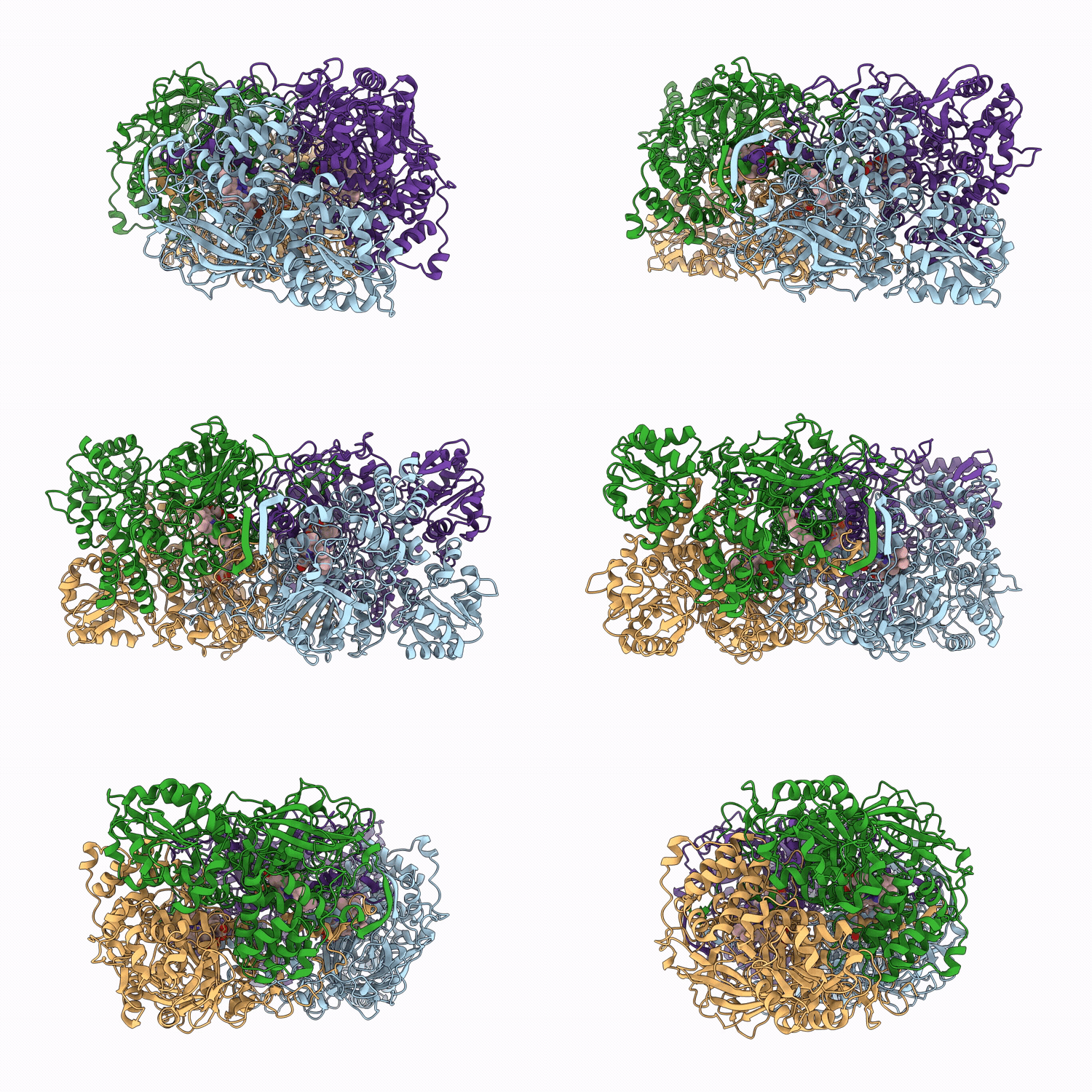
28WU image
Deposition Date 2026-02-25
Release Date 2026-05-06
Last Version Date 2026-05-06
Entry Detail
PDB ID:
28WU
Keywords:
Title:
Crystal Structure of Catalase HPII (KatE) from Escherichia coli
Biological Source:
Source Organism(s):
Method Details:
Experimental Method:
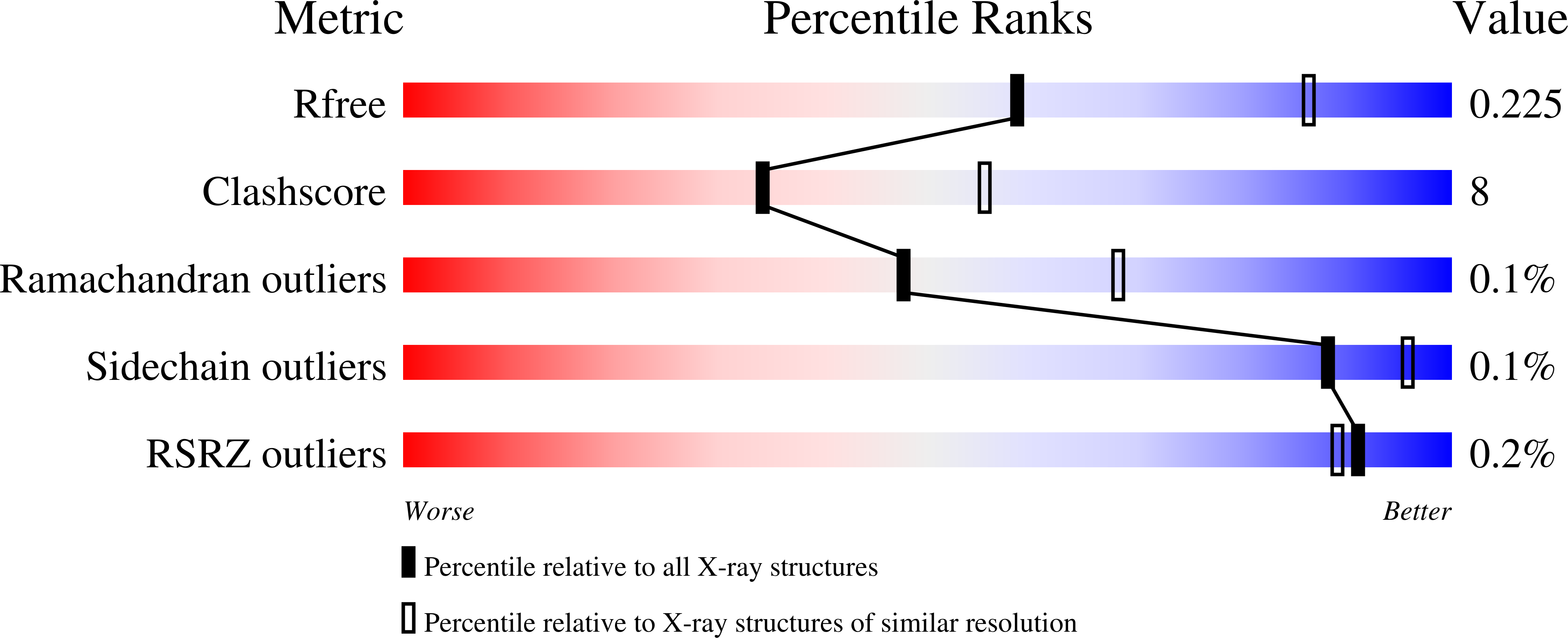
Resolution:
2.50 Å
R-Value Free:
0.22
R-Value Work:
0.15
R-Value Observed:
0.15
Space Group:
P 1 21 1
Macromolecular Entities
Structures with similar UniProt ID
Protein Blast
Polymer Type:polypeptide(L)
Molecule:Catalase HPII
Gene (Uniprot):katE
Chain IDs:A, B, C, D
Chain Length:753
Number of Molecules:4
Biological Source:Escherichia coli BL21(DE3)
Ligand Molecules
Primary Citation
A katE katG double-knockout E. coli strain eliminates the risk of catalase contamination in recombinant proteins.
Appl.Microbiol.Biotechnol. 110 ? ? (2026)
PMID: 42020871 DOI: 10.1007/s00253-026-13820-2

Abstact

Recombinant protein expression in E. coli is a key methodology for modern biomedical research. Typically, a polyhistidine-tagged ("His-tagged") protein is purified using immobilized metal affinity chromatography (IMAC), achieving close to apparently homogenous target protein preparations. However, contaminant host proteins may nonetheless be co-purified at trace amounts. This includes bacterial catalase, which can even be found crystallized instead of an intended target protein. Here, we found that less than 0.03% of the original endogenous bacterial catalase remaining in a final recombinant protein product can easily be detected in an enzymatic H(2)O(2) (hydrogen peroxide) scavenging assay, because of the high inherent turnover of catalase and its lack of need for additional cofactors. If present in a recombinant protein preparation, this activity may give unintended effects, especially if the target protein is a redox active enzyme, such as glutathione peroxidase, glutaredoxin, ribonucleotide reductase, thioredoxin, or peroxiredoxin. Here, we found that genetic deletion of the two katG and katE genes in a bacterial expression host could fully eliminate catalase from the recombinant protein product without any appreciable loss of final yield. We suggest that this genetic approach is to be preferred for the removal of catalase instead of using more extensive purification schemes. KEY POINTS: * Catalase contaminates recombinant His-tagged proteins purified from E. coli. * A small amount of catalase yields substantial activity due to its high turnover. * Genetic knockout eliminates catalase contamination without compromising yields.

Legend

Protein

Chemical

Disease

Primary Citation of related structures
Feedback Form
Name
Email
Institute
Feedback