

28PP image
Deposition Date 2026-02-12
Release Date 2026-05-06
Last Version Date 2026-05-06
Entry Detail
PDB ID:
28PP
Title:
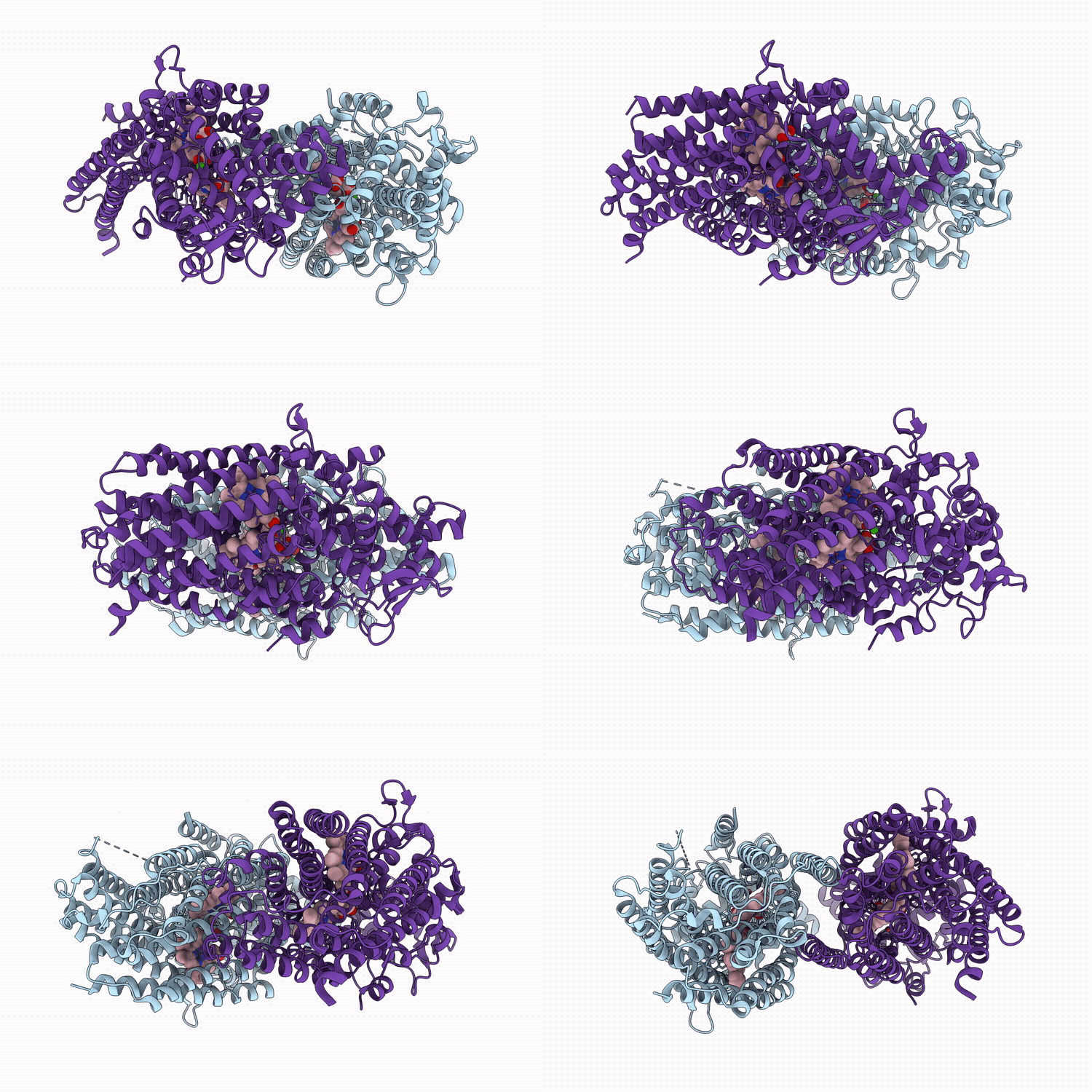
CryoEM structure of native quinol dependent Nitric Oxide Reductase Arg720Ala variant at pH 6.5 on gold grid.
Biological Source:
Source Organism(s):
Expression System(s):
Method Details:
Experimental Method:
Resolution:
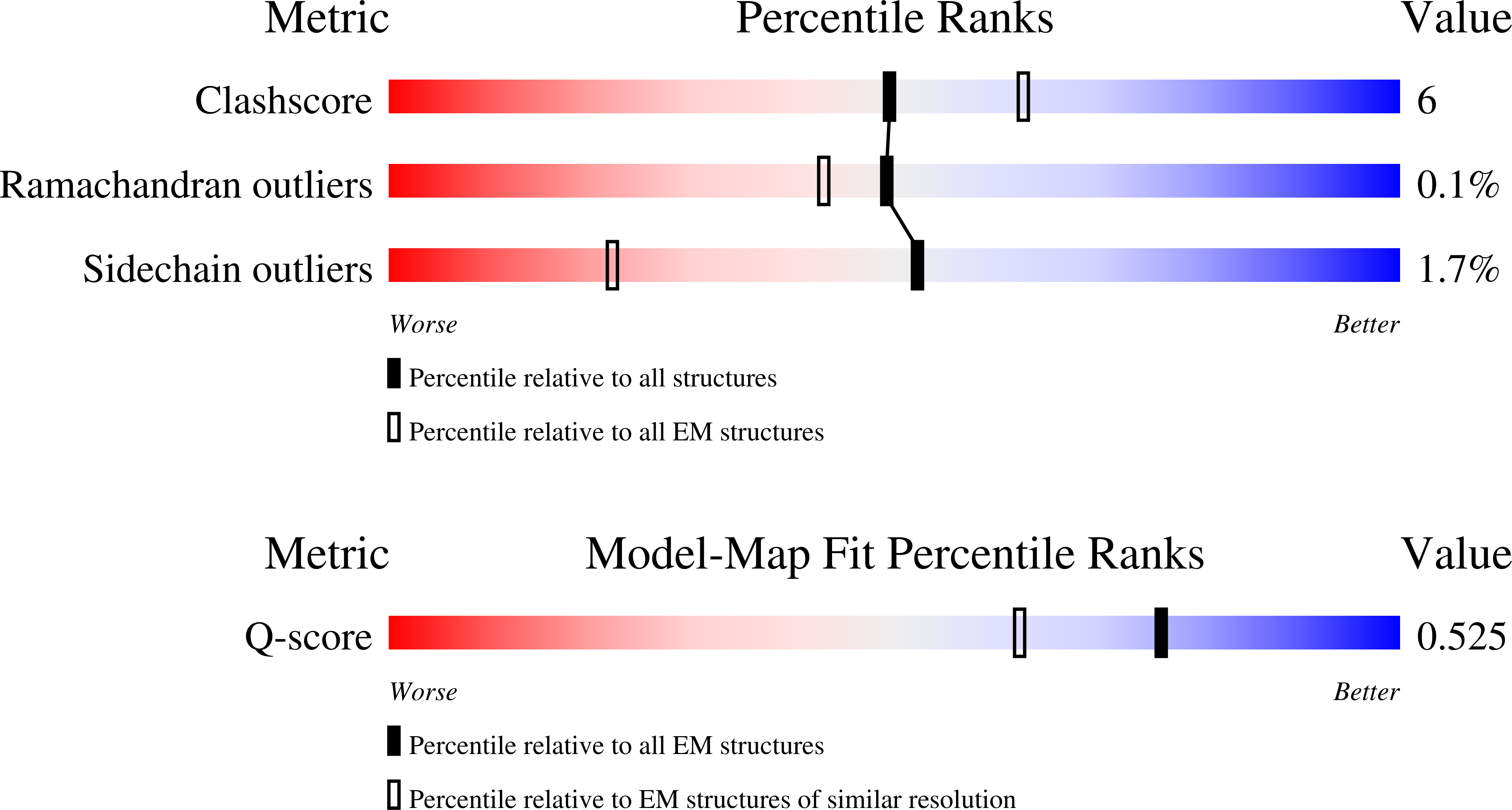
2.90 Å
Aggregation State:
PARTICLE
Reconstruction Method:
SINGLE PARTICLE
Macromolecular Entities
Structures with similar UniProt ID
Protein Blast
Polymer Type:polypeptide(L)
Molecule:Nitric oxide reductase subuni
Chain IDs:A, B
Chain Length:761
Number of Molecules:2
Biological Source:Achromobacter xylosoxidans
Primary Citation
CryoEM Structures of Native Quinol-Dependent Nitric Oxide Reductase in Resting and Quinol-Bound States.
Acs Bio Med Chem Au 6 145 159 (2026)
PMID: 42006251 DOI: 10.1021/acsbiomedchemau.5c00245

Abstact

The membrane-bound quinol-dependent nitric oxide reductases (qNORs), which are members of the respiratory heme-copper oxidase superfamily, are of major importance to food production, environment, and human health. They are unique to bacteria and catalyze N-N bond formation, converting nitric oxide (NO) to generate the enzymatic product, nitrous oxide (N(2)O), in agricultural and pathogenic conditions. High-resolution qNOR structures have been reported from two bacterial species, in which the molecular size of the protein was increased by the insertion of apocytochrome b(562) (BRIL) at the C-terminus to facilitate cryoEM structure determination. However, it remains uncertain how BRIL fusion alters the native structure of these metalloenzymes. Here, we present the first high-resolution structure of Achromobacter xylosoxidans qNOR (AxqNOR) determined without a fusion tag at two different pH values, revealing structural differences near the catalytic core as well as overall conformational changes between the native and fusion-tagged structures. The native enzyme shows a bell-shaped pH dependence of enzymatic activity, like nitrite reductase, the preceding enzyme in the denitrification pathway, which generates the substrate NO. In addition, we report structures of AxqNOR bound to quinol and hydroxyquinol that provide valuable insight into the potential electron transfer pathway originating from Trp718 to the redox centers.

Legend

Protein

Chemical

Disease

Primary Citation of related structures
Feedback Form
Name
Email
Institute
Feedback