

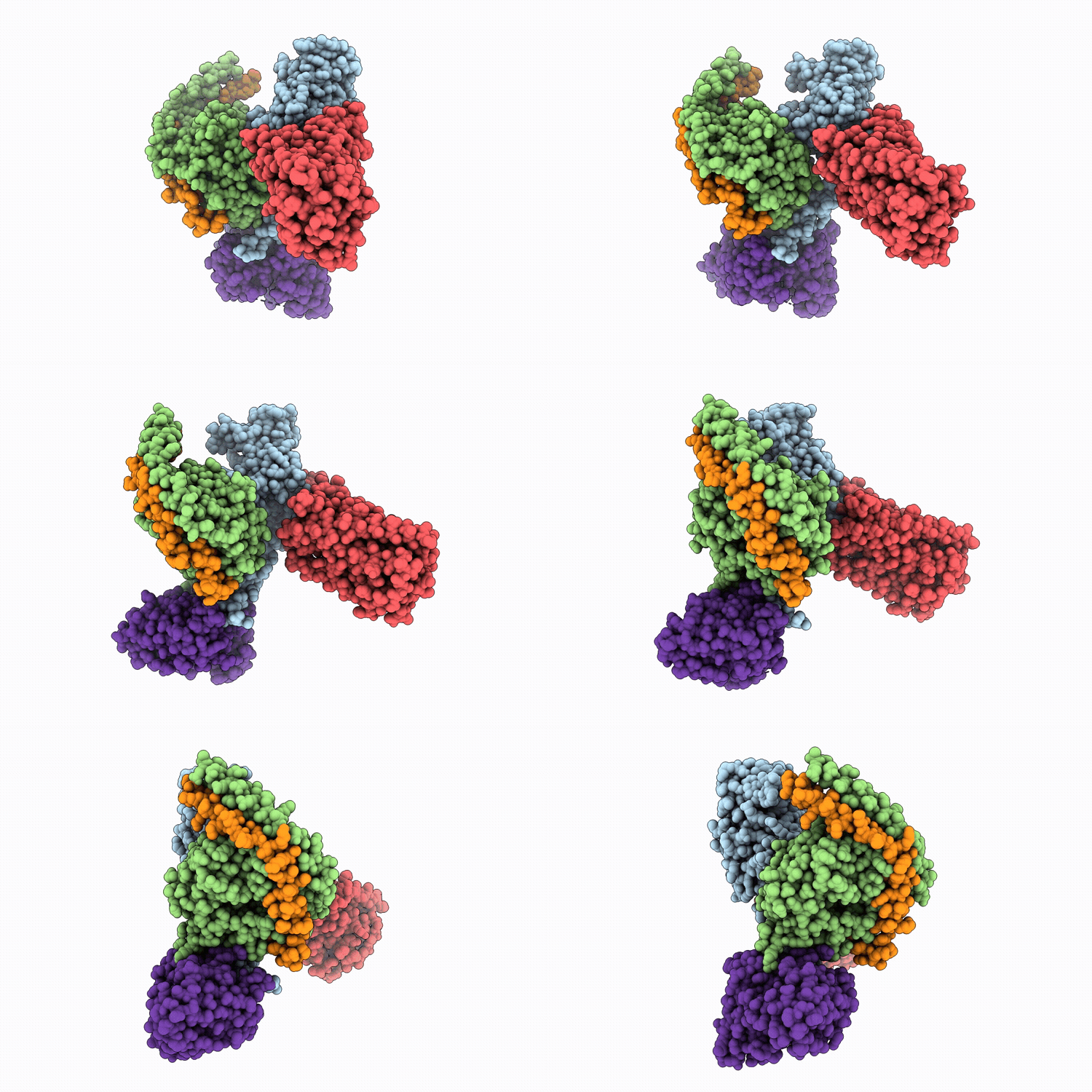
23IV image
Deposition Date 2026-02-07
Release Date 2026-05-20
Last Version Date 2026-05-20
Entry Detail
PDB ID:
23IV
Title:
Cannabinoid Receptor 1-Gi Complex
Biological Source:
Source Organism(s):
Homo sapiens (Taxon ID: 9606)
Mus musculus (Taxon ID: 10090)
Expression System(s):
Method Details:
Experimental Method:
Resolution:
2.42 Å
Aggregation State:
PARTICLE
Reconstruction Method:
SINGLE PARTICLE
Macromolecular Entities
Structures with similar UniProt ID
Protein Blast
Polymer Type:polypeptide(L)
Molecule:Guanine nucleotide-binding pr
Gene (Uniprot):GNAI1
Mutagens:S47N,G203A,E245A,A326S
Chain IDs:A
Chain Length:354
Number of Molecules:1
Biological Source:Homo sapiens
Structures with similar UniProt ID
Protein Blast
Polymer Type:polypeptide(L)
Molecule:Guanine nucleotide-binding pr
Gene (Uniprot):GNB1
Chain IDs:B
Chain Length:339
Number of Molecules:1
Biological Source:Homo sapiens
Structures with similar UniProt ID
Protein Blast
Polymer Type:polypeptide(L)
Molecule:Cannabinoid receptor 1
Gene (Uniprot):CNR1
Chain IDs:E (auth: D)
Chain Length:504
Number of Molecules:1
Biological Source:Homo sapiens
Structures with similar UniProt ID
Protein Blast
Polymer Type:polypeptide(L)
Molecule:Guanine nucleotide-binding pr
Gene (Uniprot):GNG2
Chain IDs:C (auth: G)
Chain Length:71
Number of Molecules:1
Biological Source:Homo sapiens
Structures with similar UniProt ID
Protein Blast
Polymer Type:polypeptide(L)
Molecule:Scfv16
Chain IDs:D (auth: S)
Chain Length:250
Number of Molecules:1
Biological Source:Mus musculus
Ligand Molecules
Primary Citation
Rational design of G i -biased CB1 agonist with reduced side effects.
Cell ? ? ? (2026)
PMID: 41980782 DOI: 10.1016/j.cell.2026.03.020

Abstact

The cannabinoid receptor 1 (CB1) has emerged as a promising candidate for next-generation non-opioid therapies. However, the development of therapeutics targeting CB1 has been consistently hindered by significant adverse effects. Here, through structure-activity relationship analyses focused on biased signaling, we rationally design two G(i)-biased CB1 agonists, LZD503 and LZD505. Our design strategy employed structural spatial tuning of the agonist scaffold to disrupt specific molecular interactions and minimize steric conflicts with critical tip residues within the ligand-binding pocket, thereby promoting preferential G(i)-pathway signaling. Cryo-electron microscopy structures of the CB1-G-protein complexes bound to these designed agonists confirmed that their anticipated conformational poses favored G(i)-biased signaling. Both designed compounds demonstrated promising results by alleviating pain and mitigating unwanted responses in mice. The elucidated CB1 complex structures and the resulting insights establish a comprehensive framework for the structure-guided development of innovative CB1-targeted analgesics with reduced adverse effect profiles.

Legend

Protein

Chemical

Disease

Primary Citation of related structures
Feedback Form
Name
Email
Institute
Feedback