

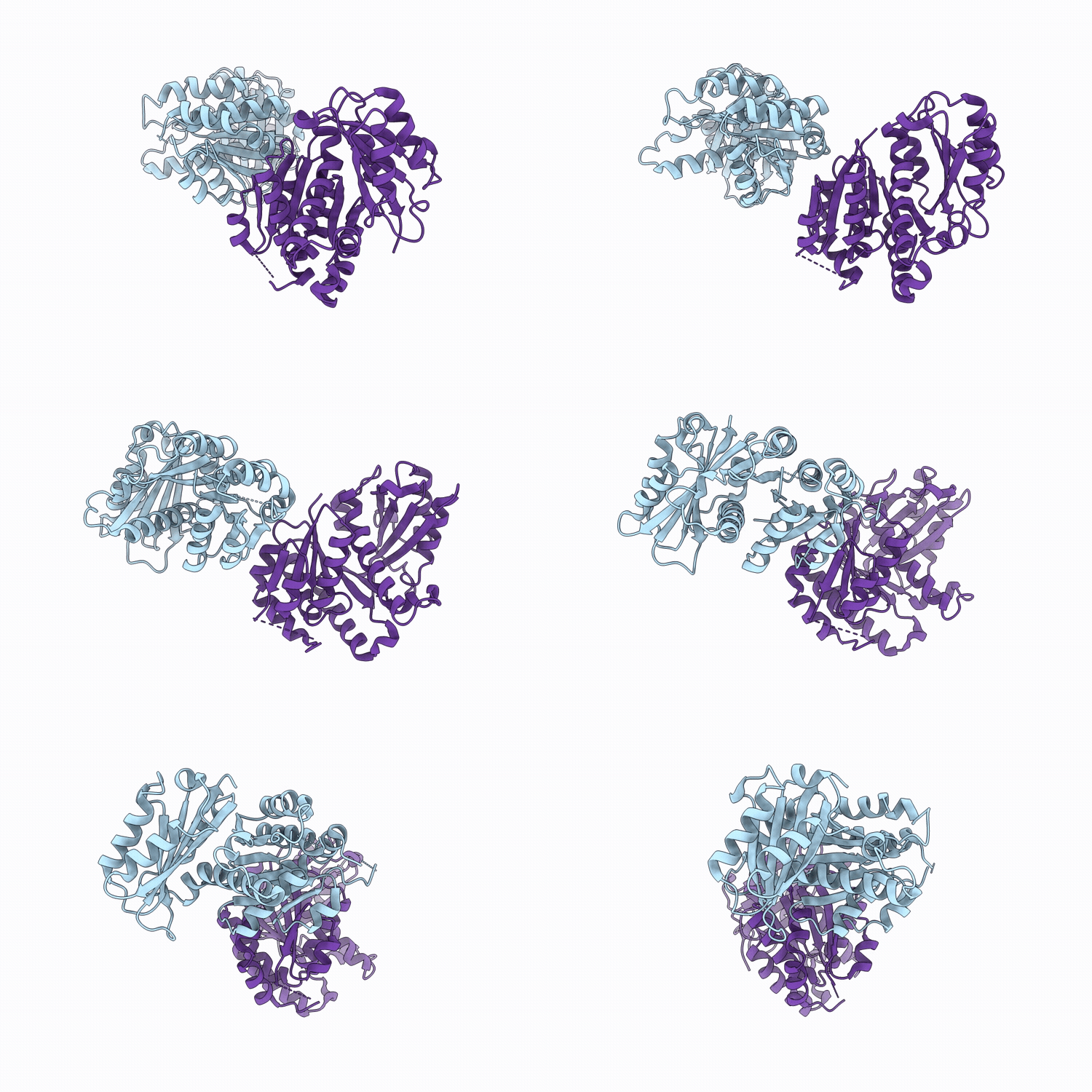
22HR image
Deposition Date 2026-01-11
Release Date 2026-05-20
Last Version Date 2026-05-20
Entry Detail
PDB ID:
22HR
Keywords:
Title:
Crystal structure of Apo FtsZ from Acinetobacter baumannii
Biological Source:
Source Organism(s):
Expression System(s):
Method Details:
Experimental Method:
Resolution:
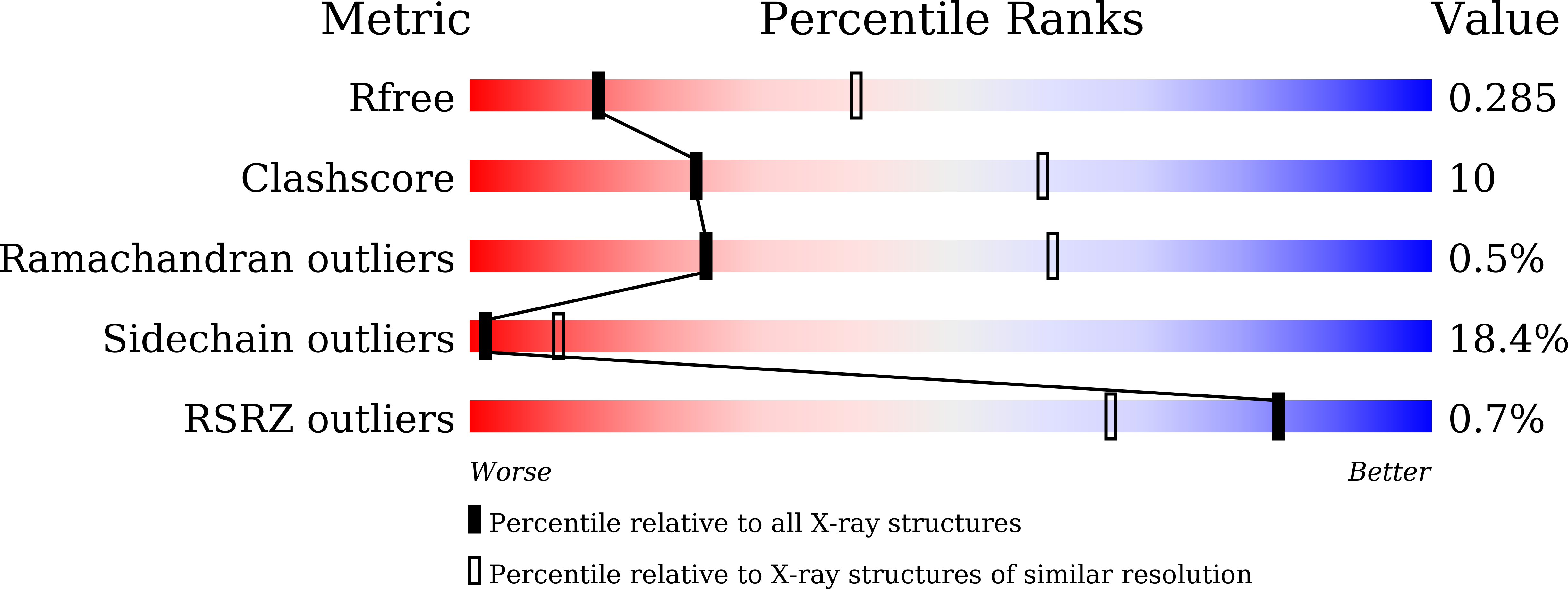
3.00 Å
R-Value Free:
0.28
R-Value Work:
0.24
Space Group:
P 1
Macromolecular Entities
Structures with similar UniProt ID
Protein Blast
Polymer Type:polypeptide(L)
Molecule:Cell division protein FtsZ
Chain IDs:A, B
Chain Length:307
Number of Molecules:2
Biological Source:Acinetobacter baumannii
Primary Citation
Crystal structure of FtsZ from Acinetobacter baumannii and identification of a potential inhibitor targeting its GTPase domain.
Int.J.Biol.Macromol. 364 152295 152295 (2026)
PMID: 42067083 DOI: 10.1016/j.ijbiomac.2026.152295

Abstact

Acinetobacter baumannii is an opportunistic pathogen known for its extensive antibiotic resistance, posing a significant concern in healthcare settings. Given global concern over broad-spectrum antibiotic use and its impact on the human microbiome, targeting the bacterial cell-division protein Filamenting temperature-sensitive Z (FtsZ) is a promising strategy for developing new antibiotics, as this protein is essential for bacterial cell division. FtsZ polymerizes into filaments to form the Z-ring at the cell division site. This Z-ring orchestrates the recruitment of other crucial proteins in cytokinesis and cell wall synthesis, making it critical for bacterial viability. To target FtsZ from Acinetobacter baumannii (abFtsZ), we have elucidated the first crystal structures in the apo and GDP-bound state. The structural analysis revealed that the abFtsZ-GDP complex exists in a relaxed state conformation with weak inter-subunit interactions. The GTPase activity of abFtsZ showed a V(max) of 3.3 +/- 0.4 nmolP/nmolFtsZ/min, and a K(m) of 2.3 mM. By virtual screening using the crystal structure of abFtsZ, we identified six potential inhibitors: Gossypin, Stafib-1, Tryphostin A51, Sangivamycin, Scutellarin, and Ellagic acid that target the GTP-binding pocket. These inhibitors exhibited high docking scores ranging from -10.2 to -8.4 kcal/mol and remained stable throughout the 500 ns MD simulation. These inhibitors can serve as lead molecules for the development of a new antibacterial agent.

Legend

Protein

Chemical

Disease

Primary Citation of related structures
Feedback Form
Name
Email
Institute
Feedback