

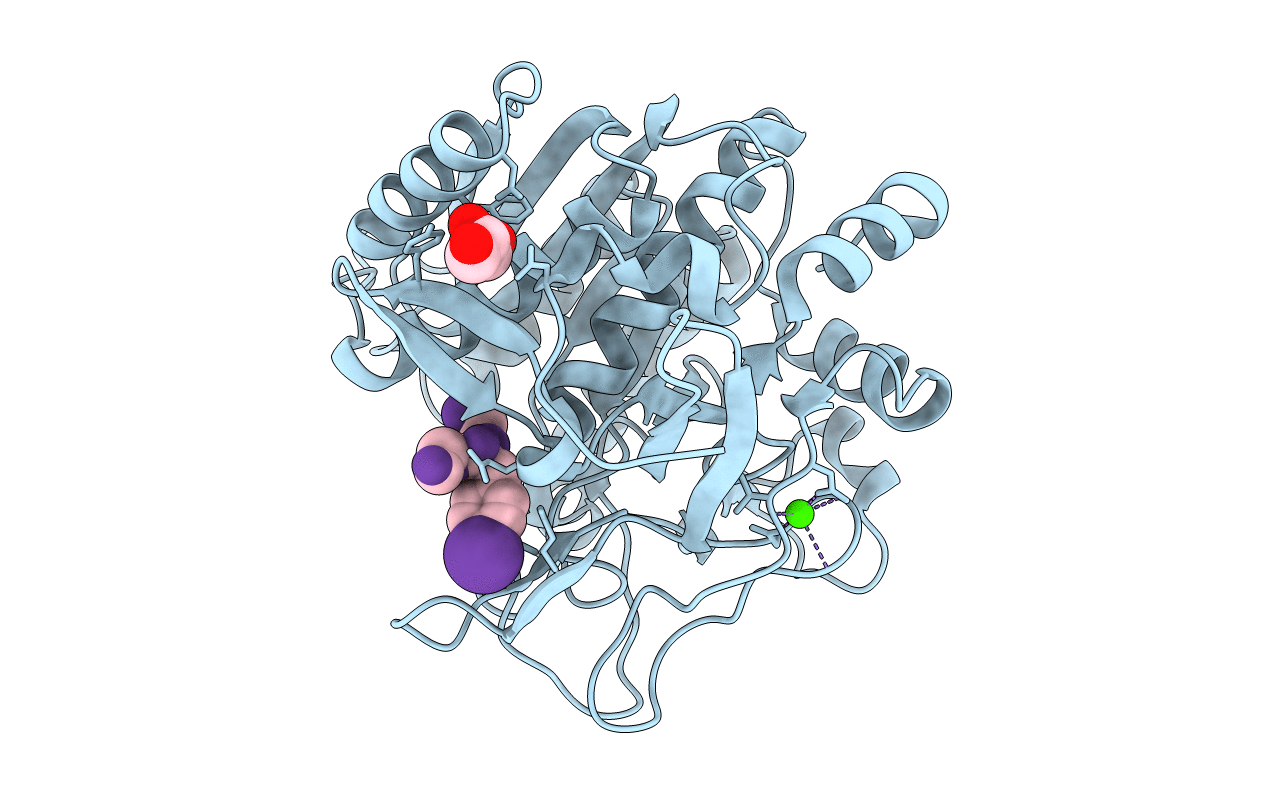
1ga1 image
Deposition Date 2000-11-29
Release Date 2000-12-13
Last Version Date 2025-03-26
Entry Detail
PDB ID:
1GA1
Title:
CRYSTAL STRUCTURE ANALYSIS OF PSCP (PSEUDOMONAS SERINE-CARBOXYL PROTEINASE) COMPLEXED WITH A FRAGMENT OF IODOTYROSTATIN (THIS ENZYME RENAMED "SEDOLISIN" IN 2003)
Biological Source:
Source Organism(s):
Pseudomonas sp. (Taxon ID: 306)
Expression System(s):
Method Details:
Experimental Method:
Resolution:
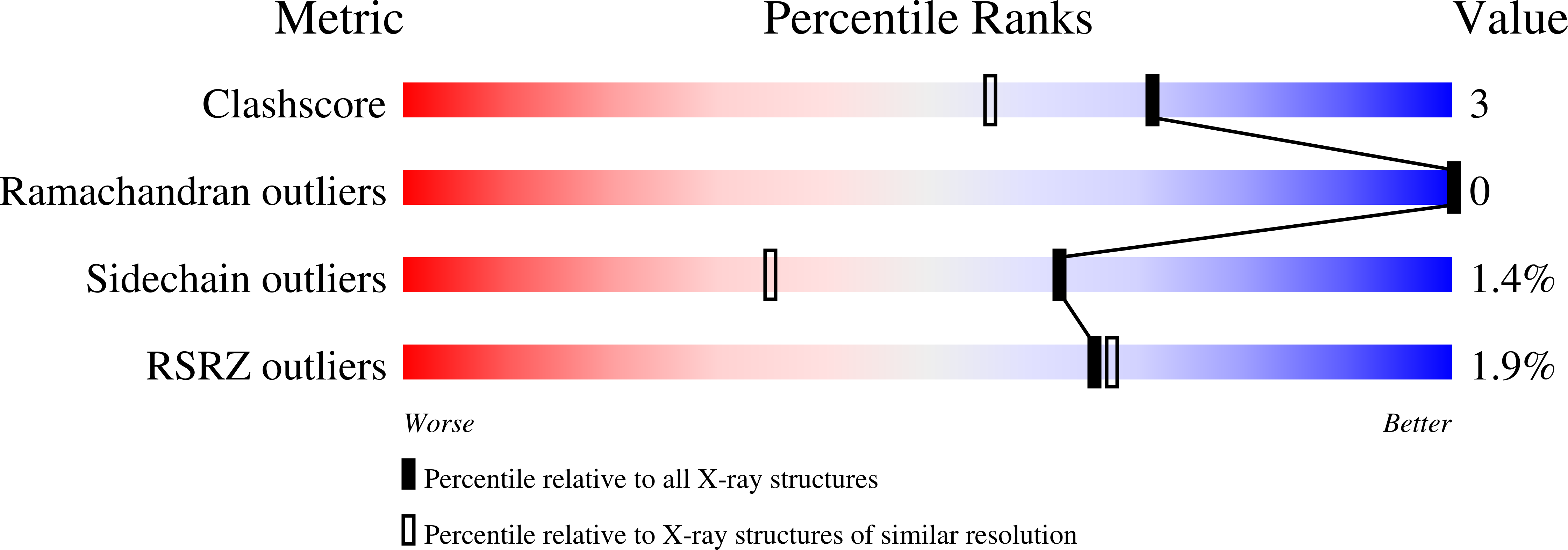
1.40 Å
R-Value Free:
0.13
R-Value Work:
0.11
R-Value Observed:
0.10
Space Group:
P 62
Macromolecular Entities
Structures with similar UniProt ID
Protein Blast
Polymer Type:polypeptide(L)
Molecule:SERINE-CARBOXYL PROTEINASE
Gene (Uniprot):pcp
Chain IDs:A
Chain Length:372
Number of Molecules:1
Biological Source:Pseudomonas sp.
Structures with similar UniProt ID
Protein Blast
Polymer Type:polypeptide(L)
Molecule:FRAGMENT OF IODOTYROSTATIN
Mutagens:T2(PHI)
Chain IDs:B (auth: I)
Chain Length:3
Number of Molecules:1
Biological Source:
Modified Residue
Compound ID Chain ID Parent Comp ID Details 2D Image
PHI B PHE IODO-PHENYLALANINE
Primary Citation
Practical experience with the use of halides for phasing macromolecular structures: a powerful tool for structural genomics.
Acta Crystallogr. D Biol. Crystallogr. 57 239 249 (2001)
PMID: 11173470 DOI: 10.1107/S0907444900015249

Abstact

The crystal structure of pepstatin-insensitive carboxyl proteinase (PCP) from Pseudomonas sp. 101, an enzyme with no overall sequence similarity to any other proteinases of known structure, was solved using crystals soaked in sodium bromide solution and then cryocooled. A data set collected at the bromine peak absorption wavelength was sufficient for calculation of an excellent map and the entire process of phasing and tracing the maps required almost no direct human intervention. The process of structure solution using single-wavelength data was compared with three-wavelength multiwavelength anomalous diffraction (MAD); although the latter resulted in slightly better maps, the use of this much more labor-intensive approach did not significantly improve the ability to solve the structure. The successful phasing approaches are compared with several less successful attempts utilizing other crystal forms of the enzyme and the practical aspects of the use of bromine as a heavy-atom derivative are discussed. In conclusion, the use of halides with single-wavelength diffraction data fulfills the requirements of being a first-choice method of high-throughput structure solution for the emerging field of structural genomics.

Legend

Protein

Chemical

Disease

Primary Citation of related structures
Feedback Form
Name
Email
Institute
Feedback