

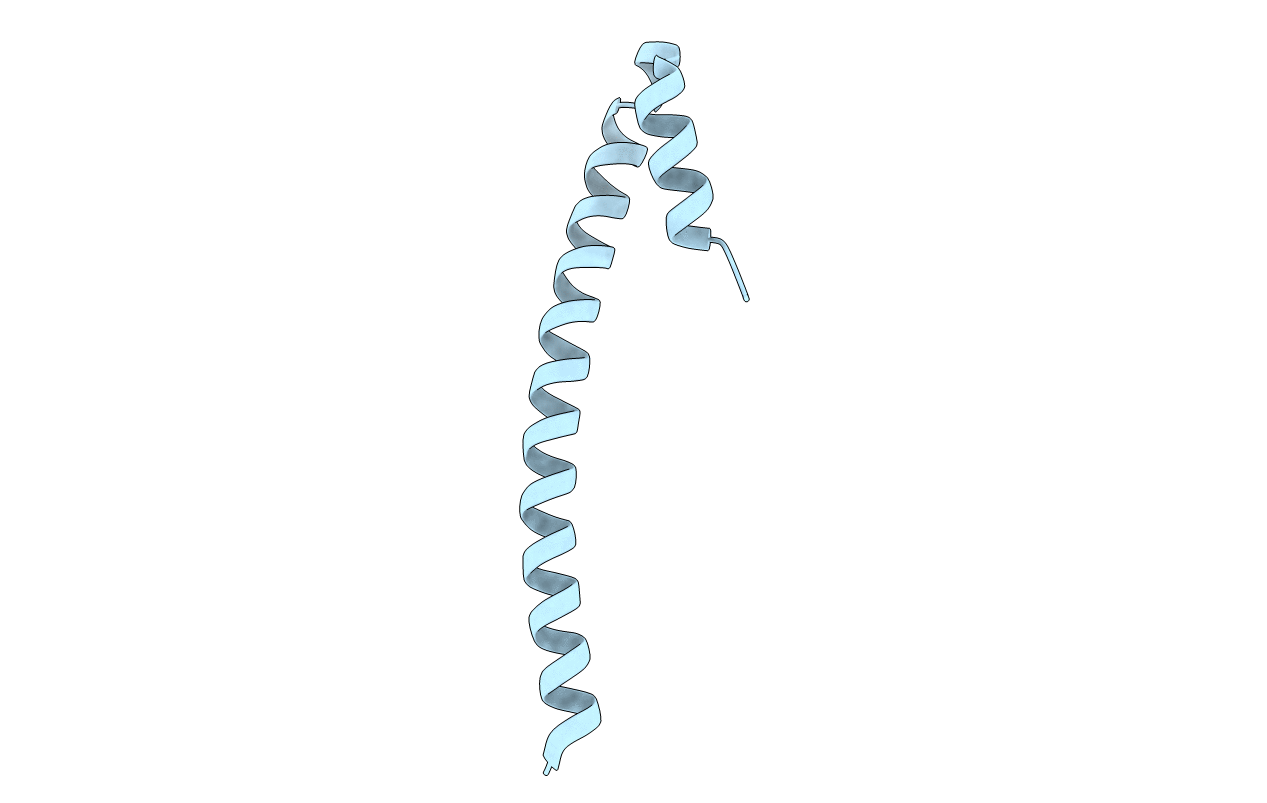
1YIB image
Deposition Date 2005-01-11
Release Date 2005-03-08
Last Version Date 2024-02-14
Entry Detail
PDB ID:
1YIB
Title:
Crystal Structure of the Human EB1 C-terminal Dimerization Domain
Biological Source:
Source Organism(s):
Homo sapiens (Taxon ID: 9606)
Expression System(s):
Method Details:
Experimental Method:
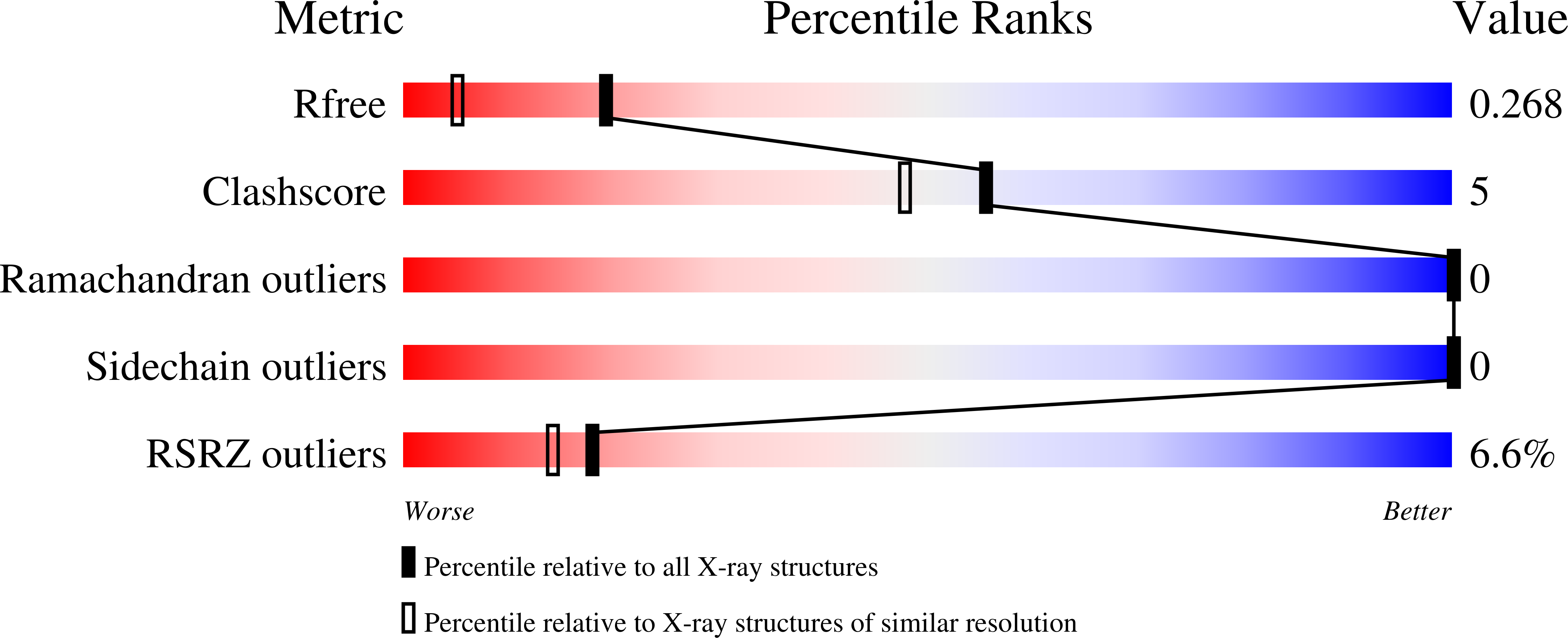
Resolution:
1.80 Å
R-Value Free:
0.25
R-Value Work:
0.22
R-Value Observed:
0.22
Space Group:
C 2 2 21
Macromolecular Entities
Structures with similar UniProt ID
Protein Blast
Polymer Type:polypeptide(L)
Molecule:Microtubule-associated protei
Gene (Uniprot):MAPRE1
Mutagens:N-terminal cloning artifact GPLGS
Chain IDs:A
Chain Length:76
Number of Molecules:1
Biological Source:Homo sapiens
Primary Citation
Structural determinants for EB1-mediated recruitment of APC and spectraplakins to the microtubule plus end
J. Cell Biol. 168 587 598 (2005)
PMID: 15699215 DOI: 10.1083/jcb.200410114

Abstact

EB1 is a member of a conserved protein family that localizes to growing microtubule plus ends. EB1 proteins also recruit cell polarity and signaling molecules to microtubule tips. However, the mechanism by which EB1 recognizes cargo is unknown. Here, we have defined a repeat sequence in adenomatous polyposis coli (APC) that binds to EB1's COOH-terminal domain and identified a similar sequence in members of the microtubule actin cross-linking factor (MACF) family of spectraplakins. We show that MACFs directly bind EB1 and exhibit EB1-dependent plus end tracking in vivo. To understand how EB1 recognizes APC and MACFs, we solved the crystal structure of the EB1 COOH-terminal domain. The structure reveals a novel homodimeric fold comprised of a coiled coil and four-helix bundle motif. Mutational analysis reveals that the cargo binding site for MACFs maps to a cluster of conserved residues at the junction between the coiled coil and four-helix bundle. These results provide a structural understanding of how EB1 binds two regulators of microtubule-based cell polarity.

Legend

Protein

Chemical

Disease

Primary Citation of related structures
Feedback Form
Name
Email
Institute
Feedback